The New Rules for Love, Sex, and Dating

The New Rules for Love, Sex, and Dating

by Andy Stanley


– Start living like the person that you want to marry. Do you have all the qualities and characteristics of the person that you yourself are trying to look for in a mate?

– Become a person that the person you are looking for is looking for.

– Instead of working so hard on looking, work hard on becoming the right person.

– Your relationships will never be any healthier than you are.

– If you cannot learn self-control right now, you will not do it later on when you get married. The only thing that changes when you get married is a last name, not your habits.

– Most guys think that when they meet the right body, they will have no more need for the artificial body (by looking at porn and lusting over girls), but that is not true. If anything, it will only accelerate your desire and need.

– Porn is not a past-time, it is a pathway – a pathway to destruction! It destroys relationships, marriages, thought patterns, behaviors and expectations.

– You should know that your sexual decisions before you get married will affect your sexual decisions after you get married.

– Purity now paves the way for intimacy later. Sex is more than just physical.

– Sexual sins is like no other sin; not because it’s unforgivable or more wicked than others, but because it is against your own body. Jesus did not say this because he will not forgive you, but because it brings so many problems, scars, regrets and pains to your life.

– Practice makes perfect does not apply to sex. It undermines intimacy!

– Every time you say no, you’re saying yes: yes to a better future, yes to purity, yes to a better you, yes to intimacy, and yes to trust

The Leader in You

The Leader in You

by Dale Carnegie


– You cannot lead by directive, you must leave by influence.

– The ability to communicate with people is essential in leadership. It’s what turns a good idea into a great idea, it’s what ignites people.

– People will not listen to what you have to say unless you have a sincere interest.

– Treat people as if they are smart and capable and then get out of their way – that will get the job done. Respect them and appreciate their work.

– Making someone feel important is not a one time thing, it is several little small things such as returning a phone call, remembering their name, thanking them, etc.

– Good listening is key to affective communication.

– Good listening is better than speaking other languages or knowing all about every subject.

– No one could possibly know everything. Listening to others is the single most important thing in learning.

– No one is more persuasive than a good listener. You almost never forget a good listener when you meet one.

– Good leaders talk in plural, how we need, how we accomplished, etc. People need to feel like their contributions are important.

– Share the glory but always accept the blame.

– Criticize your mistakes before anyone else gets an opportunity to do it.

– Think twice before you criticize or blame.

– If you do have to criticize, walk softly and do not bring along a big stick. Praise first and then critique a kind way.

– If you are shouting for arguing with someone you have already lost.

– Be quick to admit mistakes and slow to criticize

– Set goals, they give us something to shoot for and look towards. Without goals, it is easy to drift. A goal is a dream with a deadline.

– Patience and perseverance will accomplish more in this world than a fast run at something.

– Having a goal is important but is only half of it; the other half is discipline and focus.

– Leaders do not lose focus, they keep their focus.

– Consistently high-performance comes from a balance of both hard work and leisure. You have to have both to continue for a long time.

– When something is going on and you are worried, you have to ask yourself how much it’s worth. Is it worth losing a night sleep, a week of anxiety, etc.? Very few things are worth worrying so much about. Keep things in perspective.

– Instead of worrying so much, ask yourself what the reality of this coming to pass. Next, what is the worst case scenario if this happens. And lastly, what can you do to fix or help the situation.

– There are very few motivators as a positive, upbeat attitude.

– The way to be enthusiastic is to believe in what you are doing and believe in yourself that you can do it.

– True enthusiasm is made up of both eagerness and assurance.

The Intimate Marriage

The Intimate Marriage

by RC Sproul


– Why do we have marriage? Is it just some traditional thing that we do. Marriage was created, ordained and instituted by God, not by man.

– Marriage is one of the greatest institutions created, but is also one of the most dangerous. Marriage is where you can have the greatest happiness as well as have the greatest disappointments, most frustration and most pain.

– They were naked and unashamed. Nakedness is usually equated with shame – no one wants to be naked in front of others. Yet God sees us naked and still loves us. The only place that nakedness is not a shame is in the bond of marriage.

– You can be naked in your marriage in every way – should never humiliate each other, rather totally open. The clothes are off because you have nothing to hide.

– The Bible many times uses the phrase “to know” as to have sex with… not because the Bible is avoiding the word sex, but because intimacy is truly knowing someone.

– You can impress someone by putting on cologne, looking macho or dressing nicely, but what will they think of you when they truly know you. Marriage is truly knowing someone. When dating, you only think you know someone, but in marriage you really get to know the person. Intimacy takes place when you truly know someone.

– Marriage cannot be sustained by feelings, you must have knowledge… we must get to know our spouse.

– To have knowledge, to get to know something, we must study it.

– Two reasons why people cannot have sex with their spouse (although we try to call it impotency or fidgety, etc.)

1. Fear Fear of performance. But the more you demonstrate love, the fear vanishes. Perfect love cast out all fear according to I John 4:18. Fear of being hurt physically – some women have been abused as children or even raped. (Some husbands may be tough, but not tender.)

2. Fear of discovery – that your kids will walk in, no privacy, etc. Fear of pregnancy We need to communicate to find out what each other are afraid of, we should never force our spouse to do something they do not want to do.

3. Guilt – of past sins, etc. We must get rid of guilt.


– The three biggest enemies of harmony in marriage, according to secular psychologist, are: sex, money and interferences of in-laws.

– Words or disregarding remarks are a great destroyer of marriages.

– The book of Song of Solomon is filled with complements between spouses. The tongue and usage of words is very important in marriage.

– The book of James says that the most destructive member of the body is the tongue. With it we bless God and curse man.

– We say that sticks and stones may break our bones but words will never hurt us, but that is a lie. We can break an arm and heal, but the words cut deeper and hurt us.

– When first married, you went out of your way to cherish your wife, and your words were one of the biggest ways you did that… and you still can and should do that. What you say with your mouth will reveal how much cherish your wife.

– There are certain things that we cannot take back – a flying arrow, etc. And in that list is a spoken word. We may say something and then say we should not have said it, but it is too late. Think before you speak.

– Psychologist say that it takes 9 complements to outweigh 1 criticism.

– As Christ is preparing to present his bride unblemished & perfect to God, so should a husband with his bride – not with bruises, or marred up, but perfect.

– We are to love our wife as we do our own body, to love and cherish her – that is my job, to love and cherish her.

The Insanity of God / The Insanity of Obedience

The Insanity of God / The Insanity of Obedience

by Nik Ripken


In his first book “The Insanity of God” seem to me to be more of a inspirational book, just giving testimonies of people persecuted that he (Nik Ripken) interviewed. I loved some of the stories and they were very moving. The conclusion of the book was not very appealing to me because I felt like he was saying that he went to tell people about Jesus and ended up being told about Jesus (pretty much his words). I understand what he was saying, at least I think so, but I think the danger could be that people can translate it as “there’s no need for missionaries to go because they already have the Gospel everywhere”. I also think that it can be dangerous if people get the idea that instead of going to start churches, we just go find persecuted Christians and talk to them. Sounds exciting to find and talk to people who are living in restricted areas, but we must be careful to not make young people think that the Great Commission is only for restricted areas, the persecuted, or is already being done… so all we need to do is go get their stories (or as in some books, just give the money instead of send more missionaries). There are many great tools used and needed for getting the Gospel out, but the Great Commission still says “go” and we can’t replace that.


As far as “The Insanity of Obedience”, it was still inspirational (although he repeated several stories) but moved a little more towards informational. I certainly couldn’t agree with everything, but I found some great nuggets in his book. Here’s some of the great points in my opinion:

• For every 1 male in overseas service, there are approximately 7 women.

• Less than 10% of students at Christian colleges are studying or even considering going overseas.

• We think that others should share the Gospel and even be willing to be persecuted, yet we are not willing to let our own children go overseas to serve God.

• The only thing harder than going overseas, is sending our children overseas.

• When asked Muslim converts what they had learned from Western Christian missionaries, they responded that the missionaries taught them how to be afraid. (I personally have seen this traveling in restricted countries in both Asia and North Africa — some missionaries have made the converts more afraid of their government than they would have figured out on their own).

• One of the greatest problems of overseas missionaries is fear – fear of learning the language, putting the kids in the school, visas, harm, etc.

• Your fear is the greatest tool that you could ever give to the devil and overcoming your fear is the greatest danger to take from the devil.

• Many Christians around the world live in persecution, so comfort is not the norm, persecution is the norm.

• Often the fear of persecution is greater than the persecution itself.

• Witness is not a matter of freedom it’s a matter of obedience.

• Much of our building churches today has to do with taking care of the 99 sheep that have already been found and very little has to do with the 1 sheep that is lost.

• Discipleship should never be an excuse for not evangelizing.

• People who followed Jesus gave up something. People who follow a westerners want to get something.

• We cannot expect that spending a couple of hours a week will change someone – Jesus lived with His disciples 24/7.

• Our western style of teaching someone (when a student does not even know where the teacher/professor lives) is not effective if we truly want to get the job done.

• Discipleship should not be a mere transfer of information but learning of character.


I do not know the author, but several things point to being heavily charismatic – he talks about visions, healing, etc. He states (or heavily alludes to) someone getting saved and immediately turning into a house church leader.

I agree a new convert should get involved quickly and witness but I do not think he should be a “pastor/shepherd” right away.

So in conclusion, I thought there were some excellent and moving stories in the book. It should wake many people up. But if the underlying message is to not push sending missionaries rather go find those already saved (which is not a new philosophy), I would tend to disagree with that.

Time of Your Life

Time of Your Life

by Anthony Robbins


– To have a better life, you have to change your psychology, how you think.

– Success without fulfillment is a failure.

– There are always more things to do than you have time for, this is the reason we must determine what is the most important use for our time.

– So you must start out by deciding what you want, then why you want it and finally you can work on steps of how to achieve it.

– We must be able to see life, not just be addicted to the achievements.

– We were told that technology will help save time and improve our lives, but it really disrupts our lives and relationships. There is a way a better of using our time and life, but the answer is not technology.

– Taking control of your life means taking control of your time.

– Learn to take big things and make them small things by organizing them.

– Don’t let the interaction of an interruption beauty control your life.

– Many people know what to do, but they do not have a system to accomplish it.

– There are so many things that fight for your attention and focus and if you cannot decide on what is most important, you’ll be focusing on what everyone else want you to focus on.

– Media does not live off of information but off of advertisement. They need your interest to survive and continue on. – You cannot truly have a plan for the day until you have a plan for your life.

– Rpm stands for rapid planning method:

1. Result. What is the result that you want?

2. Purpose. Why do you want this to happen, what is the purpose?

3. Map. How are you going to achieve it?


– Results focused, not just activity focused.

– Do not focus on what you have to do, focus on what you want. There are plenty of things that will keep us busy, but if you do not know what you want then you will have movement never have achievements.

– Activity is usually a reaction.

– But what is it that you want to accomplish this week, this month and this year? If you do not ask yourself what you want, you will only stay active but not accomplish what you want.

– Know exactly what you want and have it clear in your mind, you must map it out.

– A map could be super powerful, but you must know two things in order to use the map correctly:

1. Where do you want to go?

2. Where are you currently at?

– Writing a list without knowing the reason is unsustainable.

– Where focus goes energy flows.

– What would life look like if you were able to master time? What would be the consequence of you not mastering your time?

Training Camp

Training Camp

by Jon Gordon


– Their are some things that successful people do that unsuccessful people do not do. It is almost like there’s a pattern or process we can follow that successful businesses, families, teams and individuals do.

– Life is too short to be average.

– Work hard, work to be great.

– Do good on something is one thing, but be great is a lifestyle.

– The big picture-vision. The best know what they truly want, it is clear in their mind. For every person this clarity comes at a different time in life, but at some point they can see clearly what they want to achieve and begin working towards it.

– Don’t do anything halfway, find what you want to do or what you do well and then do it with all your heart.

– Too many people don’t want to be great because they’re not willing to grow, change or work at becoming better.

– Be a life long learner.

– Fear success, not failure. When many people attain success, they think they have arrived and never strive to grow anymore.

– The best recommit themselves every year to improving and becoming better.

– Past success does not assure you will have future success. – Everyone needs a coach that will help and push them to become greater.

– There’s no such thing as an overnight success.

– It is not how you perform on game day, it is how you prepare for game day.

– 5% of your life is performance on game day, but 95% of your life is preparing for game day.

– How you prepare is how you will perform.

– Success is not about the big things, it’s all about the little things you do.

– The best do ordinary things but better – they just keep practicing the little things over and over until they become better.

– Vision without execution is hallucination – Edison.

– You have to have the telescope view to see the big picture of what you want to accomplish, but you have to have the microscope to zoom in and execute.

– The best of the best do ordinary things with extraordinary focus and execution.

– The recipe for success is not that hard, it is the art of focusing and executing the recipe.

– No secret recipe rather zoomed focusing and commitment.

– Stop saying yes to all the trivial things and begin focusing and practicing the most important things.

– To be the best, you have to train your mind just as much, if not more, as you train your body.

– The best are mentally stronger.

– Stay positive and focused. You’ll have to stay mentally strong because you will receive negative input from both outside of you and inside of you.

– You have to be willing to pay the price if you’re going to learn, grow, and become better.

– The best overcome their fears.

– If you want to be the best, you have to be willing to dig deep and expose your fears.

– Sometimes you have to feel so isolated that you are willing to look within and look up. You might need to be in so much darkness before you realize you need the light.

– We do not live our lives based on what our life is rather on what our perception of life is.

– Playing it safe and not risking ourselves is nothing more than a recipe for disaster, not success.

– The best people make those around them better.

Tramp for the Lord & The Hiding Place

Tramp for the Lord & The Hiding Place

By Corrie Ten Boom


(“Tramp for the Lord” is sequel to “The Hiding Place” — 1st set of notes from Tramp and 2nd set from Hiding Place)


– She is literally proof of what God can do with the person that is filled with the Holy Spirit.

– She started Bible groups in the prison camp so that others would know.

– She prayed that God would take away the bitterness that she had for her enemies and gave testimony that God did that for her (although this one not a one-time prayer but a battle she would overcome at times).

– One day when she thought she was going to die, she prayed that God would give her one more chance to witness before she was executed.

– She was released from the prison camp because of an administrative blunder. Come to find out, every woman her age was killed the next week. God saved her.

– Singing was one of the ways that her and other ladies kept her courage.

– When she was going into a prison camp in Germany, she was scared she would get caught with her Bible that was hanging around her neck. She prayed that God would protect her. When she went through the lines, the guards checked the people in front of her and behind her, never touching her.

– When the war was over, she believed God wanted her to be a missionary to America. She prayed the paperwork would work out and God began to move the mountains.

– She had become bitter at a man that tricked them to take all their money and sent her family to the concentration camp. She hated the man but then gave her bitterness to God and forgave the man. Later, when the man was on death row, she corresponded with him and he got saved.

– She said that working in the flesh instead of the power of the Spirit can be tedious and tiring.

– You never touch so much the ocean of God’s love as when you forgive another.

– God always has more for us than we can think of asking

– It is not our job to give God the tasks but to report for duty.

– It is not enough just to tell someone you forgive them, you must live it out. Remember that God threw their sins in the depths of the sea just like He did yours.

– We can trust God for emotions as well as for thoughts.


The Hiding Place

– Her dad, mom and her and her sister were watchmakers. Both her and her sister were single and lived at home.

– She was 53 years old when taken to prison.

– Her dad was very hospitable to people and when Germany started taking the Jews, they began to help the Jews by hiding them in their house or help them stay elsewhere.

– They had a code, using watches as their system, to tell others when they had a Jew who was in need.

– Both her dad and sister ended up dying in prison.

– At one point in prison, her sister told her that they need to give thanks for everything. She didn’t like this idea at first and specifically, when her sister said she was thankful for the fleas, she thought her sister was going to far. Later they began to use a room for preaching because the guards did not want to step foot in that “flea-infested room”… she remembered how her sister was right about being thankful for the fleas.

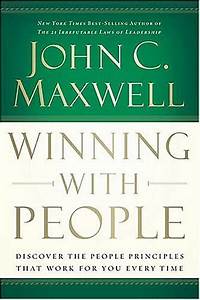
Winning with People

Winning with People

by John Maxwell


– It doesn’t matter what you work or do, if you can win with people then you will do well.

– People do not reach their full potential not because they are not talented but because they do not know how to work with people.

– We will see others from our own outlook – if we are critical, we will see everyone else as critical. If we are compassionate, we will see others as compassionate.

– Timing is important — when asking forgiveness, asking a favor or whatever it maybe.

– Selfishness will always hurt every relationship. We must put our personal agendas aside and build our relationships.

– Our attitudes and actions affect more than just the words that we say. Our tone of voice and how we act is more important than just the words.

– If our reaction is bigger than the action, the problem will become only bigger.

– The law of the elevator is that you lift people up or take them down. What other people say that you left them up or pull them down?

– There are 4 kinds of people in relationships:

1. Those to add value. Do all the good to all the people you can in every way that you can whenever you can – DL Moody Adding value to others requires that you give of yourself. Make it your goal to be a friend and add value to others. You’re more than the average guy and help everyone around you. Add value to everyone around you and to the job you have.

2. Some subtract things from life. We tolerate these people. Some people subtract from relationships by default because they do not add to the relationship. In relationships, receiving is easy but giving us more difficult.

3. Dividers. People that just want to cause some kind of division. If there’s someone good or better than them, they want to get rid of them.

4. Lifters. Those who lift up others around them.


– Caring for people should always come before confronting people.

– The people who learn the most are not necessarily the people who spend more time with smart people, they are people with a teachable attitude.

– Learn to smile, it is inviting.

– Remember that a person’s name is a sweet sound to their ears.

– Make other people feel important and do it sincerely.

– Believing the best in people brings out the best of those people.

– Everybody needs somebody. The question is not if we need others, but how much we need others.

– Reminding people who you are, your position or what you have done will never get you far in a friendship or any relationship.

– Being a victim and always feeling sorry for yourself will kill any friendship or relationship.


– Six ways of conflict resolution:

1. Confront a person only if you care for that person.

2. Meet with each other ASAP. Many times when there’s a problem, we try to avoid it or wait a long time to talk… this is a mistake. The more time you wait the bigger the problem gets. Meeting in person is always the best. Talking on the phone is possible if you cannot meet in person, but never do it via text or email.

3. Seek understanding, not necessarily agreement. Don’t give judgment before you understand. You cannot reach understanding if your focus is on yourself.

4. Outline the issue. Let the other person know how you feel about what is happening without attacking the person.

5. Encourage a response. Never finish a conversation without letting the other person respond.

6. Agree to an action plan. Working on an action plan shows you’re focusing on the future instead of the past or problems.


– Instead of putting people in their place, put yourself in their place.

– People are interested in the person that is interested in them.

– You can learn something from everyone if you will be teachable.

– Believing the best in people will usually bring the best out of people.

– Trust is the foundation of any relationship.

– Never let the situations be more important than your relationship.

– Do you see the big picture or just a bad picture?

– Do not make every situation a life or death situation.

– Be approachable to talk to.

– Be the kind of friend that others can trust.

– Relationships is like everything else, you get out of them what you invest in them.


– The People Principals in Relationships:

1. The gardening principle – all relationships need cultivation to grow.

2. The 101% principle – find the 1% that you agree on and give it your 100%. Most people look for the differences for whatever reason, but find what you can agree on, the common ground.

3. The patience principal – the journey with others is always slower than the journey alone. All good relationships take time.

4. The celebration principle – the real question is not how loyal we are when our friends fail, but how much we rejoice with them when they succeed.

5. The highroad principle – we go to another level by treating others better than they treat us. We can only take three routes: the low road where we treat others worse than they treat us; the middle toad where we treat others the same as they treat us; or the high road where we treat others better than they treat us.