
God-Confident Kids

God-Confident Kids: Claypool de Neve: 9780801094330: Amazon.com: Books

God-Confident Kids

By: Cyndie Claypool de Neve

  • How are you doing at sharing your love for the Lord with your children. Start sharing
  • Memorize verses with your kids, it will help them all throughout their lives.
  • Help your kids understand their emotions, don’t ignore them. God can be your (their) strength in weakness.
  • Demonstrate love and confession with your children. God forgives, and you should as well.
  • Ask your kids questions. Learn to listen without judging and responding so quickly. If you blow them off too many times, they will stop talking to you.
  • Having the last words does not give you more power or control. When your children get angry, let them know you will talk to them when they calm down, and then wait.
  • Parent out of faith instead of fear. Know that God loves your children more than you do. Instead of fearing they will fail or not make it, how about believing and trusting God with it. That doesn’t mean you don’t place rules and guidelines, but does mean must be less controlling and demanding if trust God in your parenting.
  • Put down your phone. Set rules for screen time and follow them — you too as a parent.
  • Sometimes, the traits that drive us crazy about our children are the same weaknesses we have in our own lives.
  • Learn to parent each of your children as individuals. God made each person uniquely different.
  • Our job is to raise our children to be all God wants them to be, not mini versions of what we want.
  • How you learn is not necessarily how your children learn.
  • Teach your children to pray, and pray with them and for them. God hears our prayers and wants His children to talk to Him. They need to know they can talk to God at any time and when no one else is around. God is always there.
  • Everyone has strengths; your job is to help your children find their strengths.
  • Praise more for their character and Christlikeness than their activities and performance.
  • Ask God for direction and learning in your own life.
  • Teach them to create time with the Lord. Life is easier when God is directing, so they need to hear from God.
  • Prayer eradicate fear. We live in a world in which there are school shootings, bullying and all kinds of problems. If we don’t learn to pray and teach our children to pray, we will stay fearful.
  • Teach your children to be thankful. It’s hard to be fearful when you are thankful.
  • If there are past family behaviors that you do not want repeated, realize that you are not destined to continue those patterns, they can be broken.
  • You need a good community to raise your children — your church’s youth group, friends, and family.
  • If there are people in your neighborhood or family that you do not trust, make sure your children are never alone with them.
  • Establish dating rules for your children.
  • Help your children make a list of what they are looking for and want in a future spouse.
  • Pray for your children’s future spouse and teach them to pray for them as well.
  • Maintain strict screening time and be very choosy with the games they play and things they watch.
  • Teach them that if they stand firm in the Lord, they can get through any problems.
  • We must be there for support, but their journey must be between them and God.
  • Kids need to know you love them before you correct, give advice, or talk to them.
Eat That Frog

Facebook

Eat That Frog

By: Brian Tracy

21 ways to stop procrastinating and get more things done faster: 

  1. Set the table — clarify what your objectives are.
  2. Plan every day in advance — think on paper. 
  3. Apply the 80/20 rule — remember that 20% of your activities will count for 80% of your results, so concentrate on that top 20%. 
  4. Consider the consequences — your most important tasks will have the greatest consequences on your life or work (positive or negative), concentrate on these above all. 
  5. Practice the ABCD method — before you begin working, organize them by value and priority so that you can start with the most important. 
  6. Focus on key result areas — find what will result in getting your work accomplished and work on those all day long. 
  7. Practice the law of forced efficiency — there’s never enough time to do everything but always enough time to do the most important things, so what are they? 
  8. Prepare thoroughly before you begin — proper prior preparation prevents poor performance. 
  9. Upgrade your skills — the more knowledgeable and better you become at your skills, the quicker you can get them accomplished. 
  10. Leverage your special talents — determine what you are or could be good at and throw your whole heart into doing those very well.
  11. Identify your key constraints — find what slows you down or stops you and determine to alleviate them. 
  12. Take it one oil barrel at a time — you can accomplish anything if you will take it one step at a time. 
  13. Put the pressure on yourself — imagine you had to leave town for a week and you had to finish certain things before you left. 
  14. Maximize your personal powers — identify your most productive mental and physical times in the day and structure your most important tasks at those times. 
  15. Motivate yourself into action — be your own cheerleader; always be optimistic; find the good in every situation. 
  16. Practice creative procrastination — since you can’t do everything, focus on what you can do and put the other things to the side. 
  17. Do the most difficult thing first — identify the hardest task and determine to stay at it until it is finished. 
  18. Slice and dice the task — break the large tasks into bite-sized pieces and do them one at a time until you finish. 
  19. Create large chunks of time — organize your day into chunks until you can finish with the task that needs to be accomplished. 
  20. Develop a sense of urgency — make a habit of getting things done and not stopping until you are finished. 
  21. Single-handle every task — set clear priorities and start on your tasks, working on them until they are finished. 

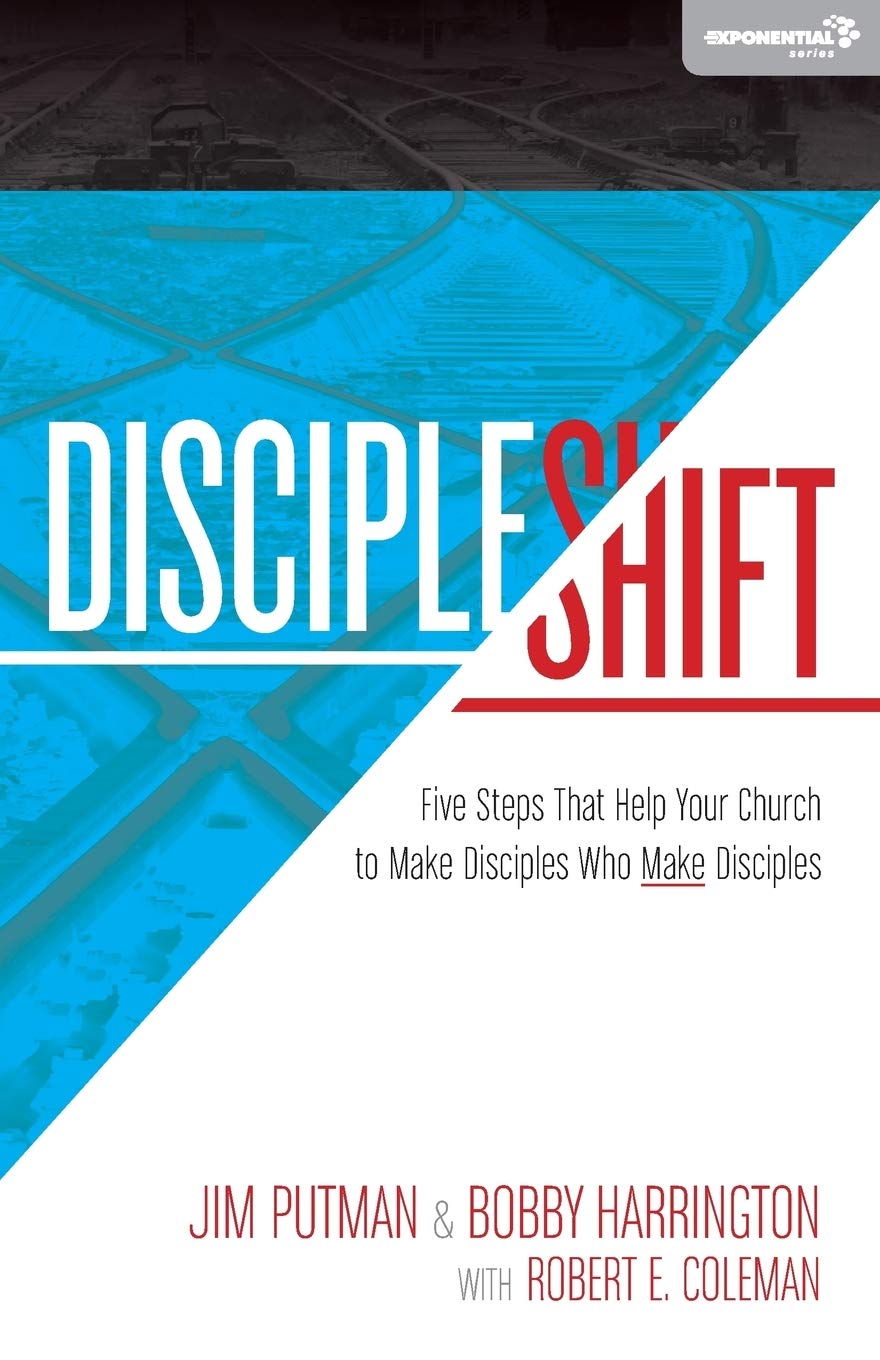
DiscipleShift

DiscpleShift

By: Jim Putman & Bobby Harrington with Robert E. Coleman

  • Intentional discipleship is a must in our churches. Most church growth strategies (books, conferences, etc.) have no discipleship involved.
  • You must determine what a disciple should look like so you have a goal to aim at.
  • Spiritual parents are not perfect, they are simply people striving to grow in their spiritual life.
  • A spiritual parent usually knows where a person is on their journey in life, where they should be, and how to get them there.
  • One just needs to be one step ahead of someone else in order to disciple them.
  • What does spiritual maturity look like? It is what we imagine the Lord would do if he was here upon the earth.
  • Our goal is to present others mature before Christ (Colossians 1:28).
  • Everyone is saved for a purpose.
  • A disciple should grow in four areas of life according to Ephesians:
      1. His relationship with God.
      2. His relationship with God‘s family, the church.
      3. His relationships at home.
      4. His relationship with the world.
  • As a disciple maker you should express your goal of making that person more mature and like Jesus.
  • As a disciple maker you must look at the man in the mirror (you).
  • We must be careful that we are not merely informing people, rather equipping them.
  • The pastor sets the tone for spiritual maturity, and the same goes in disciple making.
  • We are not to just shepherd others but create an environment where others are shepherding others.
  • How you act as a leader is determined by who you are, your character.
  • The pastor must be immersed in the Word of God, yielded to the Holy Spirit, and in relationship with others. The last is often forgotten because we don’t want to be transparent and accountable to others.
  • As a leader you must model or live out what you teach and preach. As the head goes, so does the body. 1 Corinthians 11:1
  • Ephesians 4:11-13 should be a key verse for a disciple maker. Your responsibility is not to simply to be a star on the team but to build up others who will lead and do the work.
  • Do you want to be the star athlete or coach? You must teach and release others to be the boots on the ground for the work.
  • We are trying to make disciples, not just converts.
  • A pastor must be a leader developer. Many of the leaders are already in the church, they are just overlooked or undeveloped.
  • Most pastors are too busy in the church doing the work themselves, so they do not have time to develop other leaders.
  • The difference between a high school coach and a college coach is that a high school coach must develop players he has within his team; a college coach travels to find and recruit/develop players to play on his team. Most pastors play the role of a college coach by recruiting from the outside instead of developing those from the inside.
  • What you celebrate is what your people will aspire to. Many churches celebrate attendance, buildings, offerings, etc., but if you will celebrate how many people are getting connected into discipleship, you will see the fruit from that.
  • A pastor must not only cast the vision for the church, but constantly guard or defend that vision.
  • As a pastor, you cannot disciple everyone yourself so you must teach others to disciple.
  • Even though Jesus spoke to crowds of thousands, that was not the focus of his discipling. His focus was with his disciples, and that is clear all throughout the gospels.
  • We must move discipleship from being an institutional program to a personalized habit.
  • We should teach and expect for disciples to continue the process and disciple others. Jesus taught his disciples to disciple others. A mature disciple is one that disciples others.
  • Every disciple has the capability and responsibility to minister to others.
  • Ask yourself how every ministry in your church connects people to discipleship.
  • You must understand the scorecard in discipleship. The point comes when they are deployed to go out and disciple others – not start a new church, but finish discipleship themselves and begin discipling another.
  • It is more important to evaluate how many people go out instead of how many people show up.
  • A pastor should not just be a teacher but a coach.
  • We must transfer our scorecards from attracting and gathering to discipling and releasing.
  • You should constantly access, correct course, and encourage.
  • The shift must be from gathering a crowd to deploying disciple makers who will disciple others.

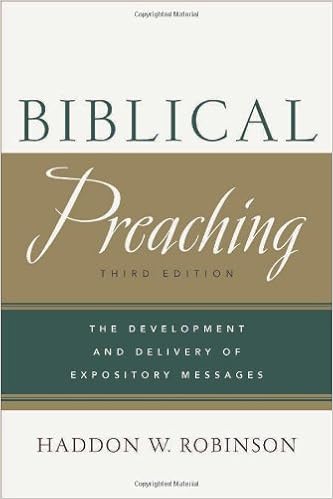
Biblical Preaching

Biblical Preaching: The Development and Delivery of Expository Messages:  Robinson, Haddon W.: 9780801049125: Amazon.com: Books

Biblical Preaching

By: Haddon W. Robinson

  • We cannot separate ourselves from the Scripture.
  • Preaching is truth poured through personality – Philips Brooks
  • Preaching should develop the preacher into a mature Christian.
  • The Bible is the supreme preacher to the preacher – PT Forsyth
  • Many preachers fail as Christians before they fail as preachers.
  • Preaching comes alive when the disciplined mind and loving heart are going to the Holy Spirit.
  • We must learn to listen to God before we speak for God.
  • As we study the Scriptures, we must understand first of all what God is saying in this portion of Scripture. We then must understand what God wants to change in us because of the Scripture. Lastly we must understand what God wants to use us to teach the listeners through this passage.
  • We must know the people as we learn the Scriptures. Our Lord spoke to the people and their needs in that day. Each letter in the Bible was addressed in a different way because the people were dealing with different things – the Philippians from the Corinthian‘s, etc.
  • Sermons do not fail because they have too many ideas but because they have unrelated ideas.
  • Every Scripture should have a theme.
  • You are not ready to preach until you can condense the message down to one pregnant sentence.
  • We must be careful to not let theological jargon stand in the way of being clear when we preach.
  • If you do not apply the Scriptures to peoples lives, you cannot expect them to do it.
  • Our listeners need both the truth to believe and the ways to apply it.
  • Ask yourself why you are preaching that sermon. A sermon without a purpose is meaningless.
  • A sermon with purpose is what differentiates it from being a mere essay.
  • A sermon is not to be like shooting a firecracker that just makes a noise, it is to be like shooting a gun in which the hunter looks to see his target hit.
  • Write down in a statement what you want the hearers to do as a result of what you preached.
  • People need to be reminded just as much as they need to be informed.
  • Jesus was such a good storyteller that many times one did not even realize when the theological truths were being placed in the story.
  • There are three kinds of preachers: those that you cannot listen to, those that you can listen to, and those that you must listen to. In the introduction, the congregation will decide which one you are.

Ego is the Enemy

Ego is the Enemy

by Ryan Holiday


– Your worst enemy is that which lives inside of you, your ego.

– Ego is the sense of superiority that goes beyond ability or talent.

– Some learn humility and some choose ego.

– Impressing people is much different from being impressive.

– Having a position of authority is much different from being in authority.

– Are you being selfish or selfless?

– To become great and stay great, athletes and professionals know that they must have a coach. You have to keep learning to become better and stay better.

– It requires humility to being an eternal student. You can’t learn anything if you think you know everything.

– Most people forget about those that cleared the way for them.

– Arrogance is a lie because it makes you think that you are better than you really are.

– You can’t make a reputation on what you are going to do.

– We think if we are humble, we’ll finish last and be walked all over.

– Ego makes one think they are better and the rules don’t apply to you.

– Genghis Khan was one of the greatest warriors, and much was because he learned from everyone and therefore became better.

– Be a student; every situation has a lesson to teach you.

– Amateurs stays the same but a professional learns and becomes better.

– It’s not about beating the other guy but being the best you possible.

– Ego says you need everything and there’s no stop to what you’ll do or how much you should get.

– Ego is our own worst enemy, it hurts us and those around us.

– Ego needs honor, recognition and titles; confidence can wait and go without.

– Ego tells us that meaning comes from activity.

– We say we have to stand up for ourselves, but do we really need to do that?

– The bigger the ego, the harder you’ll fall.

– Ego feels that it needs to be in control and has to measure up to what everyone thinks you are, but it end sup destroying.

– Ego is a haze that disconnects us from reality. It makes us think we know everything so there’s no room for growth.

– Every day you will face failure, success or inspiration… and ego is almost always present.

– We should want to be better, but not at the price of being motivated by ego.

– Ego makes you think that being successful in one area makes you successful in every area, so everything you touch turns into gold. But this mindset will be your ruin.

Dangerous Calling

Image result for Dangerous Calling


Dangerous Calling

By Jack Tripp


We get too comfortable where we are, we become apathetic, we minister to people but yet do not seek to be ministered to… therefore we are in a dangerous area in life and ministry.

Most pastors are angry, have marriage problems, have personal struggles and a much more.

Although we can see other people’s problems, we become blind to our own. Our ministries are fueled by our personal devotion to the Lord.

It is my worship that can lead to other people worshiping. It is my sense of need to my Savior that can lead other people to fill their sense of need for the Savior. It is my joy and identity in Christ that can help others find theirs.

If I am not looking for joy in the Gospel, I will try to fill it in another gospel.

If my relationship is not right vertically, I will start seeking out things that can fill me horizontally.

We must look to God. We must listen to others. We must ignore the urge to isolate ourselves.

Having fantasies of doing something else or working in another ministry will lead to discontentment and bring on very big problems.

Just as a man who takes care of roses but never takes the time to enjoy them, so is a person that is so busy in the ministry but never stops and enjoys what is around him – how God is blessing, the good things going on.

We are fooled when we think that spiritual maturity is simply knowing more… It is actually applying more, not just knowing more.

Because of our vast knowledge of the Word, we go to her desk to get new sermons, but few times do we open it to really learn.

Knowing so much Scripture brings us to a knowledge/understanding, but very few times brings us to our knees.
Dangerous Calling Personal notes by Jeffrey Bush

Self-righteous people tend to be critical.

Our knowledge makes us think so much that we preach all these rules for people… but if it’s about rules, then Jesus came, died and rose again in vain.

We must not judge ourselves or any pastor in the ministry by the exterior, we must dig deep and find out if he pastors his own home, how his walk with the Lord is, if he is critical and judgmental, if he is loving, etc.

Be careful how we define successful ministry – if we think that a graduate with multiple diplomas will be successful, we could be totally wrong.

Maturity is about a relationship with God. Sin blinds 10 out of 10 people.

Spiritual blindness is different than physical blindness – spiritual blindness tricks the person by thinking he/she can really see.

Spiritual blindness is so deceptive that we literally need daily intervention. We must establish relationships that can confront us. Be open and except criticism.

A pastor’s wife needs help, mentoring and accountability as well.

Do not let the busyness of ministry cause your marriage to fail.

You should come to the point where you know that you need other people in your life.

You cannot think that your life is fine just because ministry appears good. You cannot be deceived that marriage is well just because your ministry looks good.

It is very hard for a pastor to stay accountable and admit when he is wrong or in sin.

Many that have opened up and admitted struggles or sin failure have been hurt and decide to never open up or tell people their problems again. Most pastors live in isolation and silence, thinking this is the most secure and best way – but this is false!

Why are there so many pastors who struggle in their families? Why are there so many pastors that have problems with other staff members? Why is there so much depression amongst pastors? Why are there so many difficulties in the lives of ministers? The problems are personal; it is a war in the heart.

Dangerous Calling Personal notes by Jeffrey Bush

Problems are so great because there is a war in the heart – pride, wanting to be something, wanting to see results and desiring to measure up.

We preach to so many other people and many times forget to preach to our own selves.

We must fight to keep the gospel first.

So, in the war, are we good soldiers?

We are made to worship, but we must remember that worship is not an activity rather an identity.

What do our words and actions reveal that our priorities are?

God is our refuge and strength – but many pastors run to substance, sex, activities, friends, and other things instead of running to God when they have problems.

There’s a great danger of losing the awe and forgetting what God has done. If you can’t get your excitement back, maybe you are doing what you should not be doing.

Are we so busy feeding others that we don’t have time to feed ourselves? We cannot lead others to do what we ourselves are not doing.

We must be careful that our Christianity does not become a system of what we do instead of a relationship.

I will never measure up; Christ never saved me because of who I am or what I can do. I must remember to look and depend on Christ.

We have to learn to not look for other people’s approval, we minister to serve our Savior.

We must put ourselves under Biblical council. Sadly most pastors do not have a pastor, meaning that no one tells them when they are wrong, calls them out when prideful, helps them grow, etc.

Dangerous Calling Personal notes by Jeffrey Bush

7 Laws of the Teacher

Image result for seven laws of teaching howard hendricks

7 Laws of the Teacher

by Howard Hendricks


    • Law of Teacher
  • Teacher is coach and doesn’t play but teaches students to play
  • Teaching is both a science and an art
  • Knowledge is proud because knows so much, wisdom is humble because knows so little
    • Law of Education
  • Key to education is not what you do but what the students do
  • If you want to change someone, change their thinking, not their appearance.
  • In parable of sower, only one difference: the sower is the same, the seed is the same, only the soil is different – its what people hear and do.
  • You can not prohibit without providing – give opportunities
    • Law of Activity
  • Maximum learning is a result of maximum invovlement
  • Teaching is not an end but a means to an end
  • I hear & forget; I see and remember; I do and understand
    • You remember up to 10% of what you hear
    • You remember up to 50% of what you hear and see
    • You remember up to 90% of what you hear, see and do.
    • Law of Communication
  • Test of communication is not what I’m feeling and saying, but what they are feeling and understanding
  • Purpose of communication is not to impress, its to imporat; not to simply convince, its to change.
  • Provide direction, not dictatorship
  • You test your teaching by seeing what student is doing.
    • Law of Heart
  • Teaching that impacts is not head to head, but heart to heart.
    • Law of Encouragement
  • Someone’s M-Q (motivation-Q) is more important than their I-Q
  • As a teacher, I can only work on the outside of them, I cannot work on the inside of them – so I must motivate them.
  • Motivation is very important – many people do not do something just because they are not motivated. We can guilt people into things for a while and they do what is asked, but after a while, they will only do what they are motivated to do.
  • When was the last time you challenged someone?
  • Simply telling the student you believe in them
  • You motivate a person when you
  • Create a Need – everyone has needs, maybe just not aware of them, so the teacher must show them.
  • By developing responsibility with accountability
    • more you put into something, the more you appreciate it
    • The US spends millions of dollars on an airplane and puts it into a young person to fly it – and when young person comes to church we don’t let them do anything.
  • By structuring experience – what is process of training people:
    • Telling stage – need to hear it
    • Showing stage – need to see it
    • Doing stage – need to hear, see and do it, but under supervision.
  • Everyone can be motivated – but you first must be motivated yourself
    • Law of Readiness
  • When student and teacher are readily prepared, more will be done.
  • Learning is most effective when the student is adequately prepared
  • If you come into the class asking about their lives, you will get more out of them contrary to just teaching


[gview file=”http://missions.tips/wp-content/uploads/2020/03/7-Laws-of-Teacher.docx”]

Ideas for Church Plant (Gardner) 2 of 2


  1. Train at least one usher to stand in door/ listen/ help control service/welcome people
  2. Use a minimum of 2 ushers. Choose a spot during break
  3. Print welcome on door or walk have wet down before each service
  4. Have ushers ready to take out chairs
  5. Are you using visitor cards?
  6. Get information by giving away Bibles but need info
  7. Get away prized based on faithful attendance
  8. In Sunday school teach how to read the Bible Sword drill/ book of the Bible
  9. Break up service/Sunday school in short parts to not let them get bored
  10. Gospel tracts need to be available so that can take them
  11. Need invitation read for next service to anyone & give them.
  12. Some sort of bulletin. Children lesson to take home. Drawing/life truth
  13. 8 under 12, 6 teens,    39
  14. Back ground music playing before, after, and between services
  15. Practice with usher, helping them get to seat
  16. Set up the nursery- children’s area
  17. Ushers gives those that leave early material
  18. Train people to sit with visitors & help them find verses in the Bible
  19. Do other churches have tea or snack for children
  20. Make Sunday school and everything like TV program, grab interest, make classes, interest to study
  21. Install ceiling fans
  22. Work on venting for air flow if possible. Consider where you have crowd
  23. Shorter break – so they don’t leave
  24. Sing some songs so they all sing. Spread out those that they know
  25. Due to outside noise use PA and set speaker up high – Hand held mic. Background noise ruining everything
  26. More light over and towards pulpit
  27. Have some sort of greeting time -10 seconds- they love to greet apparently
  28. Write Baptism tract with graphics explaining for them to give out
  29. Static web page set up to mobile they can get to
  30. Set up to text announcement to all each week
  31. Set up Facebook page from web
  32. Put all video and audio lings on web page
  33. Speaker outside for nosy people
  34. As soon as possible Sunday school class for young adults. You write the lesson. Teach in teachers and workers meeting. Sunday school divided.
  35. Divide Sunday school time.  Never a segment longer than 12 min
  36. Have people stand to sing
  37. Put up a calendar of church events /social
  38. Get giving envelops
  39. Plan charter organizational service in the next year
  40. Visitor cards or something. Must learn who came
  41. Decision cards
  42. Train councilors
  43. Work all week- practicing what each will do. They have to be there. Prepare with them
  44. Explain every move. Even how to use a song sheet- until all learn
  45. Order of service given to all who will participate including ushers
  46. Explain all Bible & reference words at all times
  47. Think of how a believer first time hears everything
  48. Remember the biggest enemy.
  49. Have practice sessions or everything. Ushers, Music, choir, specials, Bible verses, welcome, helping others find things in their Bibles. Sundays we run the plays we practice during the week. Get as many people as possible practicing each thing. Get subs ready
  50. Have Bible reading in service. Teach them to read. They need to practice his reading. Give attentions to reading
  51. Explain silent prayer. Praying is everything. So I learn what is helping.
  52. Always make sure you can look everyone in the eyes
  53. Get sign up sheet for disciple. Set up a time for all new believers to tell
  54. Have each of your guys look for 3 guys they can teach to do all they can do. Their job- find others train them and then move up.
  55. 6 circling fans
  56. Find jobs for anyone that comes semi-regular. Don’t worry if they miss.