
Spirit-Controlled Temperament

By Tim LaHaye (summary by Jeffrey Bush)

  • Temperaments are the inborn traits that affect all behavior. They are based on
    hereditary factors, and six people contribute to these: the two parents and four
    grandparents.
  • Character is the real you. This is the hidden person of the heart – 1 Peter 3:4.
    Sometimes referred to as the soul of a person.
  • Personality is the outward expression of a person, which may or may not be the
    expression of a person‘s character. The place to change someone’s behavior is on
    the inside, not the outside.
  • Temperament can be changed through the Holy Spirit – 2 Corinthians 5:17
  • You can use your background as an excuse for your behavior only until you accept
    Jesus Christ. At the point of salvation, you have the power to change your conduct.
  • There are four different types of temperaments: sanguine, choleric, melancholic, and
    phlegmatic.
  • Each temperament has its strengths and its weaknesses. Not one is better than the
    other.
  • The sanguine is a people-person, and enjoys talking and being with others. Simon
    Peter from the Bible was a sanguine. Most salesman, preachers, and actors are
    sanguine. They are never moderate about anything.
  • The choleric is a hot, quickly-reactive temperament. The apostle Paul was a choleric.
  • The melancholic is analytical and perfectionist type. He is a faithful friend, but does
    not make friends easily. Most musicians, theologians, scientist, engineers, and artist
    are melancholy. Moses was a melancholic.
  • The phlegmatic has a high boiling point and rarely explodes in laughter or anger.
    They can easily make everyone laugh while keeping a straight face. They are masters
    of things that take patience and detail. Abraham is a good example of a phlegmatic.
  • Rarely is someone composed of only one temperament. Usually, they have a
    predominant and secondary temperament, and possibly more.
  • Abraham went from being timid to a man known for his trust in the Lord. In God,
    personalities and lives are changed.
  • Because temperament is based on the natural man, it’s easier to diagnose the
    temperament of a lost person or carnal Christian than that of a spiritual person.
  • The temperament with the greatest strengths and potential also have the greatest
    potential of weaknesses.
  • Faith in Christ lifts a person above their temperament.
  • Selfishness is a basic weakness of every one of the temperaments.
  • Our strengths and weaknesses prevail by our choice.
  • We maximize our strength and minimize our weaknesses through the indwelling of
    the Holy Spirit.
  • Any spirit-filled Cristian will have the strengths of Galatians 5:22–23, without
    weaknesses.
  • The greatest goal of a Christian is to be filled with the Holy Spirit.

Clean

By Douglas Weiss (summary by Jeffrey Bush)

  • The plan of the enemy (devil) is to seduce then reduce. He seduces you through
    sexual thoughts and then reduces you for participating.
  • Your sexual body parts do not belong to you. They first belong to God, then to your
    wife, and then only use for you is to use the restroom.
  • Love and lust are polar opposite; one cannot exist while the other is present.
  • Treat women as God teaches — as mothers or sisters.
  • Sexually clean men make better husbands, dads, and men as a whole.
  • What you love, you protect. This is the reason many men protect their sexual sins
    instead of confessing and getting clean.
  • Many men travel the road to trouble and think they will not have to pay the tolls, but
    they are wrong.
  • Principles to keep you off the road to trouble:
  1. Fear God — Proverbs 8:13
  2. Be honest — past and present
  3. Talk to your wife — your wife wants to be with you forever, and is a great
    person to talk to
  4. Don’t believe in a secret — Luke 12:2-3; Rev 2:23. There’s no such thing
    as a secret.
  5. Imagine the worst — list all the people your sin will affect. Imagine how
    they will feel, and imagine the consequences you will receive from the sin.
    Knowing the impact of your actions can help you stay away from the road
    to trouble.
  6. Exit and entrance signs — if you get involved in sexual sins, you are
    exiting from your wife, exiting from God’s plan for your life, and from
    God’s best for your life. When you’re tempted, imagine an exit sign above
    that girl’s head. Your wife, and only your wife, is the only entrance sign to
    God’s blessings for you. She is your only entrance for your romantic and
    sexual expressions.
  7. Praise and touch — are you praising your wife, and are you touching her
    in non sexual ways?
  8. Respect — men need respect from their wives, and if you’re respect
    needs are being met outside of your marriage, you need to get help and
    not stay on the road to trouble.
  9. Daily declaration — there’s a need to make daily commitments to stay off
    the road to trouble. James 1:14.
  10. Prayer — ask God’s strength and help.
  11. Hero to one woman — you can’t be a hero to every woman, but you can
    to your wife. Let God be the hero to others.

Anger & Stress Management God’s Way

By Wayne A. Mack (summary by Jeffrey Bush)

  • The words anger and stressed are common, every day words amongst about
    everyone. Both are destructive.
  • According to Ephesians 4:31, we are commanded to put away all wrath and anger.
  • We often become angry because we feel our rights have been denied.
  • Our anger is wrong when we let it control us – Proverb 16:32; 25:28
  • When we say we were so angry we couldn’t help it, or we couldn’t control ourselves,
    we are just excusing our behavior.
  • Our anger is wrong when we return evil for evil or attack the other person.
  • Proverbs 29:11 and 22 says a fool always loses his temper.
  • Our anger is wrong when we hurt or attack a substitute – taking it out on someone
    else.
  • We should learn that there are some things that should be overlooked instead of
    pointed out. Love covers a multitude of offenses.
  • Your spouse is a fellow brother or sister in Christ, and you are to follow the biblical
    commands for reconciliation.
  • Scripture commands us to take care of today’s problems, for tomorrow will hold its
    own — Eph. 4:26.
  • The Bible teaches that anger rests in the bosom of fools (Ecclesiastes 7:9).
  • As Christians, we have the power to control our anger. When we fail to do so, it is by
    choice.
  • The bottom line for our anger is that we have an agenda and someone or something
    caused it not to go our way.
  • Venting your anger is not the answer because God warns against it – Proverbs 16:32;
    29:11; Ephesians 4:26-27, 31.
  • We can learn to put off the deeds of the flesh and be filled with the Spirit. We can
    learn to control our anger and not be controlled by our anger.
  • To win the battle over the stresses in life, we must learn to give God thanks in
    everything and for everything. 1 Thessalonians 5:18; Ephesians 5:20.
  • To continually think upon what God has given and done in your life will help you
    avoid giving up.
  • To win the battle over the stresses in life, we should seek to discover God‘s
    purposes for these specific areas in our life.
  • We don’t always know what God is up to, but we do know many of His promises,
    how He wants our good, and how He works all things out for our good.
  • God uses things in our lives to mature and complete us. Knowing this will help as
    you respond to the stresses in life.
  • To win the battle over the stresses in life, you must determine what God wants you to
    do in the midst of those stressful situations.

The Laws of Lifetime Growth

By Dan Sullivan (summary by Jeffrey Bush)

  1. Always make your future bigger than your past. Allow what you know to
    push you to bigger achievements.
  2. Always make your learning greater than your experience. Experience does
    not mean growth. You don’t get to choose all of your experiences, but you
    can choose to learn from them.
  3. Always make your contribution bigger than your reward. It’s the
    contributions that make us grow, not the rewards.
  4. Always make your performance bigger than your applause. Applause can
    be intoxicating, causing you to build your life around what others think. The
    best performers are those that seek to improve and grow. Applause should
    be a byproduct, but never the goal itself.
  5. Always make your gratitude greater than your success.
  6. Always make your enjoyment greater than your effort.
  7. Always make your cooperation greater than your status.
  8. Always make your confidence greater than your comfort.
  9. Always make your purpose greater than your money.
  10. Always make your questions bigger than your answers.

The Freedom of Self-Forgetfulness

By Timothy Keller (summary by Jeffrey Bush)

  • The ego often hurts because it is drawing attention to itself.
  • We say our feelings are hurt, but our feelings cannot be hurt, it is our ego that is hurt.
  • Your identity and self-worth is not in what others think of you but rather what the
    Lord says about you.
  • In 1 Timothy 1:15, Paul said he was chief amongst sinners. Not that he used to be,
    but that he was. We are not used to someone with such confidence, as Paul, saying
    they are unworthy. His ego was not drawing attention to himself, he is not paying
    attention to himself anymore.
  • Gospel humility is not thinking more of yourself, or less of yourself, it is thinking of
    yourself less.
  • A true gospel person is not a self loving person or a self hating person, rather a
    gospel humble person. And a true gospel humble person is a self forgetting person.

The Diligence of Discipleship

By John A. Copper (summary by Jeffrey Bush)

Three reasons why discipleship is needed today:

  1. Christ commanded it – Matthew 28:18–20
  2. We live in a world of Christians that are biblically illiterate — Eph 4:14
  3. Worldliness in the church – 2 Timothy 3:1-5; Colossians 2:8

The life of a Christian is to glorify God – 1 Corinthians 10:31

The five steps of diligence in discipleship:

  1. Renew the mind — Romans 12:1-2
  2. Take captive the thoughts – 2 Corinthians 10:5
  3. Not grieve the Holy Spirit of God — Ephesians 4:29-32
  4. Everything we do should glorify God — 1 Cor 10:31; 1 Peter 4-10-11;
    Col 3:15-16
  5. A life worthy of the Gospel. Your life should look like Jesus to a lost
    world — Philip 1:27; 1 John 2;15; Col 1:9-10; 1 Thessalonians 2:11-12

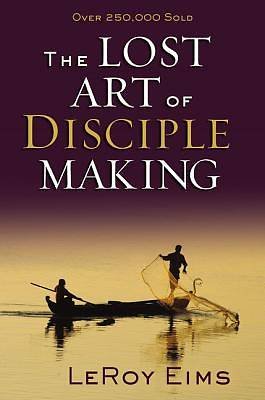
The Lost Art of Disciple Making

By LeRoy Eims (summary by Jeffrey Bush)

  • Every baby will grow if you provide the food and care they need, and the same goes
    with a new Christian.
  • The pastor does not have to be the only spiritually qualified person in the church; in
    fact, he should definitely not be the only one.
  • God has given leaders in the church to help the members build the body of Christ.
    Everyone can and should be involved in ministry. Ephesians 4:11–12
  • Multiplying disciples is biblical, and it works.
  • When you start spending time with another person for the purpose of spiritual
    growth, something happens in your life, as well as in the life of the other person.
  • Jesus spent all night in prayer before choosing His disciples. He did not go out
    hastily, and choose the first volunteers He saw.
  • To learn to lead one must learn to serve.
  • Elijah never urged Elisha to go with him or continue with him in the work.
    Contrariwise, he told him Elisha should leave. Every disciple must count the cost.
  • Every Pastor has within his congregation men that are merely spectators, but there
    are some willing to pay the cost to spend time with him and be involved in the
    ministry.
  • First John 3:16 teaches that our Lord laid down His life for us, and we should do so
    for others. It will cost you something to invest in the lives of others.
  • The training Jesus did with the disciples was on-the-job training.
  • Three things that are a must if you are going to disciple another person:
  1. You must know what you want them to know.
  2. You must have a clear picture of what you want them to become. What
    elements of Christian character they need.
  3. You must have a vivid vision of you what you want them to do and plan to
    help them accomplish it.
  • Do not overlook the power of personal example. The disciples knew how to act
    because they saw Jesus. The same could be said with the early Christians watching
    the apostles.
  • To get people involved in discipleship, they need three things:
  1. Motivated to become disciples
  2. Regular fellowship with Jesus
  3. Witness to the Lord.
  • People, not angels, are God’s means to witness to a lost world.
  • Spiritually mature people that are prepared to make other disciples is a rare thing
    today.
  • The basic needs of a growing Christian are
  1. Protection (from false cults, sins, lies of the devil)
  2. Fellowship (other people to befriend and help us)
  3. Food (regular food from the Word – teach them the Word and teach them
    how to study the Word and feed themselves)
  4. Training (teaching the how-to’s).
  • Help a growing disciple to have desire and consistency.
  • To train and develop workers, one needs to teach:
  1. Conviction — the why’s of doing what they do
  2. Perspective — see the world beyond themself
  3. Excellence — all he does needs to be done in the right manner because it’s
    for the Lord
  4. Depth of character — 1 Cor 4:20.
  5. Continuance of growth — 1 John 3:20
  • 1 Thessalonians 1:5 — they saw the example of Paul, not just heard his teaching.
  • For your life to transmit effectively to another, two things are required: availability and
    transparency.
  • No one can know you unless you open yourself to them.
  • To see a sermon is more affective than hearing one.
  • You must concentrate on a few.

Pray First


By Chris Hodges (summary by Jeffrey Bush)

  • Prayer is exchanging your best for God’s best.
  • It’s not “all’s well that ends well,” rather “all’s well that begins well.” Begin with
    prayer!
  • Too many times we make prayer more difficult than it needs to be.
  • Prayer is about a relationship, not a religion.
  • Before you act on or do anything, pray first. Pray before you go and as you go.
  • Having a prayer place is a good habit. It doesn’t matter if it’s at your home, office, a
    park, or elsewhere, the emphasis is you are with God in your heart.
  • Jesus seemed to favor praying to His Father outside.
  • The greatest force on earth is not from a government or weapon but God working
    and answering prayers.
  • God honors bold prayers because bold prayers honor God.
  • Why put your hope in the provision when you can put your hope in the Provider.
  • Prayer does not fit us for the greater work, prayer is the greater work. — Oswald
    Chambers
  • Prayer is relational and spiritual. It unleashes God’s power to work in churches,
    organizations, nations, and individuals.