Lasting Impact

By Carey Nieuwhof (summary by Jeffrey Bush)

  • The world is better when the church is at its best.
  • Growth is healthy. But don’t go to the extreme thinking growth means you’re doing
    everything right, or the lack of growth means you’re doing everything wrong.
  • The greatest enemy of your future success is actually your current success.
  • Many leaders overthink and underact.
  • Activity does not equal accomplishment.
  • Focus on who you want to reach, not who you want to keep.
  • If you have a church that engages teenagers, it will most likely engage the church
    people as well. If your own teenagers do not want to grow, you cannot expect the
    church to want to grow.
  • If you are going to grow, you have to give it to your team leaders that will lead.
  • Identify your biggest obstacle to growth, and make a six-month plan to work on it.
  • Assigned responsibilities and accountability, then meet often to evaluate progress.
  • People admire your strengths, but they identify with your weaknesses.
  • Christian leaders can be tempted to depend more on substance than on God (food,
    entertainment, overworking, etc.).
  • In some circles, it is popular to brag about not getting enough sleep, but a leader
    needs 7–8 hours of sleep, as well as naps and downtime.
  • No one is impressed with your 20 hour workdays, not even God.
  • When it comes to trusting leadership, most people start out with suspicion, instead
    of trust. Trust is gained slowly and lost instantly.
  • Most people will not change because they like the status quo.
  • Our world is changing; history belongs to the innovators, those willing to change and
    make better.
  • You can embrace the past for improvement without erasing the past.
  • You can learn from the past without living in the past.
  • If you don’t become part of the solution, you will become part of the problem.
  • Those that are going to last the future, not only see the benefit of changing, but they
    will learn how to navigate through changes.

God Owns My Business

By Stanley Tam (summary by Jeffrey Bush)

This is an incredible biography of a successful businessman with deep faith,
hard work, and strong convictions. He wanted God to be his senior partner in
business, so he asked a lawyer to draw up the paperwork. One lawyer told him
he couldn’t do it, and the second said the same. Finally, because of Stanley’s
persistence, the lawyer drew up papers that said God would own 51% of his
business. This meant 51% of all profit went to God’s work overseas and
different Christian organizations.

Stanley was sensitive to God‘s working in his life. On more than one occasion he
went back to apologize to someone or pay something he owed.

He established five guideposts for his life:

  1. To thank God for every adverse event.
  2. Rather hold a bolt of lightning in my hand than to speak against a
    brother.
  3. To pay any price in order to be obedient to the Holy Spirit.
  4. To administer love and never govern in anger.
  5. To pay three compliments every day.

Developing The Leaders Around You

By John C Maxwell (summary by Jeffrey Bush)

  • A leader sees the big picture, and understands he needs help from others.
  • Great leaders produce other leaders.
  • Grow a leader, and you will grow an organization.
  • Followers tell you what you want to hear, leaders tell you what you need to hear.
  • It takes a leader to know a leader, to grow a leader, and to show a leader. But it also
    takes a lead to attract another leader.
  • There’s no success without a successor.
  • Most people only produce when they feel like it, but leaders produce even when they
    don’t feel like it.
  • The more people you lead, the more people you need.
  • Leaders are perpetual learners.
  • The first thing to look for in a potential leader is character flaws. Everyone has
    weaknesses, but character is essential.
  • A great leader will help others have confidence in themselves.
  • How many leader must be able to to communicate effectively.
  • To nurture potential leaders, they need the BEST from you:
    B — believe in them
    E — encourages them
    S — share with them
    T — trust them
  • To nurture potential leaders, they must see leadership modeled.
  • People must trust you before they will follow you.
  • Time is valuable, and time spent with a potential leader is an investment.
  • Good leaders give encouragement.
  • A good leader will show each individual their significance as part of the big picture.
  • When you nurture those around you, everyone wins.
  • Good leaders are good listeners.
  • How you select people is more important than how you manage people.
  • Respect must be won. Respect comes from trust, care, and the ability to make hard
    decisions.

Who Moved My Cheese Book Review By Jeff Bush

By Spencer Johnson 

This book is a short, must-read book. It is on my yearly list, and I highly recommend it to you. It is a short story of four of four mice: Sniff, Scurry, Hem, and Haw. The four mice live in the maze, and are accustomed to the cheese always given to them. When the cheese is one day is no longer there (cheese being a metaphor for anything in life that one desires), two of the mice go running off looking for more. Two of the mice stay and begin to picket, get mad, and live in shock that someone has taken their cheese. The big lessons, for me, were:

  1. Expect change because it will happen whether one likes it or asks for it. 
  2. When the “cheese” is moved, you have a decision to make: get mad and let it ruin your day and life, or move on to find more cheese.
  3. Don’t allow entitlement to dictate your life.

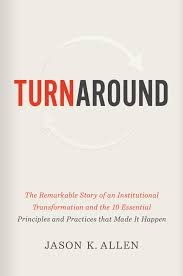
Turnaround Book Review by Jeff Bush

By Jason K. Allen 

  • To be an effective leader, you probably need to do less, not more. 
  • Leadership boils down to one word: stewardship. 
  • A few principles that do not change in leadership: 
  1. Lead where you are. The most important job you have is the one that you have right now. Leadership is not just for your future, it is in your present. In leadership, you must lead in your present area. Locationally, your job right now is more important than your job in the future. 
  1. The Providence of God. 2+2 can be 7 when God is with you.
  1. Credibility follows you. When a politician’s past is brought up, his credibility is doubted and it could be his end. It takes years to accumulate and take seconds to end. 
  1. It takes a Team. 
  • You must know what you believe, and why you exist. You must know your purpose.
  • A mission statement help you as an organization and those you serve.
  • The mission statement clarifies what you do and why you do it. It not only clarifies what you do, but it also clarifies what you do not do.
  • Midwestern seminary has the vision statement “For the church.” It clarifies everything they do.
  • A vision statement needs to be no longer than one sentence. It is better to have no vision statement than an unclear one.
  • Vision leads, so communicate it regularly.
  • Vision rusts over time, so we need to hear it over and over again.
  • The leader might carry the vision, but the vision will also carry the leader. 
  • Trust is needed for leadership.
  • Trust requires authenticity, logic, and empathy.
  • Trust is slowly learned, but quickly lost. It takes off in a sprint, but comes back in a crawl.
  • Every hire matters. Never casually hire someone.
  • When you’re going to hire, start with the C’s:
      1. Character
      2. Calling — are they doing this for the money? 
      3. Conviction
      4. Culture – do they align with your organization’s culture?
      5. Competency — Will they strengthen the team or debilitate it?
      6. Capabilities – do they add value?
  • Believe your team, and believe in your team. 
  • Keep short accounts with your team.
  • At the end of every meeting, it should be clear who is going to do what and when.
  • Insufficient accountability results in a lack of progress.

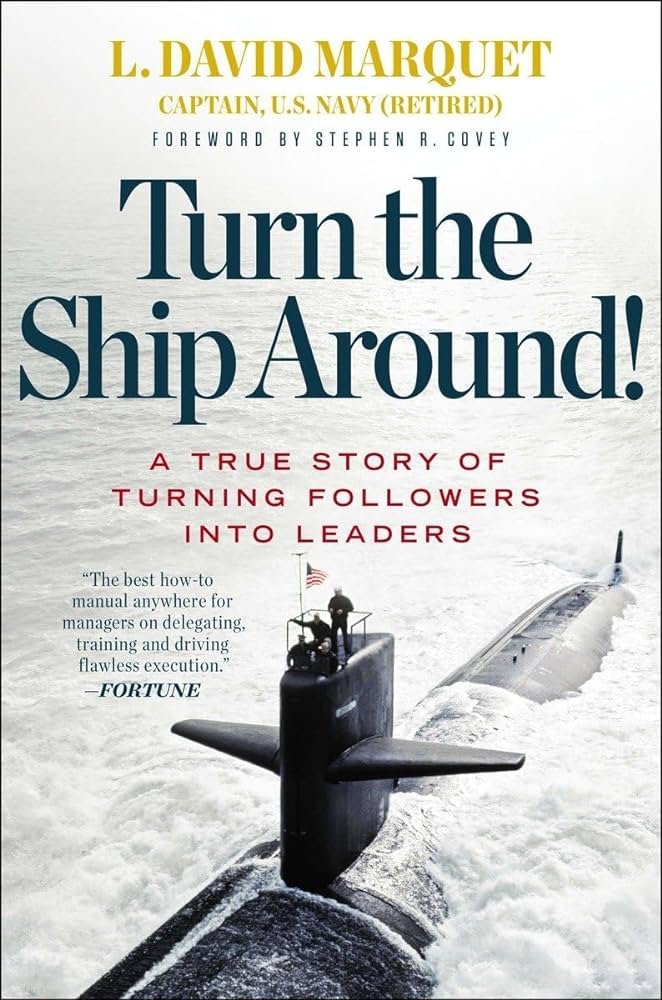
Turn the Ship Around Book Review by Jeff Bush

by L. David Marquet 

  • The leader–leader philosophy is different from the leader–follower model. The leader–leader philosophy empowers others to lead.
  • Leadership is not something that some people have and other people do not. It is within every human and we all must do our best to lead well.
  • What is your commitment like? 
  • When was the last time you walked around to hear the good, bad, and ugly about your management?
  • Does leadership in the organization take control or give control?
  • Are your people trying to achieve excellence or just avoid mistakes?
  • Do you take more time critiquing errors than celebrating success?
  • Do you work at minimizing errors without making it the focus of your organization?
  • Allow others to give input and make decisions. Ask what they think. Instead of asking you something, let them say, “I intend to” and you can accept or not. This will turn passive workers into active leaders. 
  • In the leader–leader concept, you should discuss and act before giving an order. This is much harder than the leader–follower concept where the leader just tells someone what to do.
  • Control without competence is chaos.
  • Stop briefing and start certifying.
  • Do the guiding principles in your organization help people to make decisions?
  • Are your guiding principles known and understood by others?
  • Give immediate recognition, do not wait.
  • Do you want obedience or effectiveness?
  • Build a culture that has a questioning attitude instead of blind obedience.
  • Don’t think short-term, think long-term.
  • Specify goals, not methods.

Think Again Book Review by Jeff Bush

By Adam Grant 

  • Learn to rethink. Let go of old knowledge and opinions, and be willing to learn.  
  • You live in a changing world, therefore, you must discern what to think and what to rethink. 
  • The smarter you are, the harder it is to question yourself and rethink.
  • In the preacher mode, questioning your thinking is translated as a lack of weakness, but in the scientific mode, questioning your thinking is translated as a way to discover truth.
  • The purpose is not to stop your thinking but to accelerate your rethinking. 
  • Too many times, we have just enough information to be confident, but we are not right.
  • The antidote for not being stuck on Mount Stupid is humility.
  • Arrogance is the confidence of ignorance.
  • Arrogance blinds us from our weaknesses. 
  • Being wrong doesn’t need to depress you — see it as you discovered something. 
  • If you’re insecure, you make fun of others. 
  • If you don’t change your mind frequently, you’re going to be wrong a lot. 
  • It doesn’t matter whose fault it is, it’s your responsibility to fix it. 

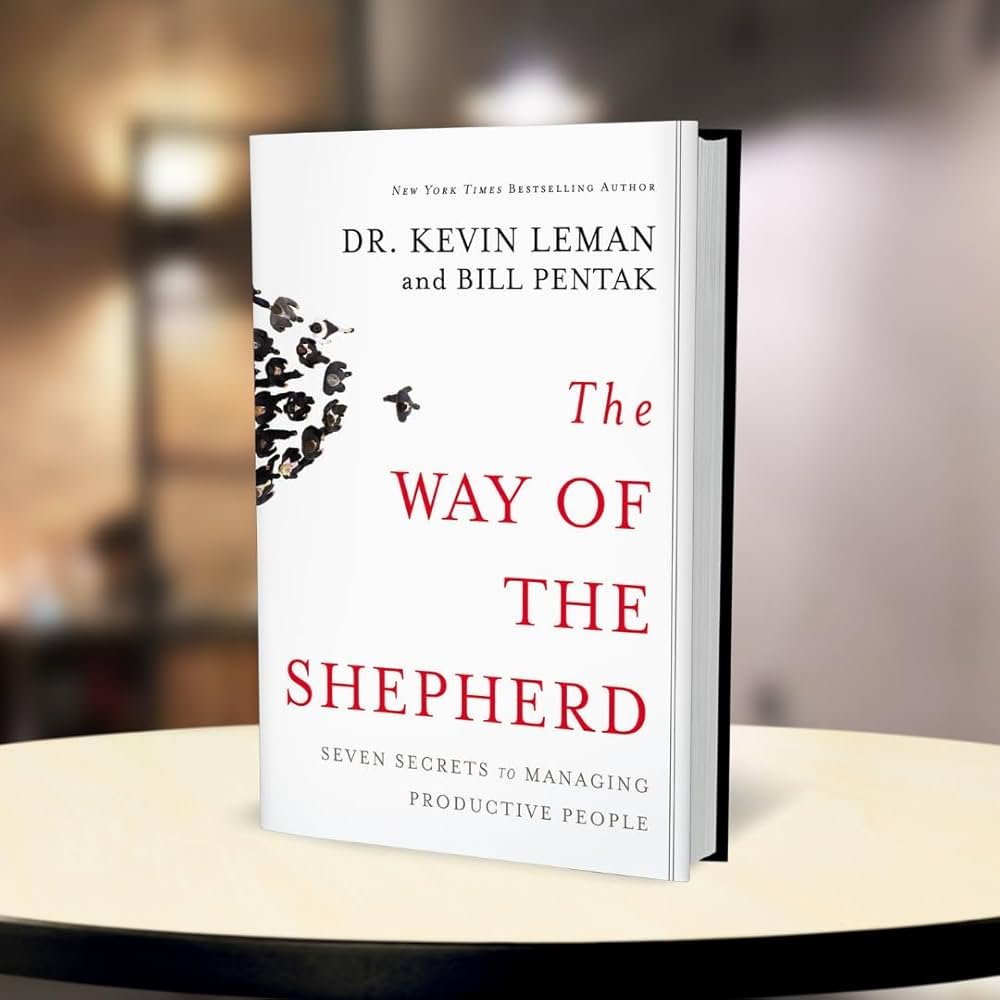
The Way of the Shepherd Book Review by Jeff Bush

by Dr. Kevin Leman and Bill Pentak 

  1. Alw

    by Dr. Kevin Leman and Bill Pentak (summary by Jeffrey Bush)

    1. Always know the condition of your flock. 
              • You can’t manage what you don’t know. 
              • Many focus on their projects and not their people. 
              • It’s the people that get the work done. 
              • You help the flock one individual at a time, not by the group. 
              • Know what is impacting them and keep up with them. 
              • You should genuinely care for those you work with. 
    1. Discover the SHAPE of your sheep. 
              • Strengths (what are they good at). 
              • Heart (what are they passionate about). 
              • Attitude (people with a can-do attitude. Negative attitude hurt others). 
              • Personality (put each person in a position where personality fits). 
              • Experiences (to understand a person, know their experiences of past, working with others, etc.). 
              • Who you choose will make the job easier or harder. 
    1. Help your sheep identify with you. 
              • When a shepherd tags a sheep. 
              • The mark you put on the people that work for you — a good mark of a leader is to not think for the people, integrity, authentic, trustworthy, and compassion. 
              • You must get up close and personal. 
              • For great leaders, leadership is not just professional, it is personal. 
    1. Make your pasture a safe place. 
              • A flock cannot be productive If it does not get the rest and nourishment it needs. 
              • It must be free of fear and secure of predators. 
              • You keep people secure and free from fear by keeping them informed. 
              • Keep them from rivalry, and keep them from pests (small irritations). 
              • The shepherd must be visible. 
              • Don’t let problems fester. 
    1. The staff of direction. 
              • The staff represents responsibility. 
              • Lead the sheep instead of being a barking dog. 
              • Point the way by getting in front of them. 
              • The staff helps rescue stray sheep. 
              • Help people get out of trouble. 
    1. The rod of correction. 
              • You have to know when to use it, and use it wisely. 
              • The rod is to use against predators. 
              • Discipline is not to harm but to keep from harm. 
    1. The heart of the shepherd. 
              • There is a cost for leading. 
              • Great leadership is hard work and if you’re not willing to pay the price, those you lead will have to pay it. 
              • What distinguishes a great leader from an ordinary leader is your heart for the people. 
              • If you give your sheep halfhearted leadership, they will follow you halfheartedly.
    ays know the condition of your flock. 
            • You can’t manage what you don’t know. 
            • Many focus on their projects and not their people. 
            • It’s the people that get the work done. 
            • You help the flock one individual at a time, not by the group. 
            • Know what is impacting them and keep up with them. 
            • You should genuinely care for those you work with. 
  1. Discover the SHAPE of your sheep. 
            • Strengths (what are they good at). 
            • Heart (what are they passionate about). 
            • Attitude (people with a can-do attitude. Negative attitude hurt others). 
            • Personality (put each person in a position where personality fits). 
            • Experiences (to understand a person, know their experiences of past, working with others, etc.). 
            • Who you choose will make the job easier or harder. 
  1. Help your sheep identify with you. 
            • When a shepherd tags a sheep. 
            • The mark you put on the people that work for you — a good mark of a leader is to not think for the people, integrity, authentic, trustworthy, and compassion. 
            • You must get up close and personal. 
            • For great leaders, leadership is not just professional, it is personal. 
  1. Make your pasture a safe place. 
            • A flock cannot be productive If it does not get the rest and nourishment it needs. 
            • It must be free of fear and secure of predators. 
            • You keep people secure and free from fear by keeping them informed. 
            • Keep them from rivalry, and keep them from pests (small irritations). 
            • The shepherd must be visible. 
            • Don’t let problems fester. 
  1. The staff of direction. 
            • The staff represents responsibility. 
            • Lead the sheep instead of being a barking dog. 
            • Point the way by getting in front of them. 
            • The staff helps rescue stray sheep. 
            • Help people get out of trouble. 
  1. The rod of correction. 
            • You have to know when to use it, and use it wisely. 
            • The rod is to use against predators. 
            • Discipline is not to harm but to keep from harm. 
  1. The heart of the shepherd. 
            • There is a cost for leading. 
            • Great leadership is hard work and if you’re not willing to pay the price, those you lead will have to pay it. 
            • What distinguishes a great leader from an ordinary leader is your heart for the people. 
            • If you give your sheep halfhearted leadership, they will follow you halfheartedly.