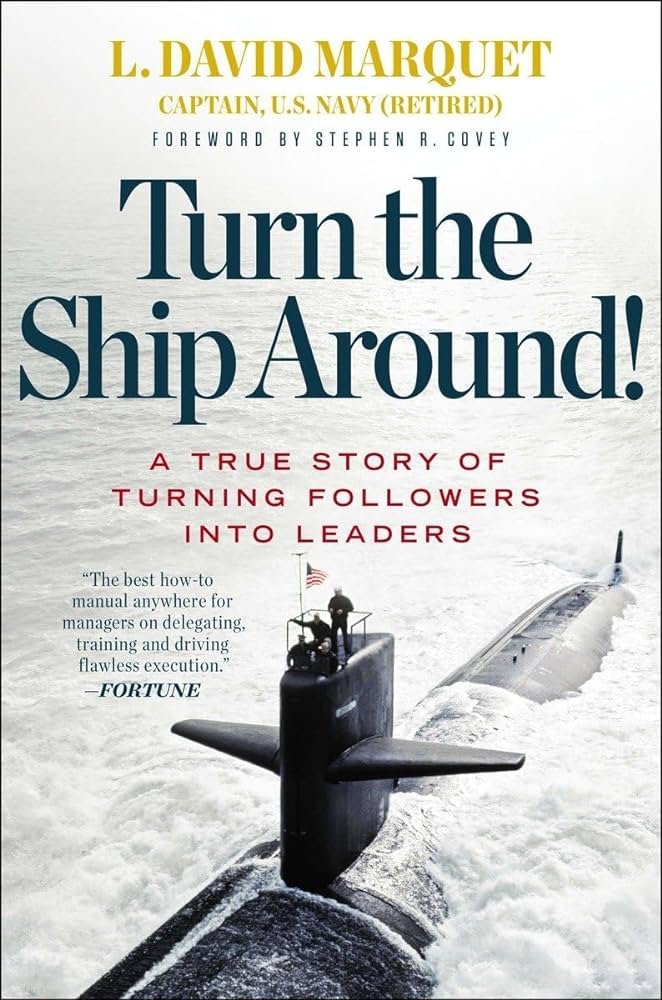
Turn the Ship Around Book Review by Jeff Bush

by L. David Marquet 

  • The leader–leader philosophy is different from the leader–follower model. The leader–leader philosophy empowers others to lead.
  • Leadership is not something that some people have and other people do not. It is within every human and we all must do our best to lead well.
  • What is your commitment like? 
  • When was the last time you walked around to hear the good, bad, and ugly about your management?
  • Does leadership in the organization take control or give control?
  • Are your people trying to achieve excellence or just avoid mistakes?
  • Do you take more time critiquing errors than celebrating success?
  • Do you work at minimizing errors without making it the focus of your organization?
  • Allow others to give input and make decisions. Ask what they think. Instead of asking you something, let them say, “I intend to” and you can accept or not. This will turn passive workers into active leaders. 
  • In the leader–leader concept, you should discuss and act before giving an order. This is much harder than the leader–follower concept where the leader just tells someone what to do.
  • Control without competence is chaos.
  • Stop briefing and start certifying.
  • Do the guiding principles in your organization help people to make decisions?
  • Are your guiding principles known and understood by others?
  • Give immediate recognition, do not wait.
  • Do you want obedience or effectiveness?
  • Build a culture that has a questioning attitude instead of blind obedience.
  • Don’t think short-term, think long-term.
  • Specify goals, not methods.

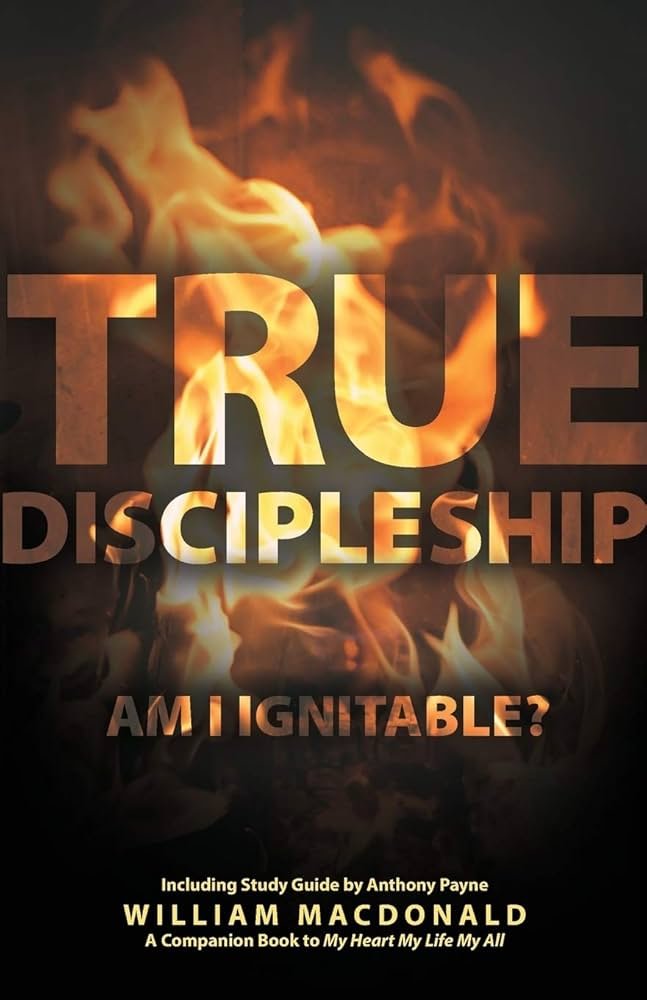
True Discipleship Book Review By Jeff Bush

By William MacDonald (summary by Jeffrey Bush)

  • Jesus is not looking for those who will give their spare evenings to Him, but rather commit their lives to Him. 
  • To be His disciple, we must walk as He walked – John 15:8
  • The way we use material possessions speaks of our spiritual stewardship. 
  • A disciple cannot be divided between two worlds. He can love God or mammon, but not both. This passage (Matthew 6:24) was written to disciples, not to lost people. 
  • The disgrace of the church today is that there is more zeal in suicide bombers and cultists than amongst God’s children. 
  • God is looking for people completely controlled by the Holy Spirit. 
  • No one has ever trusted God in vain. 
  • Any disciple that decides to walk by faith can be assured that his faith will be tested. 
  • Since faith comes by hearing and hearing by the Word of God, the disciple should desire to saturate himself in the Scripture. It is his lamp and light, his chart and compass. 
  • Prayer that cost nothing is worth nothing. 
  • The way of unity is through humility. 
  • The Bible is center in world evangelism. 
  • More can be accomplished for God by a few dedicated disciples then by a great army of self-satisfied religionists. 
  • To be a true disciple is to be Christ’s bond slave.
  • A Christian either leaves his fortune upon death, or he goes to it in Heaven.
  • A Christian can make money as long as he doesn’t fall in love with it. 
  • God is not seeking power from us rather weakness. 

To Fly Again: Book Review by Jeff Bush

By Gracia Burnham 

  • There are two things things that are for certain, that there will be trials and that he has overcome them John 16:33
  • Less than 1/4 of the world sleep in beds. The majority of the world are sleeping in hammocks, on the floor, on the dirt, or on something else.
  • When life spins out of control, we find out who we really are. 
  • What defines us is not what we have but who we are.
  • Anger doesn’t help. Anger in the face of trouble is common, but that does not make it productive.
  • Impatience is another way of saying I am important, what I want should happen, and it really doesn’t matter what anyone else needs. 
  • A fruit of the Spirit is patience. God‘s timing and God‘s way is always best.
  • Sometimes God calms the storm, and sometimes God calms you.
  • Our only hope is God‘s grace.
  • When we are weak, He can be strong. When we are shattered, He can put us back together again. When we are disputed, He can infuse us with His joy.

Through A Great Door Book Review by Jeff Bush

By Bob Shelton 

  • God doesn’t call all of His children to preach, but He commands every Christian to be a part of His plan to get the gospel into all the world.
  • As Dr. Bob Jones says, “You never find happiness looking for it—you stumble over it on the road of duty.”
  • I thanked God for American young men who were willing to respond to the call of Uncle Sam. They even gave their lives for a just cause. But I also wondered where were the young men who were willing to bend their wills to the call of God. How was it that pagan unbelievers could recall the dedication of American soldiers who were willing to die for the cause of freedom, but they were still in spiritual darkness because no one had been willing to go for the cause of Christ?
  • Sandra Goodwin expressed it in these words. TRAVELING ON MY KNEES
  • I can’t speak the language of these people and they can’t speak English. I really don’t have anyone to talk to but You.” I discovered something that day that has stayed with me for life—when you have no one but Him, He is enough.
  • I have the conviction that in every missionary conference there should be a time to honor the parents and grandparents of missionaries. After all, it is one thing to go—it is another thing to let go.

Thoughts for Young Men: Book Review by Jeff Bush

by J. C. Ryle

  • “Young men likewise exhort to be sober minded.” — Titus 2:6
  • Don’t wait until tomorrow. Tomorrow is the devil’s day. The devil wants you to put off tomorrow instead of living and serving God today.
  • “Rejoice, O young man, in thy youth; and let thy heart cheer thee in the days of thy youth, and walk in the ways of thine heart, and in the sight of thine eyes: but know thou, that for all these things God will bring thee into judgment.” — Ecclesiastes 11:9
  • Young man, do not deceive yourselves. Do not think you can fill yourselves of lust and simple pleasures now and then serve God when you are old.
  • If you do not seek the Lord while you are young, your sinful habits will be so entrenched that you will unlikely seek Him when you are old.
  • Some could say their sins are holding them back, others could say their idleness, but do not wait until later to serve the Lord.
  • Seek the Lord early, and you will be spared of many bitter tears.
  • There are dangers of young men face:
        1. Pride. 
                  • Pride is probably the oldest sin, and it sits in the heart of every man.
                  • Young men often think old men are dumb, and cannot help. Like wild horses, they must have their own ways. This is pride. 
                  • 1 Corinthians 8:2. Colossians 3:4, Romans 15:2. 1 Peter 5:5. 
                  • Never be afraid to sit and listen. Jesus did this in Luke 2:46. 
        1. Love of Pleasures.
                  • Col 3:25; 1 Cor 6:18
                  • Flee from the places that offer worldly pleasures. Flee from those who tempt you. Flee from talking about the worldly pleasures. Flee from the imaginations of thinking on them. 
        1. Contempt of Christianity.
                  • Beware of thinking you do not need to listen to preaching. Beware of mocking godly things. 
                  • Psalms 14:1
        1. Fear of Man’s Opinion.
                  • Proverbs 29:25
                  • What others call good, they call good. And what others call bad, they call bad.
                  • The fear of being ridiculed, mocked, or what others will think stops many young men.
                  • Learn to say no. Proverbs 1:10
        1. Not Considering Consequences of Sin.
                  • Proverbs 14:9
  • Your body is to be the servant of your soul, not your soul the servant of your body
  • Daniel sought God as a young man. So did Timothy, Josiah, David, and many others in the Bible.
  • Determine to make God’s Word your guide in life. 
  • Never make anyone a friend who is not a friend of God. Psalms 119:63; Proverbs 13:20
  • Devise to remove any sin that distances you from the Lord. The little sins separate you little by little until you are far from God. 
  • Resolve to never forget the eye of God. He knows you through and through. How many things are done because men think they are not seen, but He sees all. 
  • Resolve that wherever you are, you will pray. 

Think Again Book Review by Jeff Bush

By Adam Grant 

  • Learn to rethink. Let go of old knowledge and opinions, and be willing to learn.  
  • You live in a changing world, therefore, you must discern what to think and what to rethink. 
  • The smarter you are, the harder it is to question yourself and rethink.
  • In the preacher mode, questioning your thinking is translated as a lack of weakness, but in the scientific mode, questioning your thinking is translated as a way to discover truth.
  • The purpose is not to stop your thinking but to accelerate your rethinking. 
  • Too many times, we have just enough information to be confident, but we are not right.
  • The antidote for not being stuck on Mount Stupid is humility.
  • Arrogance is the confidence of ignorance.
  • Arrogance blinds us from our weaknesses. 
  • Being wrong doesn’t need to depress you — see it as you discovered something. 
  • If you’re insecure, you make fun of others. 
  • If you don’t change your mind frequently, you’re going to be wrong a lot. 
  • It doesn’t matter whose fault it is, it’s your responsibility to fix it. 

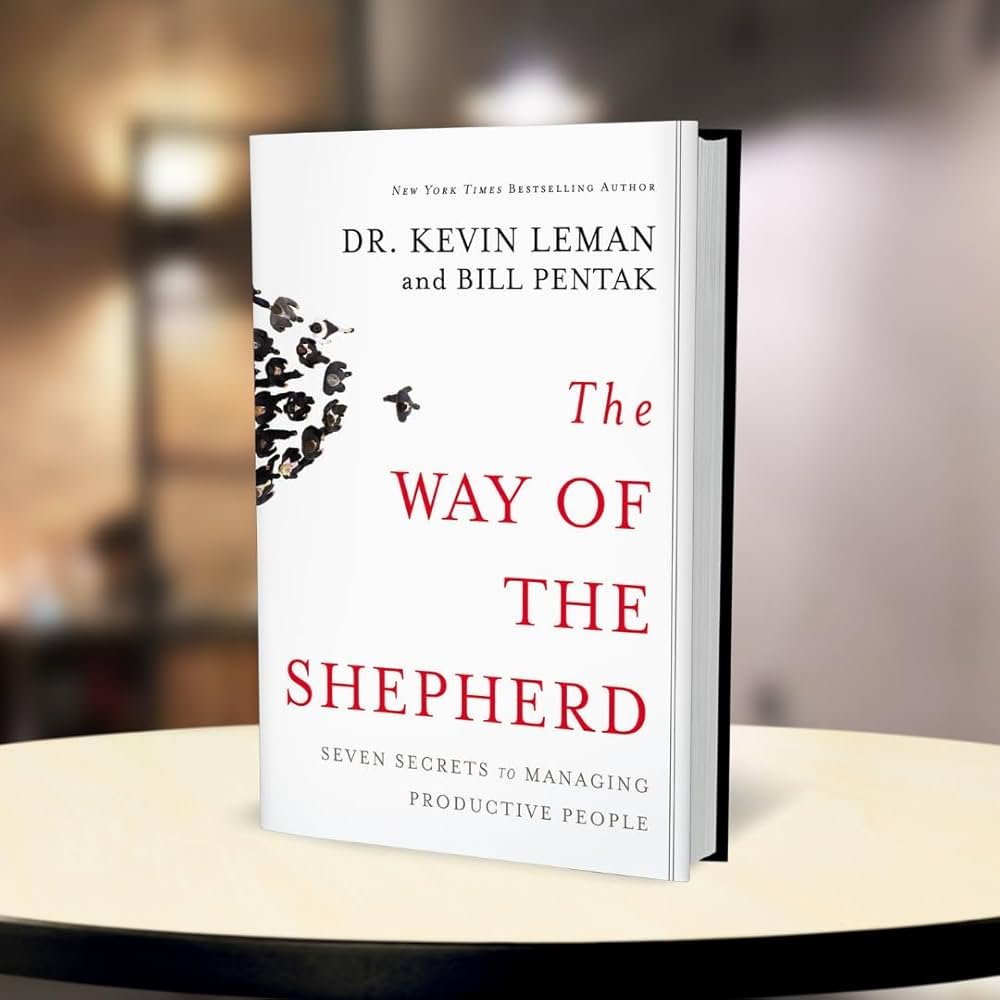
The Way of the Shepherd Book Review by Jeff Bush

by Dr. Kevin Leman and Bill Pentak 

  1. Alw

    by Dr. Kevin Leman and Bill Pentak (summary by Jeffrey Bush)

    1. Always know the condition of your flock. 
              • You can’t manage what you don’t know. 
              • Many focus on their projects and not their people. 
              • It’s the people that get the work done. 
              • You help the flock one individual at a time, not by the group. 
              • Know what is impacting them and keep up with them. 
              • You should genuinely care for those you work with. 
    1. Discover the SHAPE of your sheep. 
              • Strengths (what are they good at). 
              • Heart (what are they passionate about). 
              • Attitude (people with a can-do attitude. Negative attitude hurt others). 
              • Personality (put each person in a position where personality fits). 
              • Experiences (to understand a person, know their experiences of past, working with others, etc.). 
              • Who you choose will make the job easier or harder. 
    1. Help your sheep identify with you. 
              • When a shepherd tags a sheep. 
              • The mark you put on the people that work for you — a good mark of a leader is to not think for the people, integrity, authentic, trustworthy, and compassion. 
              • You must get up close and personal. 
              • For great leaders, leadership is not just professional, it is personal. 
    1. Make your pasture a safe place. 
              • A flock cannot be productive If it does not get the rest and nourishment it needs. 
              • It must be free of fear and secure of predators. 
              • You keep people secure and free from fear by keeping them informed. 
              • Keep them from rivalry, and keep them from pests (small irritations). 
              • The shepherd must be visible. 
              • Don’t let problems fester. 
    1. The staff of direction. 
              • The staff represents responsibility. 
              • Lead the sheep instead of being a barking dog. 
              • Point the way by getting in front of them. 
              • The staff helps rescue stray sheep. 
              • Help people get out of trouble. 
    1. The rod of correction. 
              • You have to know when to use it, and use it wisely. 
              • The rod is to use against predators. 
              • Discipline is not to harm but to keep from harm. 
    1. The heart of the shepherd. 
              • There is a cost for leading. 
              • Great leadership is hard work and if you’re not willing to pay the price, those you lead will have to pay it. 
              • What distinguishes a great leader from an ordinary leader is your heart for the people. 
              • If you give your sheep halfhearted leadership, they will follow you halfheartedly.
    ays know the condition of your flock. 
            • You can’t manage what you don’t know. 
            • Many focus on their projects and not their people. 
            • It’s the people that get the work done. 
            • You help the flock one individual at a time, not by the group. 
            • Know what is impacting them and keep up with them. 
            • You should genuinely care for those you work with. 
  1. Discover the SHAPE of your sheep. 
            • Strengths (what are they good at). 
            • Heart (what are they passionate about). 
            • Attitude (people with a can-do attitude. Negative attitude hurt others). 
            • Personality (put each person in a position where personality fits). 
            • Experiences (to understand a person, know their experiences of past, working with others, etc.). 
            • Who you choose will make the job easier or harder. 
  1. Help your sheep identify with you. 
            • When a shepherd tags a sheep. 
            • The mark you put on the people that work for you — a good mark of a leader is to not think for the people, integrity, authentic, trustworthy, and compassion. 
            • You must get up close and personal. 
            • For great leaders, leadership is not just professional, it is personal. 
  1. Make your pasture a safe place. 
            • A flock cannot be productive If it does not get the rest and nourishment it needs. 
            • It must be free of fear and secure of predators. 
            • You keep people secure and free from fear by keeping them informed. 
            • Keep them from rivalry, and keep them from pests (small irritations). 
            • The shepherd must be visible. 
            • Don’t let problems fester. 
  1. The staff of direction. 
            • The staff represents responsibility. 
            • Lead the sheep instead of being a barking dog. 
            • Point the way by getting in front of them. 
            • The staff helps rescue stray sheep. 
            • Help people get out of trouble. 
  1. The rod of correction. 
            • You have to know when to use it, and use it wisely. 
            • The rod is to use against predators. 
            • Discipline is not to harm but to keep from harm. 
  1. The heart of the shepherd. 
            • There is a cost for leading. 
            • Great leadership is hard work and if you’re not willing to pay the price, those you lead will have to pay it. 
            • What distinguishes a great leader from an ordinary leader is your heart for the people. 
            • If you give your sheep halfhearted leadership, they will follow you halfheartedly.

The Unlimited Mind Book Review by Jeff Bush

by Zoe McKey

  • Everyone is gifted, but some have never opened their package. 
  • You can become your best self in some area. 
  • The successful man is the average man that is focused.
  • Success happens by expanding your horizon in many areas.
  • There’s no difference between a pessimistic idle person and an optimistic idle person. Laziness kills both.
  • There’s something magical about deadlines. Once a deadline is set, you work to finish and execute.
  • Most things we believe are impossible in life have not even been attempted.
  • There’s no such thing as impossible. Impossible is a lack of focus, action, and self conviction.
  • It’s not who you are that keeps you held back, it is who you are not.
  • Negatives will drive your desires down.
  • Everyone wants to live on top of the mountain, but the growth occurs while climbing it. 
  • The race will get boring, but you must continue if you’re going to reach the goal. 
  • People don’t succeed because they are weak in one of three areas: focus, will power, and clear goal setting. 
  • To improve self control, you have to analyze why you lost it. 
  • Distractions are bumps in the road. You must be careful because there’s not enough time to keep changing the tires. 
  • It seems like the world moves out of the way when you know where you’re going.