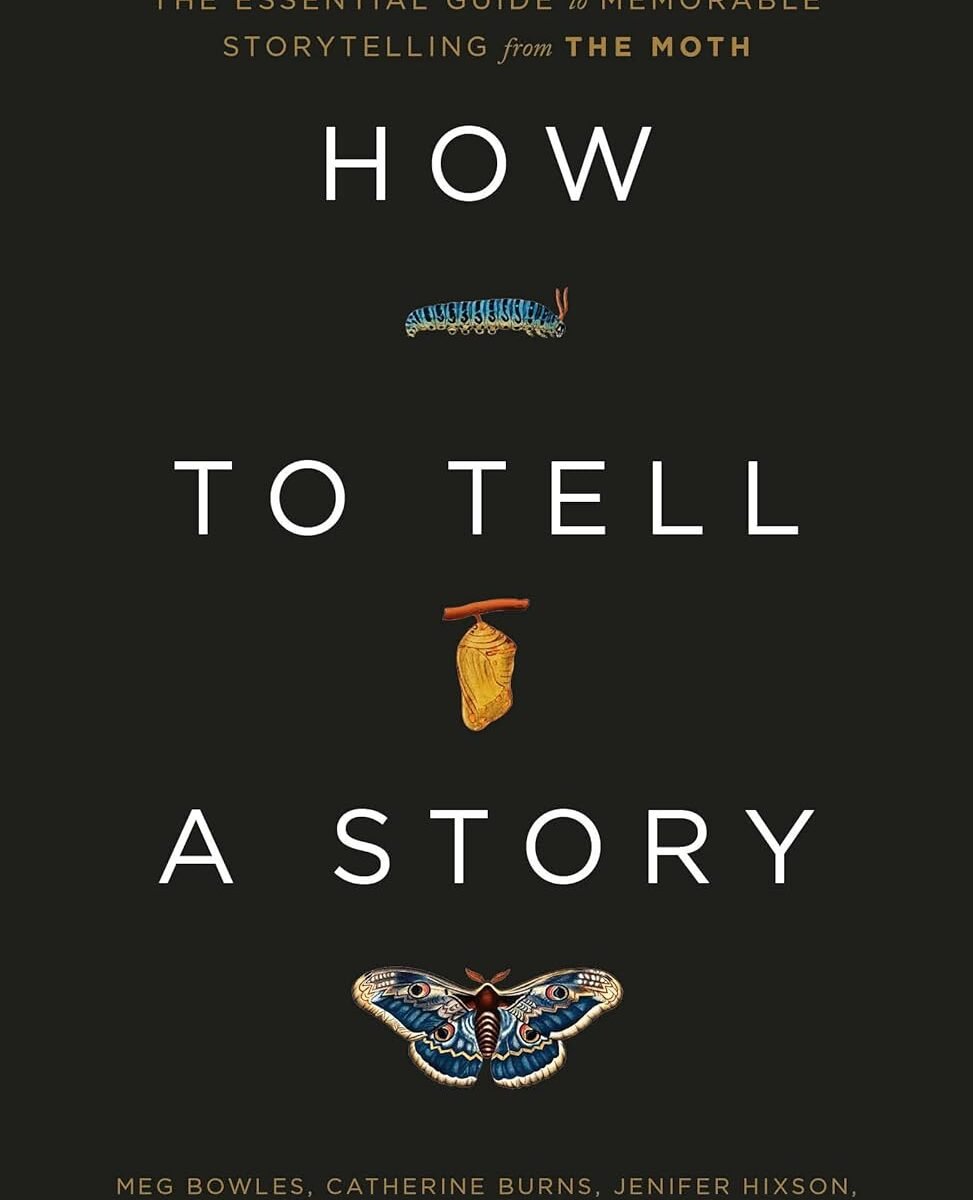
By The Moth, Meg Bowles, Catherine Burns, Jenifer Hixson, Sarah Austin Jenness and Kate Tellers
- Stories are what turns friends into family.
- Your stories are like fingerprints; they are unique to you.
- Vulnerability is power when it comes to telling a story.
- We are all bursting with stories, dig within so find them.
- If you don’t feel it, your audience won’t feel it.
- Tension keeps the audience on the edge of their seats. They want to know what is about to happen or where this story is going.
- You are not just telling what happened in the story, you are telling why it is important.
- How can you boil your story down into one sentence. Being able to do that will help guide in shape the story you want to tell.
- As a storyteller, you are in charge of the journey, the scenes you show people, where you stop, what you overlook and your final destination.
- Tell the story as if you were in it right now and feeling it.
- Resist the urge to tell the listeners how they should feel, let them decide on their own.
- Details make the story memorable to your listeners.
- Emotions will connect you with your audience.
- When telling a story, you have to take your listener somewhere. You cannot keep going around the block.
- The ending is the last thing you say, so it can hurt your entire story.
- Preparation is your key to confidence on the stage.
- Let your text be a roadmap. You do not need to know every word, just know that you are going in the right direction.
- Although you do not need to memorize your entire speech, you should memorize or know super well the opening and closing.
- Repetition can be a spotlight. It can help the audience remember and know what is important.
- There is no need for big words or flowery talk. Speak like you talk and not like you would read.
- Stories should feel off the cuff, but they should not be off the cuff. Prepare, practice, and rehearse.
- See it in your mind as you are telling it and it will help in your delivery.
- As long as you are willing to be vulnerable, you have a story to tell.
- Find a way to calm your nerves, whatever works for you.
- You are much more likely to remember a fact if it is wrapped up in a story.