Spiritual Disciplines for the Christian Life: Book Review by Jeff Bush

By Donald S. Whitney 

  • Disciplines without direction equals drudgery. 
  • How can we pursue holiness? How can we be more like our Lord Jesus Christ? We must have discipline. 1 Timothy 4:7 — “exercise thyself rather unto godliness.”
  • Man arrives to maturity by way of spiritual discipline.
  • Our Lord modeled self-discipline for us.
  • Just as practicing to play an instrument requires discipline, so growing in your spiritual life requires discipline.
  • God’s Word.
        • No spiritual discipline is more important than the intake of God’s word.
        • Listen to the Word of God. Romans 10:17. 
        • Read the Word of God. How often do you need wisdom, encouragement, and strength? Every day! Then read God’s Word every day.
        • Discipline yourself to read the Word of God. Find a time. Find a plan. Find a word, verse, or thought to meditate on throughout the day.
        • What is one thing you can do to enhance your intake of God’s Word every day? 
        • Interview the text that you read. 
        • Consciously commit yourself to take at least one action from your daily intake of God’s Word.
  • Prayer. 
        • We learn to pray by meditating on the Scripture. 
        • Pray with others.
        • Where there is godliness, there is prayer.
        • Men and women of God are always people of prayer. 
        • Worship is responding to and focusing on God. 
        • Worship is a discipline to be cultivated.
  • Evangelism.
        • New Testament evangelism is presenting the gospel. 
        • Not every Christian should use the same means of evangelism, but every Christian should evangelize.
        • Evangelism is not a gift for a few, all of God’s children are to be ambassadors.
        • Before we make excuses, we should stop and ask ourselves, are we really too busy to fulfill the Great Commission?
  • Serving for Godliness.
        • If we don’t discipline ourselves for the purpose of God’s kingdom, we will probably never serve. 
        • Serving goes against two of our biggest fleshly enemies, our sloth and our pride.
        • We are to serve the Lord with gladness. It is a privilege, not a burden. 
        • Psalms 84:10 — “For a day in thy courts is better than a thousand. I had rather be a doorkeeper in the house of my God, than to dwell in the tents of wickedness.”
        • If we are to be like Christ, we must learn to serve.
  • Stewardship. 
        • Unless we practice self control, our bodies will choose to please self more than please God. 
        • Evaluate your use of time. The time to value time is right now.
        • Decide to discipline yourself and use your time for godliness.
        • We value time at the moment of death. 
        • Realize God owns everything you have. We are just temporary stewards of the things God owns.
  • Fasting. 
        • There is fasting from food as well as times to fast from entertainment and other areas.
        • The Lord expects His children to fast. He doesn’t say “if” but “when” you fast. 
        • Before we fast, we must have purpose, a God-centered purpose.
        • Fasting is one of the best friends we can offer to our prayer. 
        • It is more rewarding to feast on God than food.
  • Silence and Solitude for the purpose of godliness. 
        • God used silence and solitude in the life of both Moses and the Apostle Paul. 
        • Jesus practiced silence and solitude. 
        • One of the biggest reasons to get alone is to better hear God speak. 
        • We have an addiction to noise, and it’s connected to a spiritual shallowness. 
  • Spiritual Discipline of Journaling. 
        • A personal writing of thoughts to the Lord. Prayers, joys, verse challenge you read, etc.
        • Consider the discipline of journaling for godliness, and to remember God‘s faithfulness.
  • Learning for the Purpose of Godliness.
        • Wise and righteous people are teachable and continue learning.
        • Wise men seek and store knowledge. 
        • Mark 12:29–30. Our Lord teaches us to love Him with all of our mind.
        • How can we know more about our Lord if we do not learn more about him?
        • Learning is mostly intentional by discipline instead of accidental.
        • Most students don’t learn because their parents don’t learn. When was the last time you read a book to your children?
        • Growing Christians are reading Christians.
        • Godly learning leads to godly living. 
  • Perseverance in Godly Discipline.
        • Laziness does not lead to godliness.
        • Even though self-discipline is not easy, it is not self-punishment. Self-discipline is actually doing what your spirit need you to do.
        • Just as the only way to God is through Christ, so the only way to godliness is through Christlike practice of spiritual disciplines.

Simple Discipleship Book Review by Jeff Bush

By Dana Allin

  • Discipleship is more of a journey than it is an event. 
  • Making disciples is the primary task to which Jesus calls us.
  • Many churches know that making disciples is a core value of the church, and will even put it in their mission statement, but are failing at doing it.
  • Discipleship, which is helping others love Jesus more, has too often been overcomplicated.
  • A reason we’ve failed in making disciples is because we do not have a clear, Biblical understanding of what a disciple of Jesus is to look like. 
  • If the church helps people love God with their heads and hands, yet not with their hearts, they’re doing a great disservice.
  • As churches, we sometimes confront discipleship as everyone needs to grow in the same areas, but that is not always the case.
  • We are not only saved by grace, but we continue to grow in grace as disciples of Christ.
  • Discipleship is so much more than dispensing information. A big misconception is that the more information we have, the more transformation will occur.
  • True discipleship is about being transformed.
  • Discipleship transformation does not happen at a microwave speed.
  • To disciple, a person should know you care for them and they’re not just a project. 
  • True growth takes time and intentional effort.
  • A mistake in discipleship is feeling you have to be a mentor, which is one who has more experience. It is good to see yourself as a coach, which doesn’t mean you are better than the other person, yet you are drawing out the best of the other person.
  • Clarify your goal as where you want the person to be after completing discipleship.
  • Be careful as you give advice. Do not try to offer solutions for everything they ask, rather ask questions questions that will help them think through what they need to do.
  • If you can help disciples, think for themselves, they will be better prepared to disciple others in the future.

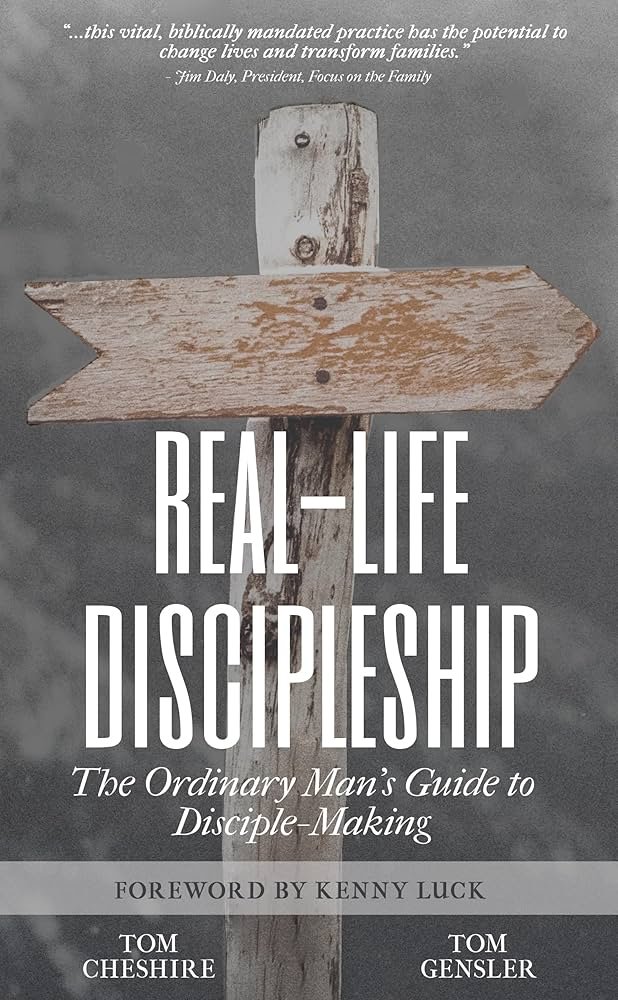
Real-Life Discipleship Book Review by Jeff Bush

By Tom Cheshire and Tom Gensler 

  • You can’t give away what you don’t possess.
  • If you were in a room of people and asked them about discipleship, almost everyone of them would refer to a person that helped them in their life.
  • Preaching is essential, but your preaching is not discipleship. 
  • Discipleship is 2 Timothy 2:2 in action.
  • Discipleship is the process of spiritual growth.
  • Jesus was not just telling disciples to be like Him, He was showing them how to live God-centered lives.
  • Discipleship is one individual investing in one or more other individuals on a consistent basis.
  • Which results more in your children listening — what you tell them to do or what they see you do? And this is what discipleship is about as well. 
  • You can and should be a disciple, as well as a disciple maker. 
  • You need to know who you are, but you also need to know Who’s you are. 
  • If you want others to follow your example, you must have been discipled and be discipling others.
  • Discipleship is not about perfection, but about progress.
  • Luke 6:12–13 teaches that before Jesus chose the disciples, He spent time in prayer.
  • Jesus always spoke to His Father. We would be wise to realize we cannot do anything on our own, we need God’s help. 
  • Discipleship is more caught than taught. Do not overcomplicate discipleship; recognize how Jesus walked and spent time investing in others.
  • Much of what you need to do with those you are discipling is to love them. 
  • In Luke 8, we see only 25% of the seed sown bears fruit. We should not be surprised that not everyone we disciple will bear fruit, but we still do our duty. 
  • The growth of an individual is not like a mushroom that shoots up quickly, rather like an oak that grows over a long period of time.
  • Discipleship is relational, it is life-on-life. 

Raising Grateful Kids In An Entitled Generation: Book Review by Jeff Bush

by Kristen Welch 

  • How can we explain or expect gratitude from our children if we are not showing it in our own lives.
  • Although our children should expect our love and acceptance, they must learn not to expect the material things this world places in front of them.
  • Entitlement winds its way through families. Everything from portion sizes, presents, activities, clothes and toys.
  • Resolving entitlement starts with teaching your children to be thankful for what they already have.
  • Entitlement has always been around, so maybe it’s the parenting that has changed and not the children. We are giving without making them earn, not saying no and overindulging.
  • Proverbs 22:6 has another side to it, a negative one. If you allow children to do whatever they want, they are not going to depart from their bad ways even when they’re old. 
  • Sometimes parents say no so often that they lose the opportunities to explain why they say no.
  • Sadly, parents feel pressured to give their children things they don’t necessarily need because everyone else is giving it to their children (best schools, sports, brand names, vacations, etc.).
  • Begin your quest for contentment. Is Jesus really enough for you?
  • The blurry line of being friend and parent is one of the most controversial lines in parenting today.
  • Kids need to learn how to problem solve. Parents do not need to rob this lesson from them.
  • We cannot make our parenting decisions based on what other parents are doing.
  • Temporary unhappiness from kids not getting their way can make for happiness as adults that love God and others.
  • Wanting our kids to be happy all the time might just be feeding their entitlement attitude.
  • Let your kids be devastated at age six so their first time is not when they are in college.
  • Tell your kids it’s more important who they are then what they have.
  • It is not your job as a parent to provide exciting activities every leisure moment. Kids are known for saying they are bored, but they need to learn to go outside, be creative and find things to do. 
  • Challenge your kids to turn their phone around and take pictures of others instead of themselves. Take them to a homeless shelter. Teach them to think of others.
  • Parents should make restrictions on their kid’s social media platforms/accounts, and should not feel bad about it.
  • You should ask and know your children’s passwords and accounts. This is not an invasion of privacy, it is protecting your children. There are predators and dangerous people out there that want to hurt your children.
  • We must teach our children self control. We will not always be with them to help make decisions, so they must learn to make decisions on their own. Proverbs 25:28
  • Obedience should be expected not suggested. But do so with grace and love.
  • Losing is good for your kids, not bad. Giving a participation trophy does not teach them about life, in fact, it makes them expect more.
  • Make your marriage more important than your children, it’s what you and your kids need. 
  • Nothing makes us more grateful than perspective.
  • The best way to teach gratitude is to model it. Do they see you saying thank you, writing a thank you card and being kind to the server at a restaurant?
  • You may get mad or feel you’ve messed up with your kids, but there’s time to ask forgiveness… so do it when necessary. 
  • Talking to older parents will help coach you as you’re raising your kids.
  • 7 Ways yo Teach Gratitude to our Kids, instead of Entitlement:
          1. Teach ownership. Chores and responsibilities. Their clothes and possessions. 
          2. Stress the value of money. Saving and spending money. Let them have an allowance for their work or an amount on vacation and not get more when it’s spent. It’s easier for them to spend your money than theirs. Teach and encourage them to give. 
          3. Emphasize the value of hard work. Make work part of your daily routine. Teach them to pick up after themselves as well as specific jobs around the house. Let them be in charge of making dinner and cleaning up after meals.
          4. Teach responsibility and consequences. Require them to do their own laundry when they get to a certain age, and when they run out of clean items don’t run to the rescue. It is hard to watch your kids fail, but sometimes that’s what they need to do. 
          5. See the benefits of delayed gratification. In a world of instant gratification children must learn to delay the immediate reward for the later reward. The reward that is worked for and waited for is usually much more valued. 
          6. Give your children a larger worldview. Perspective is one of the greatest gifts you can give your children and yourself, and service is a great way to package it. Not everyone in the world has what you have, many have far less. Your kids need to know that. Take them to work at a homeless shelter or places they can help and as see the need of others. Your family is at its best when you are helping serve others. 
          7. Strive to instill faithfulness. Persevering when things are hard is often rewarding. 
  • Don’t ground your children from spiritual activities. Sometimes parents will not let their children go to a church event because of the way they acted. But they need that influence more than other things they have or do in life.
  • One of the greatest gifts we can ask from the Lord is wisdom. 
  • Nothing we can do or say can ever substitute for bowing our heads and praying for our children. 
  • Prayer is often the last thing we think when raising kids, but God wants to walk this path with us. And there’s nothing greater than telling our parental needs to the One who parents us.

Out of The Cave Book Review by Jeff Bush

By Chris Hodges 

  • 1 out of 9 people in the US are on some form of anxiety medication. 1 out of 5 people have used it in the past. 
  • Depression has surpassed other diseases in our world such as cancer, etc.
  • Many things we tell someone that is depressed it’s not helpful – quit thinking about it, try harder, at least your problems are not as big as others, read your Bible more, etc. We should learn to listen and sympathize.
  • We need to stop talking about chemical imbalances and start talking about imbalances in our lifestyle. What we eat, how little we sleep, always on the run, not going outside, etc.
  • If we are burning the candle at both ends, we might not be as bright as we think we are. – Rick Warren
  • Motions are the precursors for emotions. When you feel …, you will… 
  • When someone throws up, the problem is a result of something happening in their body. And in the same manner, depression is not the problem, but a result of something that is happening within them.
  • An overwhelmed schedule produces an overwhelmed soul. Just because we can do something doesn’t mean we should. 
  • The comparison culture eats us alive. Proverbs 14:30
  • Experts agree that we’ve never been so connected yet so lonely at the same time.
  • The same social media that connects us also controls us, condemns us, manipulates us, and deceives us. 
  • Your social media very likely needs to be regulated and reduced. It is the number one reason for comparison and envy in the lives of most people.
  • If you want to come out of your cave, you have to stop comparing because God made you incomparable.
  • We cannot change our lives until we change the way we think.
  • The first problem was not sin but isolation. It was not good for Adam to be alone. We were not designed to be self-sufficient. 
  • In Exodus 17, Aaron and Hur held up the arms of Moses. Moses was used of God to open the Red Sea, but he needed help to keep his hands up. Who is helping you keep your hands lifted high?
  • Joy is an attitude that trusts God despite the circumstances. 
  • Instead of asking why to God, we should learn to ask what He wants to teach us through this situation.
  • Fight with light. The devil is dead set against you, but the good news is that the devil and demons are subject unto our God.
  • Prayer is both communion with God and confrontation against the devil.
  • If we want to win over depression, we must let God fill us. 
  • Perhaps our physical needs (rest and nutritious food) is more important then we think. God confronted Elijah‘s physical needs before his spiritual needs.
  • The opposite of depression is not happiness rather meaning and purpose in life.
  • Whether you like it or not, your ministry is strengthen by times you have been through. Your hard times can be either a prison of misery or schooling to help you learn.