
No Shortcuts to Success Book Review by Jeff Bush

by Matt Rhodes 

  • Short term missionaries cannot expect long-term success. There’s a need for those willing to give their lives to go long-term. 
  • Despite good intentions, amateur missionaries (those with a lack of preparation) do more harm than good.  
  • It is unwise to make numbers your benchmark for success. 
  • Big numbers do not define success. We should focus more on what is faithful to Scripture instead of what works. 
  • Choose healthy over huge. 
  • We must be more concerned with planting healthy churches over insisting they multiply at a specific speed. 
  • We cannot afford to overlook Scriptural steps just because we are in a hurry with a multiplication process. 
  • We must prepare our lives, never forgetting we are ambassadors.
  • A missionary must have a deep understanding of the Bible in order to teach it to others.
  • Many may feel that preparation in Bible school or language learning is a setback, but preparation is most definitely needed. 
  • Missionaries must realize without learning to communicate (learning the language and teaching the Bible accurately), the mission cannot be accomplished.
  • Missionaries spend too much time discussing non-essential and non-fundamental issues.
  • A missionary should work at earning the right in the eyes of the people so they want to listen. Correct character, loving people and cultivating relationships are all ways to cause others to want to listen to you. 
  • A missionary should not be an outsider to the culture he is working in rather a newcomer.
  • We must be careful thinking a few discipleship lessons can take the place of “teaching them to observe all things Christ has commanded us.” They need a church teaching the Gospel truth. 
  • Be patient. It will take time for a core of believers to grow. Jesus took over three years with His disciples. 
  • We must be careful about pushing people to go to the mission field. Firstly, God has gifted people in different areas and not everyone should go to the mission field. Secondly, the mission field does not need people that are not equipped, hard workers, or not happy to be there.
  • While going to the darkest parts of the world may seem admirable, they might not be helpful. Jesus told His disciples in Matthew 10:23 when they are persecuted in one town, go to the next.  Paul seemed to follow the same pattern (Acts 14:29–30; 16:39-40; 17:9; 20:1).
  • Prayer does not take the place of work, it lightens the path. The Lord builds the house, but you must understand He is going to use your labor to build the house.
  • Prayer works because God is great, not because we are. 
  • We do not need great faith, we need faith in a great God.
  • Faithful and fruitful missionaries do not need a spectacular or eye-catching ministry. As William Carey said, “I can plod. I can persevere in any definite pursuit. To this I owe everything.” 

No More Excuses Book Review by Jeff Bush

By Tony Evans 

  • When hard times come in life, you have a choice to make: either stay down or get back up; either make excuses, or accept where you’re at and start moving forward.
  • Your past may influence you, but it does not have to control you.
  • Joseph‘s family did not accept him, and even sold him into slavery, but the Bible says, “But the LORD was with Joseph.” Never forget that God is with you.
  • You might be rejected by your family, but you are accepted by the Lord.
  • God is sovereign, and He can take negative circumstances and turn out positive results.
  • God can take your mess and make a miracle.
  • Integrity is your trustworthiness; it is your character.
  • If we are going to be men of integrity, it boils down to our walk with God.
  • Integrity has to do with who you are in the inside no matter what is happening on the outside.
  • You may feel like you’ve lost your integrity, but you can get it back. 
    1. Moses lost his integrity when he killed an Egyptian, but God gave it back to him in the burning bush.
    2. David lost his integrity with Bathsheba, but he asked God to forgive him and got it back. 
  • Iron sharpens iron. You need a friend that will help and sharpen you.
  • Learn to ask yourself what does God thinks, not what do others think.
  • You can’t change what you messed up yesterday, but you could change how you live today.
  • You cannot please everyone, but you can determine to please the right person, which is God.

Never Go Back Book Review by Jeff Bush

by Dr Henry Cloud 

  • Never go back to what didn’t work. You can’t expect different results from doing the same thing. 
  • Never go back if you have to be someone else.
  • Never believe you can change a person.
        • We can, and should help others, but they must choose to change. 
        • When you realize you cannot change others, it frees both you and them to do what they think is best. 
  • Never go back to believing you can please everyone.
        • Choices divide, that’s just a part of life.
        • When we quit trying to please everyone, we can move forward and make the right decisions.
  • Never again avoid short term pain for long-term benefits.
        • If you avoid the pain, the payoff will never come. 
        • The sluggard in the Bible is not necessarily the lazy one, but is more likely the one that avoids pain.
        • Successful people will go through the pain to get what they want whereas unsuccessful people will avoid it.
        • Those that avoid pain do not get what they want.
        • What step of pain are you avoiding to get to the place you want to be?
  • Never again accept something that seems perfect.
        • If a person is too amazing to see his own weaknesses, it is probably not real.
        • Not all that glitters is gold. 
        • When a person, business, or situation seems too good to be true, it might just be that. 
        • We should be honest and own it.
        • It is not possible to get better if we will not realize we have a problem.
        • Look for good and real not perfect and ideal.
  • Never again take your eyes off of the big picture.
        • The big picture will change how you learn, act, and feel. 
        • The brain is made to manage the everyday obstacles on its way to the big picture.
  • Never go back to taking the easy path and doing due diligence.
        • Due diligence is the time to find out you’re really getting what you think you are getting. 
        • Sometimes our needs will paint the situation to be what we want it to be. 
        • Due diligence would save many relationships. People go from a dream boat of falling in love to needing a life boat. 
        • Sometimes the walls can look perfect when an honest inspection will prove there are termites.
        • Sometimes we get so eager, and instead of saying, ready, aim, fire, we say, fire, aim, ready.
        • When we are hasty, we many times make bad decisions. 
  • Never stop realizing you play a role where you are. 
        • If you change, your life situation will change as well. 
        • People want to say that they are a victim of something when there’s always a part they played in the situation.
        • Instead of feeling sorry for yourself, find the area in which you can improve.
        • Trials create maturity. If you bail out before time, you will not learn what you could learn.
        • When we blame others, you miss out on what we need to learn.
        • Strive for progress, not perfection.
  • Never forget, that life is living it inside out.
        • What you have came from God, not from others. 
        • You might lose a job, but you still possess the qualities and abilities that gave you that job.
        • He that is faithful with little will be faithful with more. 
        • The invisible life (that which is on the inside) creates the visible life (that which is on the outside). 
        • Outside circumstances do not change a person on the inside. A happy single person will make an unhappy, married person. 
        • Much of your happiness comes from a decision on the inside.
        • People that are happy, know that their happiness comes from the internal, not the external circumstances. 

Muslims, Christians, and Jesus Book review by Jeff Bush

By Carl Medearis 

  • Get to know the person, not the stereotype. 
  • Very few accept the doctrine of Jesus through debate apologetics.
  • Most Muslims are happy to talk about faith, and about Jesus Christ specifically. Their beliefs are not the same as ours, but the doors are open for conversation.
  • Muslims do not recognize human writers with Quran as Christians do with the Bible. They believe the Quran came straight from God.
  • Many Muslims are offended by the phrase “son of God” because they believe this means God had sexual relations with Mary. 
  • Do not compare how women are treated better in the west than the east but rather talk about what God thinks about women.
  • The large majority of Muslims just want to love and raise their families. It is a small percentage that want to kill and take over the world. 
  • Always assume your Muslims friend is more dedicated than you are — it’s more about your friend and Jesus, not about your dedication.
  • There are more refugees today than ever, and ministering to refugees in your area can make an eternal difference.
  • Muslims do not believe Christians pray because they do not see us praying as they do five times a day. Prayer is a very holy and important practice, so do not be afraid to tell them you want to pray with them or for them.
  • Muslims believe in Jesus, they just do not believe he is God. You can point them to reading what the Quran says about Jesus, but do not fight them.
  • Don’t try to be the one who knows all truth. Jesus is truth. You do not need to defend or argue just point them to Jesus.

Mentor Like Jesus Book Review by Jeff Bush

By Regi Campbell 

  • Radical mentoring is intentionally investing in a generation for God‘s glory.
  • Radical mentoring is what Jesus did.
  • More time with fewer people means greater kingdom impact. 
  • Jesus helped His men with almost every area. He was more practical than hypothetical. 
  • A mentor needs to be a giver. 
  • We all want to leave a legacy. By mentoring, you help others and leave a legacy. 
  • You really know you are a follower of Jesus when you help someone else in Jesus.
  • Mentoring is messy, and is relationships. 
  • Mentoring puts the hands and feet on loving and serving. 
  • Authentic mentoring, mentoring like Jesus did, involves selflessness. It’s a willingness to invest in others with no return.
  • Your motive in mentoring should be to point an individual to Christ. The greatest gift you can give is your time and attention. 
  • Mentors like Jesus know to watch their mentees go further in life than they do.
  • Jesus mentored with a group. Why tell the same story eight times when you can tell it once to eight people. 
  • By mentioning, you can also learn from them. 
  • We think bigger is better, but Jesus narrowed it down to twelve men. 
  • Do not take just anyone. Jesus made it a serious matter of prayer. 
  • Don’t let them pick you. Jesus picked the twelve, not the other way around. 
  • Let God be your advisor. Jesus picked His 12, He prayed all night long, which is the longest recorded prayer in the Bible.
  • The author of this book asks the mentees to make a one-year commitment to meet with the group once a month.
  • Teachability. Those you are going to mentor must be teachable.
  • There’s something good about setting a timeframe to mentorship. Jesus mentored for three years with a definite ending time, so there’s something to it. 
  • The author requires those he is mentoring to reading 9–12 books during their year of mentorship. They write one page on what they learned from the book. It is on-purpose reading about character, marriage, etc. They discuss that book together as a group and find it helpful since every person learns different things from the same book.
  • When the year of mentorship ends, says the author, many want to know what is next. I hope they are a better leader and learner as a result. Many will continue reading books, but my (author) role with them is to stay friends, hear from them at important moments of their life, and offer advice whenever they needed it.
  • Scripture is not just what Jesus knew, it is who He was. If you are going to mentor others, you must know the Word!
  • The author requires those he is mentoring to memorize 24 Scripture verses, two at a time.
  • Mentoring involves modeling. 
  • A person cannot mentor without praying — for them, for yourself, and for God’s guidance. 
  • Great mentors are great listeners. 
  • A mentee has successfully finished when he begins to mentor another person. 
  • Never agree to mentor a person unless he promises to mentor at least one person in the future.

Leadership Book Review by Jeff Bush

by Brian Tracy 

  • There are three kinds of people: people that make things happen, people that watch things happen, and people that have no idea what is happening. 
  • The way to make others feel important is: 
      1. Appreciation
      2. Approval
      3. Admiration
      4. Attention 
  • Seven steps for goals as a leader: 
      1. Clarify what the goal is. 
      2. Write it down. A goal that is not written down is just a fantasy.
      3. Make a deadline.
      4. Make a list of everything you have to do or have in order to achieve the goal. 
      5. Make an execution plan. Prioritize the most important.
      6. Take action.
      7. Do something every day. 
  • The future belongs to the risk takers. Being willing to try something hard or different is what separates leaders from others.
  • The ability to react quickly to adverse circumstance is a mark of your leadership. 
  • Three important emotional needs of employees:
      1. Dependence — feel part to something bigger than self.
      2. Independence – they are important as an individual and what they do for the organization.
      3. Interdependence – they’re part of a team. A leader should help work to keep things harmonious. 
  • Leaders must have a high level of commitment. According to the level of commitment they have will be the level of commitment others around them have.
  • 85% of your success as a leader is determined by your ability to communicate effectively with others. If you cannot communicate, you cannot lead.
  • Be clear about goals, objectives, and vision of company. 
  • Learn to give the why more than the what. When people know why, they’re willing to work. 
  • Leaders do not think about failure. They look at difficulties and setbacks as lessons to become better.
  • Leaders must be solution oriented. If there’s a problem, find a way to fix it instead of looking for someone to blame.
  • Persist until you succeed. No matter how difficult it becomes, never give up. 
  • Adversity draws out the true man.
  • Smart leaders are wise on who they pick to be around them. Strong leaders choose people that are better than them. Weak leaders choose people that are weaker than them. 
  • As a leader, decide you will not complain or criticize others.
  • Don’t wait for the right time. The right time is now.
  • How you treat others sets the tone for how those you work with will treat others. 
  • Leaders are readers. Keep growing. 
  • Become a better leader by improving yourself. Start doing some things and stop doing other things. 
  • Ask your way to success. Learn from others. You don’t live long enough to make all the mistakes, so learn from others. 
  • Leaders lead either by command (you make decision), consultation (ask and let others participate), or consensus (let others make the decision). 
  • Leaders are listeners. Listen attentively. If you are talking, you are not listening. Ask questions and don’t assume you understand. 

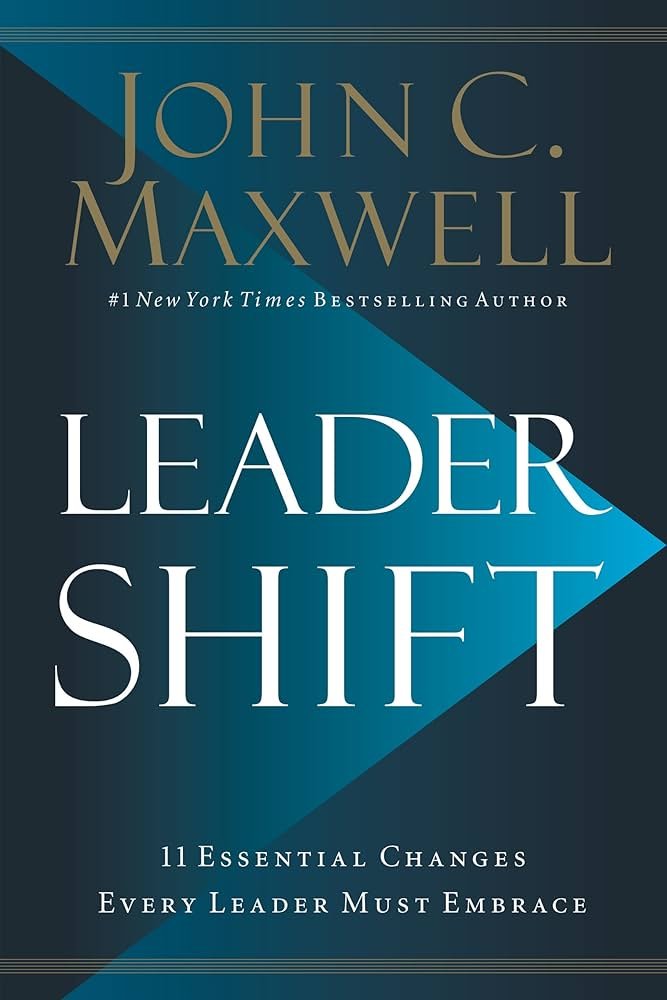
Leadershift Book Review by Jeff Bush

By John C. Maxwell

  • The more nimble and flexible we are, the better we can work through change.
  • The wise will adapt themselves to circumstances like water adapts to a pitcher.
  • The ability to adapt, to change or be changed, will determine the leader’s longevity and success.
  • Good leaders adapt to change instead of become static.
  • There are seven areas in which we can learn to shift as leaders: 
        1. Continually learn, unlearn, and relearn. We cannot be in love with one form of technology or methodology, we must be willing to learn when change comes. 
        2. Value yesterday, but live today. Famous baseball player, Babe Ruth, said yesterday’s home runs will not win today’s games. We must understand that past achievements are in the past. People may honor you for what you did yesterday, but they respect you for what you do today. 
        3. Rely on speed, but thrive on timing. The timing of when to spend or take advantage of a situation is crucial.
        4. See the big picture as the picture keeps getting bigger. As you continue leading, the picture will get bigger. You learn lessons along the way that will help you understand the bigger picture. 
        5. Live in today, but think about tomorrow. If you think ahead, you can stay ahead. The future has a way of showing up unannounced, but you can plan and prepare for the future. What can you do today to ensure that you’re prepared for tomorrow? 
        6. Move forward courageously in the face of adversity. All good things include uncertainty, and overcoming uncertainty requires courage. 
        7. Realize today’s best will not reach tomorrow’s challenges. You can’t skip today and hope tomorrow is better. Grow into tomorrow’s challenges, don’t just go into them. 
  • One of the most important shifts a leader can make is from a soloist to a conductor. You might do well on your own, but can you do well leading others?
  • Your agenda must change from how you can serve yourself to how you can serve others.
  • It is wonderful when the people help the leader, but it is more wonderful when the leader helps the people.
  • While you can do many things on your own, it is better to do things with others. Going slower could mean going further.
  • If you climb the peak by yourself, you are not a leader, you are a hiker. 
  • Being a good leader is about how many people reach their potential.
  • Competing means win-lose, but completing means win-win. One is exclusive and the other is inclusive. 
  • Are you focused on giving or receiving? Are you focused on adding value? 
  • As leaders we must stop wishing and start working.
  • Never wait to add value. Too many people wait and lose the opportunity.
  • Give without keeping score. Placing the emphasis on the return will diminish the joy of giving. 
  • Goals help you do better but growth helps you become better.
  • Make your love for learning greater than your fear of failing.
  • Develop relationships with people that are growing and will help you grow.
  • The cost of the shift. Many people want to be a leader because of the perks, but the perks have a price. Don’t lead because of the perks and what you will get out of a position, lead because of the price (you want to help people and are willing to pay the price to do so). 
  • The best things in life are not free. If you are going to lead, you must be willing to pay the price.
  • A leader goes before others and is willing to do more than others.
  • If you’re going to be a good leader, you must set expectation high for yourself. Set them high for yourself before setting expectations for others.
  • You have to give up to go up, and you have to continue giving up to stay up. 
  • The signature of mediocrity is constant inconsistency. The signature of excellence is relentless excellency.
  • There is no off-season for leadership. If you’re not going to be consistent, you cannot continue being leader.
  • Be consistent. What you say and you do should line up. 
  • Make the shift from pleasing people to leading people. No one can please everyone all the time. 
  • Be a lifelong learner that is intentional about learning something every day. 
  • Teams either grow together or they grow apart. 
  • We teach what we know but we reproduce who we are. 
  • Good leaders realize they need help.
  • Give first and give continually. Generosity and is a characteristic of a good leader.
  • If you want to be a connecting leader, start listening. It’s not your ears that get you into trouble but your mouth. Listen to others.
  • As a leader, never underestimate the power of affirming others. Encouragement is oxygen for the soul.
  • Don’t try to be the sage on the stage but a guide who goes beside. Encourage others along the journey.
  • Change from directing to connecting. 
  • People buy into the leader before they buy into the vision.
  • Stop trying to look good and start trying to make others look good. 
  • People might give you a hand because of positional authority, but will only give their heart because of moral authority. 
  • Moral authority requires competence, courage, consistency, and character. 
  • You cannot grant yourself moral authority, others must give it to you.
  • Some wake up to an alarm and some wake up to a calling.

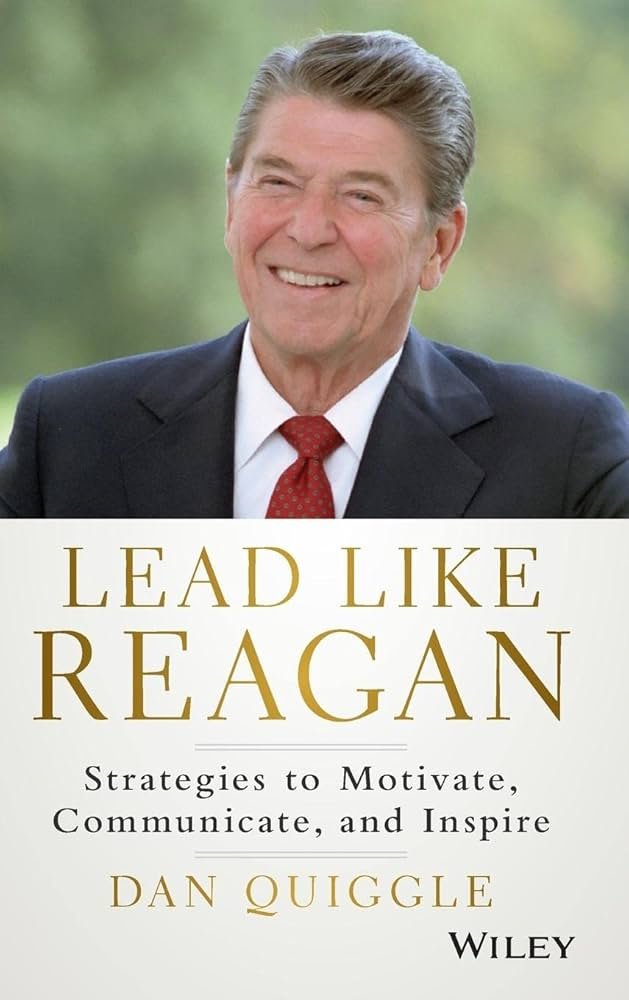
Lead Like Reagan Book Reviews by Jeff Bush

By Dan Quiggle

  • It’s easy to assume we have all the answers as leaders. In reality, the ability to learn, apply, and adapt is what differentiates mediocre leaders from exceptional ones.
  • Learning is what distinguishes those who are merely doing a job from those who pursue excellence.
  • Investing in your leadership is investing in success.
  • It’s not how eloquently your words are, but the fact that your words mean something.
  • Vision is key, but nothing will happen without steps to accomplish the vision.
  • You cannot be intimidated by being outshined by others.
  • A true leader recognizes the need to surround himself with excellence and is wise enough to create an environment where advice is received.
  • Be a lifelong learner. 
  • People are motivated by appreciation.
  • Identify and encourage the motivations that are within the lives of others.
  • When you’re going to hire someone, look for GOLD:
      1. Grateful 
      2. Optimism 
      3. Loyal
      4. Determination — not victim or quit when hard 
  • If people can have sustainability and get along with others, they’ll make it. 
  • Fire when you need to, but hire wisely and you won’t need to fire as much. 
  • Invest in your organization by investing in those that work in your organization. 
  • Make others feel needed, valued, and appreciated.
  • To improve your communication:
        1. Substance 
        2. Significance
        3. Sincerity 
        4. Sell it. Believe it yourself 
        5. Say it, and repeat it.
        6. Say it again and again. Consistently say the same thing every time you speak.
        7. Symbolize it. Personify what you are saying. 
        8. Stance. Body language speaks louder than words. 
        9. Specialize it. Speak specifically to the audience you are with, not over their head or not below them.
        10. Study. Study, prepare, and know more about your subject than anyone else.
        11. Style. There are many ways to speak, but find and stick with your style.
        12. Simplify. Do not use big words. People do not understand.
        13. Solicit. Invite help from others.
        14. Stories. Give stories of what you are teaching about.
        15. Smile. Nothing is more engaging than when you smile when it is appropriate. It is contagious. 
  • When you are speaking, seek to make an impact and not just make a point.
  • A lot of problems would disappear if we learned to talk to each other instead of about each other.
  • Great leadership requires much more than education. It requires relational and emotional traits.
  • In leadership, you have to prioritize and focus on fewer areas. 
  • A leader must delegate and empower others. 
  • There is no long-term if you do not take care of the immediate short term.
  • Heroes are not braver than everyone else, they are just braver for five minutes longer than others.
  • Instead of just doing the same you did yesterday, learn to implement deconstruction. If things need to be changed, then evaluate, break them down, and change them.
  • Reagan kept the following four words on his desk: “it can be done.” He reminded himself that anything can be done.
  • When there is no room for change, there’s no room for growth.
  • When a crisis comes your way, realize that others are watching. This is a time to show leadership excellence.
  • The greatest opportunities can come from overcoming a crisis with character in conviction
  • There is power in gratitude.
  • Reagan was a man of discipline. He was committed to people and policies more than his own agenda.
  • Small habits today make up your lasting impact.