Didn’t See It Coming Book Review by Jeff Bush

By Carey Nieuwohf 

  • How is it that people that apparently have everything are not happy? 
  • Christians should be the least cynical people alive because we have hope.
  • The answer to cynicism is the gospel, the good news.
  • Being hurried looks for shortcuts. 
  • If you will learn to listen longer than most people listen, you will learn more than most people learn.
  • If you feel you need to be the authority on every area, you will kill conversations.
  • Competency does not determine your capacity, it is character that determines your capacity. Character is your lid. 
  • Lack of character destroys careers, relationships and confidence from others.
  • Competency may impress the crowd, but it is character that will impress your family.
  • No one will pull out your résumé of all you have accomplished at your funeral. The legacy you leave is determined by your character.
  • It should be those who know you the best love and admire you the best, and your character will determine that. 
  • It is easy and enjoyable to become more competent (listen to a book or podcast, learn a new hack, etc.). But are you working on your character, on yourself?
  • The antidote is simple, work twice as hard on your character as you do your competency.
  • Progress starts with honesty, and honesty is accepting responsibility instead of casting blame. Until you deal with your issues instead of pointing to others, you will not make progress.
  • Out of all the lies we tell, the lies we tell ourselves are the worst.
  • Conversation is on the decline. People are asking less questions today, meaning getting to know each other less. 
  • Confession is lost today. No one seems to make mistakes any more. We refuse confession because it requires that we look in the mirror and admit we were wrong. 
  • You won’t address what you won’t confess. 
  • When are your past circumstances going to stop being your present excuses?
  • Use your past as stepping stones instead of barricades. 
  • Healthy people find explanations instead of excuses. 
  • You can make excuses or progress, but you can’t make both. 
  • Many times the people we admire most are less hurried. You must learn to eliminate the hurry in your life. 
  • Pride leads you to a hardened heart. 
  • Throughout Scripture we see God wanting to do much more with His children but cannot because of hardened hearts. 
  • Prideful, hardened hearts cause you to act superior, judgmental, not accountable and isolated. 
  • Only humility will get you out of what pride has gotten you into. 
  • Nothing kills pride like humility.
  • Humility only stays if you invite it and cultivate it. 
  • Never lose your gratitude. 
  • The more you have, the easier it is to lose your gratitude.  
  • Gratitude causes you to not remain the star; it allows you to focus on the giver instead of the gift. 
  • Humility will learn from anyone anyone. 
  • Check your motives constantly. 
  • Everyone knows your weaknesses, so level with yourself and be honest about them. 
  • Eleven signs of Burnout:
        1. Your passion fades. 
        2. You no longer feel the highs or lows.
        3. Little things make you feel proportionally wrong.
        4. Everyone drains you. 
        5. You’re becoming cynical. 
        6. Nothing satisfies you.
        7. You can’t think straight. 
        8. Your productivity diminishes.
        9. You’re self medicating. 
        10. You don’t laugh anymore. 
        11. Sleep and time no longer fuel you. 
  • Your unresolved issues will hurt you and others. 
  • If you leave Jesus out of the cure, you will never get better. 
  • Recovering from burnout:
        1. Tell someone. Swallow your pride.
        2. Develop a crowd around you. You need others.
        3. Keep leaning into God. Just because you don’t feel like God loves you doesn’t mean He doesn’t love you. 
        4. Rest. Someone said you are at your kindest when you are rested, so get some rest. 
        5. Find something to take your attention away from your pain. Distraction can be a powerful thing.
        6. Do what you can. Focus on what you can do instead of what you can’t do. Keep moving. What can you do today? Do that. 
        7. Don’t make any big decisions. 
        8. Grieve your losses. Taking time to grieve, will help you.
        9. Reopen your heart. Burnout causes you to become cynical and numb, but open up and trust again. 
        10. Live today in a way that will help you thrive tomorrow. Maintain health in the top five: spiritual, emotional, relational, physical and financial. 
  • Denial is an accelerator for burnout. 
  • Pride and fear will keep you in burnout and not allow you to get the help you need. 
  • God’s favorite people to use are the broken ones. God has not left you no matter how you feel. 
  • If God is doing surgery, let Him go as deep as He wants to go. 
  • Working is healthy, overworking is not. 
  • Self care is better than self medicating. Self care asks the question, “What can I do today that will help me live in a way I can thrive tomorrow?” 
  • If you want to beat emptiness, find a mission that’s bigger than you. 
  • Prayer is not a button to be pushed but a relationship to pursue. 

Crucial Conversations Book Review by Jeff Bush

By Joseph Grenny, Kerry PattersonRon McMillan and Al Switzler

  • A crucial conversation is a discussion between two people with varying opinions and high stakes.
  • When we have crucial conversations, we can do one of three things: avoid them, face them and respond well or face them and respond poorly.
  • We become masters at avoiding tough conversations.
  • The sad fact is that when we most need to respond well to a conversation, we fail.
  • When crucial conversations come, we tend to fight or flight instead of listen and speak.
  • Being able to handle well crucial conversations is actually healthy for you. Mountains of medical research prove that how you deal with situations and problems affect your health.
  • 70% of the success of a conversation happens in your head.
  • You know you’re having the wrong conversation when your emotions escalate, you become skeptical and you gain a déjà vu dialogue.
  • If you speak when you are angry, you will probably make the most horrible speech you’ve ever made.
  • The first thing to degenerate when you are in a dialogue is your motive. Get your heart right before anything else.
  • Stay away from the fools choice of thinking a situation has to be an “either/or.” 
  • When you feel it comes to silence or violence, you need to take a step back. 
  • Nothing in this world is good or bad; it’s our thinking so — William Shakespeare 
  • Victim stories always say “it’s not my fault.” Although someone can be robbed on the street, most of the time saying it is not fully true to say, “it is not my fault.”
  • Villain stories make the other person out to be impossible to work with. 
  • Proverbs 25:11 teaches you can make others feel safe and helped in your conversation. 
  • It’s not enough just to have good intentions, the other person must know it.
  • Mutual purpose and mutual respect are needed in a conversation. 
  • Look for mutuality. See the other person’s point of view. 
  • When the other person sees there’s not mutual respect in a conversation, they will then begin to defend their dignity. 
  • When people misunderstand and begin arguing about the misunderstanding, then stop and reiterate what you don’t mean and do mean.
  • The more convinced and forceful you act, the more resistant others become.
  • Before assuming you are 100% right, realize your observations may be false and your story may not be accurate.  
  • You can’t determine what someone will think after a conversation, but you can influence it. 
  • Ask yourself how you should act in order to get what you are asking.
  • Back off your harsh and conclusive tone, and take a step back to hear and understand the other person.
  • You can still hold your belief while softening your approach.
  • Start with the heart. When you do ask someone to share their views, you must do so with sincerity.
  • When people respond in silence or violence, find out what the hidden source is instead of responding in the same manner.

Cross-Cultural Servanthood

by Duane Elmer

  • Good intentions are not enough if you do not understand the culture. 
  • We must not have an attitude of superiority. We think we know more, what’s best, the right way of doing things, what is needed, etc. 
  • We are never more like Jesus than when we serve others. 
  • May we desire the towel of servanthood instead of the robe of authority. The disciples seemed to want the robe, not the towel. Both are in Scripture but only one is appropriate for the followers of Jesus.
  • Greatness is not the goal, servanthood is. And, according Jesus, the greatest is the one that serves. 
  • If impatience is a problem you struggle with in your home culture, it will be a big test in your new culture.
  • Servanthood is attempting to make others look more like Christ, not like yourself.
  • Deep trust drives us to act in the best interest of the other.
  • He who dares to teach, must never cease to learn.
  • Learning the language is important, but if you don’t learn the culture, you will not get your message across. 
  • Everyone is proud of their culture, but when we don’t accept their culture, there’s a big breach created. 

Calling Out The Called Book Review by Jeff Bush

by Scott Pace and Shane Pruitt 

  • We should seek to be clear instead of be clever. 
  • Do you see fruit in your own life? Can others affirm God’s working in your life?
  • Wrestling with the call of God upon our life helps us count the cost.
  • We must be careful that we do not mistake ambitions for calling. We must be careful we do not mistake wanting to please a person for a calling.
  • In the dark times it is easy to resent your calling. Peter went back to fishing.
  • God addresses our identity before he addresses our activity.
  • We shouldn’t study to teach, we should teach because we have studied.
  • God’s proximity should be our passion.
  • If we depend upon education, we get what education can give us. If we depend upon an organization, we get what an organization can give us. If we depend upon man, we get what a man can give us. But if we depend upon God in prayer, we will receive what only God can give us.
  • When we are not praying, we are declaring our independence from God.
  • Evangelism is about conviction over convenience. 
  • Too many Christians in ministry, believe their job is to share only with the saved, so they never evangelize the lost.
  • Ministry becomes messy. The moment we get frustrated, we must renew our love for the bride of Christ.
  • We can try to manufacture excitement with others, but it is the word of God that changes people.
  • Ministry is marked by servanthood.
  • It’s not about your platform; it’s about His kingdom.
  • If serving is beneath you, then preaching is above you.
  • Serve people off the stage and it will help you when you are on the stage.
  • Ultimately, serving others is an attitude.
  • A servant leader is more about who you are than what you do.
  • Our ability to lead at home is directly connected to our leadership at church.
  • Help your family understand that their identity does not depend on your position. 
  • Anyone can start ministry, but only the dedicated will finish.
  • If we are going to call out the called (people surrender to ministry, and accept Jesus), we must get back to invitations.
  • Be clear and be concise in your invitation. Just as you pray over your message, pray over the invitation. 
  • God is still calling people, so we must be intentional about calling out the called.

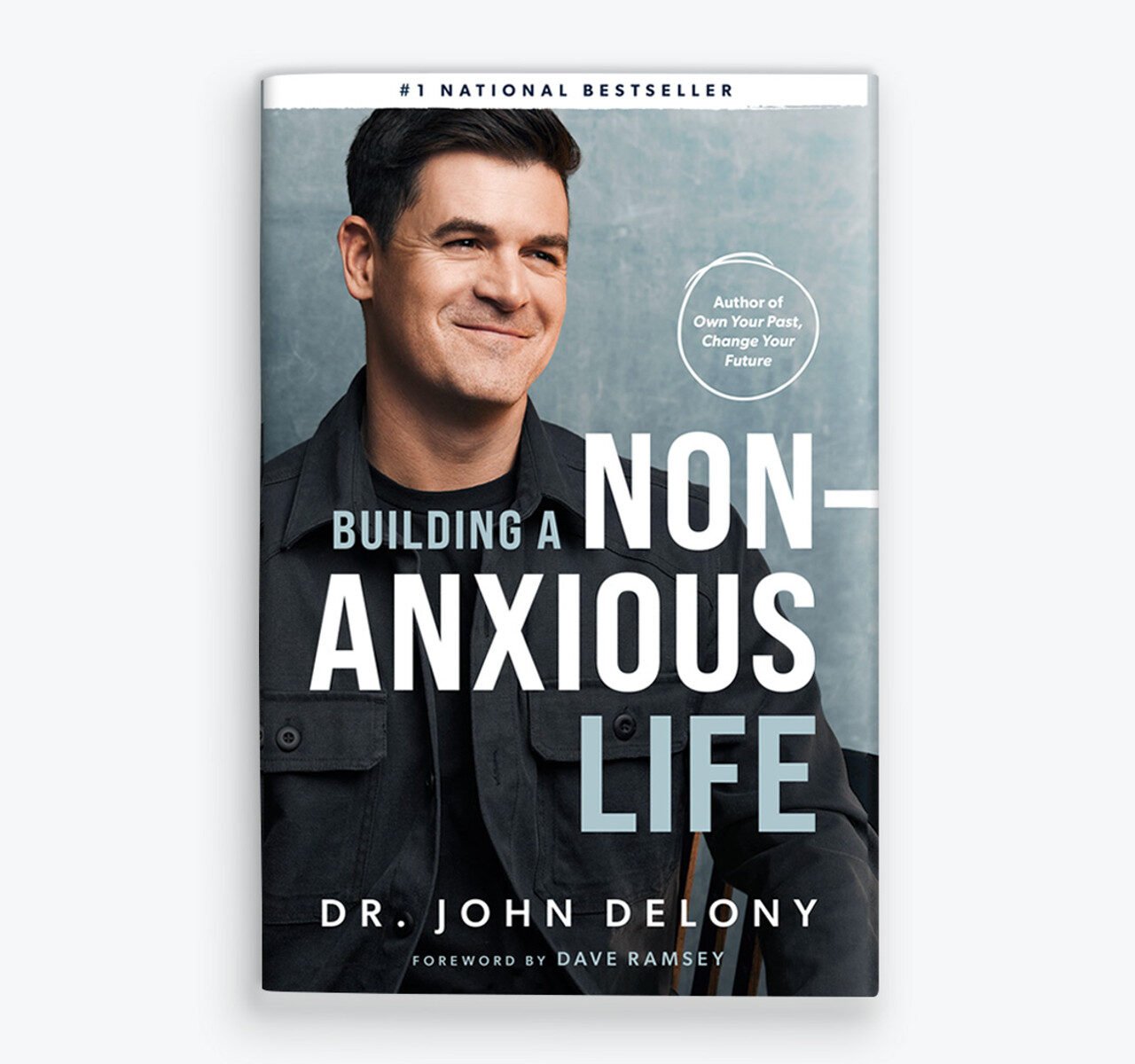
Building a Non-Anxious Life Book Review by Jeff Bush

By John Delony 

  • Anxiety is not the problem, it is just the alarm warning that something is wrong.
  • We use pills to wake us up in the morning and pills to put us to bed at night. The whole time our bodies are screaming at us and sounding alarms.
  • There’s no healing without grief. 
  • Anxiety is not an identity. 
  • Many times, a diagnosis of having an anxiety means that you look for it everywhere.
  • Medication is not the only form of dealing with anxiety.
  • Anti-depressants manage symptoms, but they do not cure anxiety.
  • You should not feel bad for getting another medical opinion, asking questions, and researching it yourself.
  • Anxiety medication should be for support, not a cure.
  • Peace is a choice.
  • Choosing to face reality is the first step to deal with anxiety.
  • Even though we act like we have everything together, our body knows and sends out alarms.
  • Choosing life alone is choosing to be anxious and burned out.
  • Communication does not mean connection.
  • Anxiety is the fantasy of “one day.”
  • Anxiety is worrying about the future while living in the present.
  • Trauma is your body’s present response to things that happened in your past.
  • You can’t change the things that happened to you, but you can choose what happens next.
  • You must release control and anchor belief knowing God is in control.
  • Currently there are more people on anxiety medication than ever in the world. Currently there are more people in professional counseling than ever in the world. And currently there is more money available and being made than ever in the world.

Brokenness Book Review by Jeff Bush

By Nancy Leigh Demos 

  • What God wants to do in our lives and hearts begins with brokenness. 
  • Brokenness and humility are timeless principles that runs like a thread throughout the Word of God.
  • Revival is not just a touch from God, it is a total takeover.
  • To be broken is the beginning of revival.
  • True brokenness is a lifestyle of agreeing with God on the condition of my heart. 
  • God doesn’t want to break your spirit rather your will. 
  • A person who has been broken before God, will also be broken and humble before others.
  • God‘s richest blessings will many times come through brokenness.
  • Proud people want to be served while broken people are motivated to serve others.
  • Brokenness brings blessedness. 
  • God draws near to the broken.
  • We think that brokenness is the end, and it is the end of ourselves, but it is a release to a new beginning that God has for us. Death brings life – John 12.
  • Pride causes us to build walls between us and God and between us and others.
  • True worship begins with brokenness and humility.
  • The closer we get to God, the more we see the need to humble ourselves. Job 40:4; 42:5-6; Isaiah 6:5. 
  • Don’t wait for God to break you, choose to be broken. 1 Peter 5:6
  • There is no brokenness when the finger of blame is still pointing at others.

Boundaries with Teens Book Review by Jeff Bush

By Dr. John Townsend 

  • Don’t forget about your teen years. You were not perfect, had attitudes, and probably messed up.
  • Get to know your teen instead of just trying to fix them.
  • Listen more and lecture less. 
  • Your teen needs to know that you care for him at a heart level.
  • When it comes to parenting, who you are carries much more weight than what you say. 
  • Be careful of knee-jerk reactions. 
  • Do not try to match your teens anger; you are the adult. 
  • Your teen needs your empathy even when you are the target of their rage. 
  • You must be charm-proof. Many times there is a charm between a dad and his daughter, or a mom and her son, that causes the parent to overlook the bad behavior of the teen. 
  • Your teen needs the safety of structure. 
  • Require your teen’s respect. 
  • Schedule family time with your teens. Walking together is much better than a movie. 
  • Disrespect is a sign of deeper issues.
  • Help your teen learn to be responsible by paying for things on their own.
  • Allow your teen to question faith to learn what they believe. Help them think instead of giving a quick answer that only helps you as the parent.
  • Help your teen to control their impulses, specifically when it comes to internet. Help them avoid harmful content, harmful people, and harmful over-involvement.
  • Establish that Internet as a privilege, not a need. 
  • As a parent, you have a lot of influence when it comes to your children’s attitude towards money. 
  • Be the grown-up; don’t engage in fighting with your teen.
  • Don’t get caught up in the crisis of today. Your teen needs you to pull them out of the crisis and know there is a tomorrow. 
  • As you grow in your own life, so grows your parenting. Work on your own character issues because your teen needs your help. 
  • You need God’s help. God can give you wisdom and insight. 

Boundaries For Leaders Book Review by Jeff Bush

by Henry Cloud 

  • Leaders lead people, and it’s the people that are going to get the job done. 
  • There’s not just one way to do things, there are many, but you win, or lose in the area of people. 
  • If leaders behave themselves correctly, they can get the results they desire, and the cultural problems will be solved.
  • A boundary is a created line where something begins and something ends. As the leader, you’re responsible for the boundaries. You create the rules and the agenda.
  • Who is the DRI? – the Directly Responsible Individual. 
  • You must take responsibility and own it.
  • Leaders define the boundaries, and successful leaders, define the boundaries in key areas.
  • Do you enhance or inhibit their ability to focus?
  • Clarity leads to attention and attention leads to results. 
  • How your people feel at work will determine how much they do at work.
  • Your position as a leader carries much more psychological and influential weight than you realize. You must be careful with what you say, and what you do.
  • If you can get rid of the toxic fear in your culture, people will begin to perform like professionals.
  • Relationship is the key to high performance.
  • You cannot help people get to another place if you do not understand what place they currently are in.
  • You must understand first. Listening is the glue that makes things work.
  • Set boundaries against pessimism. Don’t buy into helplessness, find a way. 
  • People must know two things about you as the leader: that you can overcome obstacles and that you are not immune to difficulties.
  • When, choosing a team, you need people who have character. If they do not have character, they will hurt your team.
  • In the busyness of life, you must not forget as a leader that it is your responsibility to lead yourself.
  • Set boundaries for yourself by staying open to receiving input from the outside.
  • We need outside eyes and ears to help us, and thinking we do not is only arrogance.
  • Good character, welcomes feedback, while foolish character does not.