Teatime Discipleship Book Review by Jeff Bush

By Sally Clarkson 

  • You do not have to be a Bible scholar to love others well. 
  • Enjoy the blessings of sitting at the Master’s feet and gathering others to sit there with you. 
  • Teatime can be a time to stop, sit, and steep on the Word of God. Let your soul be refreshed. As a result, you will be able to share with others.
  • When you become a host, you become responsible for all those under your roof. Invite others to partake of what you have and what you know.
  • Everyone needs friends and fellowship, but go look for it instead of waiting for others to open the doors to you.
  • Your house does not need to be perfect rather open for others to come in.
  • When you serve and help others, God will give you the friends that you need.
  • Relationships are built on time together.
  • Becoming a safe person, one that could be trusted, is vital for relationships and discipleship.
  • Hospitality and friendship are paths to share the love of God with others.
  • Be sure you are being spiritually nourished and refreshed so you can nourish and refresh others. 
  • Discipleship is not about looking good, or your knowledge or experience; it’s about being faithful to serve. 
  • Sometimes you need to move your own things aside for a divine appointment God has for you and someone else. 

Suffering is Never for Nothing: Book Review by Jeff Bush

By Elisabeth Elliott 

  • It is through the deepest sufferings that God teaches us the deepest lessons. 
  • We can come through anything knowing that God is in charge, He has a loving purpose, and He can transform something terrible into something wonderful.
  • A simple definition for suffering could be: having what you don’t want or wanting what you don’t have. 
  • We wonder if God is paying attention, and the answer is yes. He does love us and He is doing something and He will do something.
  • From the worst thing in the world (the cross) comes the greatest thing in the world (salvation).
  • Joy is not the absence of suffering, but the presence of God.
  • When Job asks God questions during his suffering, God never does seem to answer the questions. God replies back with more questions for Job.
  • Faith is not a feeling, it is a wield action of obedience.
  • Two things that should distinguish a Cristian are acceptance and gratitude.
  • Make it a habit of saying thank you Lord instead of complaining. 
  • You can thank God in advance because you know that no matter what happens, God is still in charge.
  • Gratitude honors God.
  • Gratitude prepares the way for God. 
  • If my life is broken for Jesus, it might mean that He wants to use it to feed the multitudes.
  • Suffering will cause us to long for that better country.
  • Colossians 1:24 and Philippians 1:29 speak about the joy of suffering.
  • The best fruit comes after the pruning. The best gold comes from the refining fire. Joy comes out of sorrow, and life comes out of death.

Stepping Up Book Review by Jeff Bush

By Dennis Rainey

  • A man stepping up does the following five things: 
        1. Protects his Passion. He does not touch or mess with a woman that is not his wife. He protects his eyes.
        2. Provides for his family. 2 Thes. 3:10
        3. Protects his family. If there’s a thief that comes, the man steps up and protects his family. Proverbs 4:10–15 says a father passes on wisdom to his son.
        4. Serves and leads his family. 
        5. Follows God‘s design for true masculinity. Micah 6:8. The core of a man’s life should be his relationship with God. 
  • Too many boys are growing up without fathers. So they grow up looking mature, but they are not. 
  • A boy must know his identity, who he is to God. That he’s accountable to a Creator God. 
  • A boy must know God has a plan for his specific life. 
  • They will get their life’s mission from their dad. 
  • A boy without a father figure is like an explorer without a map. 
  • Don’t leave your son to find out life on his own. 
  • Every boy needs a father who is a role model. Be involved and intentional as you raise your son. 
  • A boy doesn’t know that today’s foolishness is tomorrow’s shame. 
  • Your greatest pressure as a dad is to withdraw from your son when he kicks back against you. 
  • Many fathers help their son know how to work and drive but not how to avoid sin traps, character, convictions and become a man. 
  • A dad needs a relationship with his son. Relationships are built on trust and transparency. 
  • Stepping up to be a man is not a one time decision but a journey of a million steps, its a lifetime process. 
  • Nothing comes to the man that is passive, except for failure.
  • Real men accept responsibility instead of passing blame; they find solutions instead of making excuses. 
  • Being a man requires initiative and initiative requires action. 
  • Doing nothing is the easiest thing to do, it’s what the majority of people do. Take a stand to teach your son to respect, your daughter to dress correctly, your own eyes to not wander and loving your spouse. 
  • Praying with you wife is one of the most powerful things you can do as a man. 
  • No amount of success at work can take the place of failure at home. 
  • We were made to generationally outlive ourselves by mentoring other young men. 
  • “All that is necessary for evil to triumph is for good men to do nothing”— Edmund Burke
  • Protect your marriage, your relationship with your wife. 
  • If there’s ever been a day for men to put their hand to the plow and not let up (with their wife and family), it’s today. 

Start With Why Book Review by Jeff Bush

By Simon Sinek

  • There are leaders and those that lead. Leaders hold influence and inspire others.
  • 80% of people say they do not have their dream job. 
  • There’s only two ways to influence human behavior: you can manipulate it or inspire it.
  • Most companies do not know why their customers are their customers, they erroneously think it’s because they have better quality. 
  • Every company knows what they do, that is easy to detect. Some companies have figured out the how. Very few companies have figured out the why – their purpose and belief, the reason they exist.
  • Every company or individual that is successful works from the inside out, they have figured out why they do what they do.
  • What a company does is obvious but the why is the real success.
  • People do not buy what you do, they buy why you do it.
  • Knowing your why is not the only way to be successful, but it is the only way to maintain a lasting success.
  • When your why goes fuzzy it is much harder to maintain the growth, loyalty and inspiration that gave your original success.
  • Detecting your why will help others that have the same feeling. 
  • A failure to communicate your why only causes frustration.
  • Great leaders start with the heart before the mind, they start with the why.
  • When a company does not know their why, it is impossible for the outside world to understand it.
  • Everything you say and do comes from your why. Your why is a belief. 
  • When a salesman believes in what he’s selling, there will be more sales. 
  • If you know the why, you’ll know what decisions to make. 
  • Trust is a feeling, not a rational experience. 
  • Leading is not the same as being a leader. 
  • Great companies don’t hire skilled people and motivate them, they hire people who are already motivated and equip them. 

Spiritual Warfare is Real Book Review by Jeff Bush

By Jim Cymbala 

  • Satan is the cause of evil and the originator of evil. He is just as real as the Lord is. 
  • When you became a Christian, you entered in the spiritual war. 
  • Satan is not omniscient, omnipresent, or omnipotent.
  • Satan is originally from heaven, God’s beautiful creation. But he fell from Heaven and is against God and all that has to do with God. 
  • The devil looks for weakness, that’s why we are told to be strong in the Lord. 
  • The kingdom of darkness is only defeated by the Kingdom of Light. 
  • We have many things prepared for us and at our disposal, but faith is what will turn the key. 1 John 5:4. 
        • Jesus was never amazed at anything in this world except for someone’s faith. 
        • Faith comes from hearing and hearing from the Word of God. 
  • God says believe, while Satan says don’t believe. 
  • Faith is the substance of things hoped for and the evidence of things not seen. Faith is sure of the future though can’t see it. Faith gives assurance about future. 
  • Faith says look at the future, Satan says look at the now. 
  • We can be victorious today through faith. 

Spiritual Disciplines for the Christian Life: Book Review by Jeff Bush

By Donald S. Whitney 

  • Disciplines without direction equals drudgery. 
  • How can we pursue holiness? How can we be more like our Lord Jesus Christ? We must have discipline. 1 Timothy 4:7 — “exercise thyself rather unto godliness.”
  • Man arrives to maturity by way of spiritual discipline.
  • Our Lord modeled self-discipline for us.
  • Just as practicing to play an instrument requires discipline, so growing in your spiritual life requires discipline.
  • God’s Word.
        • No spiritual discipline is more important than the intake of God’s word.
        • Listen to the Word of God. Romans 10:17. 
        • Read the Word of God. How often do you need wisdom, encouragement, and strength? Every day! Then read God’s Word every day.
        • Discipline yourself to read the Word of God. Find a time. Find a plan. Find a word, verse, or thought to meditate on throughout the day.
        • What is one thing you can do to enhance your intake of God’s Word every day? 
        • Interview the text that you read. 
        • Consciously commit yourself to take at least one action from your daily intake of God’s Word.
  • Prayer. 
        • We learn to pray by meditating on the Scripture. 
        • Pray with others.
        • Where there is godliness, there is prayer.
        • Men and women of God are always people of prayer. 
        • Worship is responding to and focusing on God. 
        • Worship is a discipline to be cultivated.
  • Evangelism.
        • New Testament evangelism is presenting the gospel. 
        • Not every Christian should use the same means of evangelism, but every Christian should evangelize.
        • Evangelism is not a gift for a few, all of God’s children are to be ambassadors.
        • Before we make excuses, we should stop and ask ourselves, are we really too busy to fulfill the Great Commission?
  • Serving for Godliness.
        • If we don’t discipline ourselves for the purpose of God’s kingdom, we will probably never serve. 
        • Serving goes against two of our biggest fleshly enemies, our sloth and our pride.
        • We are to serve the Lord with gladness. It is a privilege, not a burden. 
        • Psalms 84:10 — “For a day in thy courts is better than a thousand. I had rather be a doorkeeper in the house of my God, than to dwell in the tents of wickedness.”
        • If we are to be like Christ, we must learn to serve.
  • Stewardship. 
        • Unless we practice self control, our bodies will choose to please self more than please God. 
        • Evaluate your use of time. The time to value time is right now.
        • Decide to discipline yourself and use your time for godliness.
        • We value time at the moment of death. 
        • Realize God owns everything you have. We are just temporary stewards of the things God owns.
  • Fasting. 
        • There is fasting from food as well as times to fast from entertainment and other areas.
        • The Lord expects His children to fast. He doesn’t say “if” but “when” you fast. 
        • Before we fast, we must have purpose, a God-centered purpose.
        • Fasting is one of the best friends we can offer to our prayer. 
        • It is more rewarding to feast on God than food.
  • Silence and Solitude for the purpose of godliness. 
        • God used silence and solitude in the life of both Moses and the Apostle Paul. 
        • Jesus practiced silence and solitude. 
        • One of the biggest reasons to get alone is to better hear God speak. 
        • We have an addiction to noise, and it’s connected to a spiritual shallowness. 
  • Spiritual Discipline of Journaling. 
        • A personal writing of thoughts to the Lord. Prayers, joys, verse challenge you read, etc.
        • Consider the discipline of journaling for godliness, and to remember God‘s faithfulness.
  • Learning for the Purpose of Godliness.
        • Wise and righteous people are teachable and continue learning.
        • Wise men seek and store knowledge. 
        • Mark 12:29–30. Our Lord teaches us to love Him with all of our mind.
        • How can we know more about our Lord if we do not learn more about him?
        • Learning is mostly intentional by discipline instead of accidental.
        • Most students don’t learn because their parents don’t learn. When was the last time you read a book to your children?
        • Growing Christians are reading Christians.
        • Godly learning leads to godly living. 
  • Perseverance in Godly Discipline.
        • Laziness does not lead to godliness.
        • Even though self-discipline is not easy, it is not self-punishment. Self-discipline is actually doing what your spirit need you to do.
        • Just as the only way to God is through Christ, so the only way to godliness is through Christlike practice of spiritual disciplines.

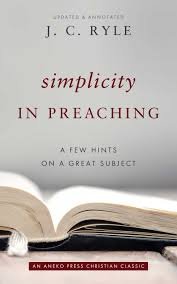
Simplicity in Preaching Book Review by Jeff Bush

By JC Ryle 

  • Unless you are simple in your preaching, you cannot be understood, and if you cannot be understood, you are of no good to the listeners. 
  • No greater mistake can be made than supposing you can easily be understood. 
  • The majority of preachers preach over the head of their listeners. 
  • It is not easy to write a clear and straightforward sermon that can be easily understood. 
  • To write what is simple, striking. and easily understood is a rather hard thing. 
  • If you are going to attain simplicity in preaching, you must have a good understanding of your subject. 
  • Do not preach on an obscure passage that you do not know or understand. 
  • Be careful of spiritualizing and drawing out something that the Holy Spirit never put in the text. 
  • If you want to be simple, there must be order your sermon.
  • If you do not understand a passage or subject, you cannot make it simple; and if you do not make it simple, it will not be understood.
  • Use simple words. Simple words, are not words of one syllable rather words that are commonly used.
  • Use antidotes and illustrations. Look at the sermons of Jesus, He referred to the birds of the air, the fish of the sea, the sheep, the goats, etc.
  • The best speaker can turn the ear into an eye, causing people to imagine and see.
  • You will never preach with simplicity without a lot of hard work. Take time to prepare and develop your sermons.

Simple Discipleship Book Review by Jeff Bush

By Dana Allin

  • Discipleship is more of a journey than it is an event. 
  • Making disciples is the primary task to which Jesus calls us.
  • Many churches know that making disciples is a core value of the church, and will even put it in their mission statement, but are failing at doing it.
  • Discipleship, which is helping others love Jesus more, has too often been overcomplicated.
  • A reason we’ve failed in making disciples is because we do not have a clear, Biblical understanding of what a disciple of Jesus is to look like. 
  • If the church helps people love God with their heads and hands, yet not with their hearts, they’re doing a great disservice.
  • As churches, we sometimes confront discipleship as everyone needs to grow in the same areas, but that is not always the case.
  • We are not only saved by grace, but we continue to grow in grace as disciples of Christ.
  • Discipleship is so much more than dispensing information. A big misconception is that the more information we have, the more transformation will occur.
  • True discipleship is about being transformed.
  • Discipleship transformation does not happen at a microwave speed.
  • To disciple, a person should know you care for them and they’re not just a project. 
  • True growth takes time and intentional effort.
  • A mistake in discipleship is feeling you have to be a mentor, which is one who has more experience. It is good to see yourself as a coach, which doesn’t mean you are better than the other person, yet you are drawing out the best of the other person.
  • Clarify your goal as where you want the person to be after completing discipleship.
  • Be careful as you give advice. Do not try to offer solutions for everything they ask, rather ask questions questions that will help them think through what they need to do.
  • If you can help disciples, think for themselves, they will be better prepared to disciple others in the future.