The Path to Being a Pastor: Book Review by Jeff Bush

By Bobby Jameson

  • Instead of asking if you’re called, ask yourself two other questions: Are you qualified to be an elder? Should serving as an elder be your job? 
  • If you want to pastor, you must meet the qualifications of a Biblical elder. 
  • Two problems with using the word “calling.” First is exegesis, and second is entitlement.
  • We are called to holiness, but Bible doesn’t seem to use the word calling as to a vocation. If the vocational call is from God, you shouldn’t question yourself and others cannot question it, in fact, they need to get behind what God is doing. 
  • Aspiring to be a pastor (as opposed to called) is best for the following reasons:
        1. It is more Biblical language — 1 Timothy 3:1
        2. It is more Humble — it suggests you are not there yet. 
        3. It is more Accurate — maybe you will be a pastor or maybe not, but calling implies you have to be the moment you are called. 
        4. It is more Fruitful — how can you serve and develop into this role. 
        5. It is more Freeing — instead of the lightning from heaven, it puts emphasis on if you qualify and if others believe you are qualified. 
  • Desire + Ability + Opportunity. 
  • If you candidate at a church and they do not call you, there’s nothing further for you to do there other than pray. On a smaller scale, what opportunities are before you right now to better prepare for ministry?
  • A good question to ask yourself is, “Would someone at your job be able to tell if you were aspiring to be a minister?” 
  • When 1 Timothy 3:1 uses the word faithful, it’s speaking of behavior more than belief. 
  • Leadership in the home is prime proving grounds for leadership in the church. 
  • Fathering and eldering overlap in many areas. 
  • An elder must be: 
        1. An example. All Christians should be, but an elder must be. 
        2. Able to lead others. This starts and can be detected by how he leads his family. 
        3. Apt to teach God’s Word. 
  • Pursue godliness. Pursue godliness more than you pursue position or publicity or prestige. Pursue godliness more than you pursue the pulpit. Pursue godliness more than you pursue others’ recognition of your godliness. Pursue godliness when no one is looking and no one cares. Pursue godliness when it seems like godliness is not getting you where you want to go.
  • How is your online presence? Are you soon angry? Are you a brawler? 
  • Reaction breeds overreaction. 
  • If you’re not godly out of the spotlight, you won’t be godly in it. 
  • Learn to pastor from other faithful pastors.  Seek godly examples. Place yourself under godly influence. 
  • Every pastor is a sheep before he is a pastor. 
  • Live a life others can imitate. If everyone read the Bible like you do, would they be better as a result? If they prayed, spoke, responded on social media and clicked the links you do, would they be better as a result?
  • Aim to be mistaken as an elder before you are an elder. 
  • Learn to care for souls. 
  • You want to be a leader, then lead something. Whether a wife or family, small group, class or reading group, can you lead others? 
  • Prayer is not preparation for a pastor’s work, it is the pastor’s work. 
  • Flee pornography. It will sink your hope, rob your joy, cause you to not be blameless, and harm your marriage and your soul. 
  • Pastor your children— Ephesians 6:4
        • Lead them in prayer and in worship. 
        • Attend to your children individually. 
        • Learn to love what they love because you love them. 
  • Suffering is a stewardship, and you can steward it in the right way. To profit from suffering, you must prove it. 
  • Being under authority is just as important as being in authority. How you handle one determines how you handle the other. 
  • Just because you have ambitions doesn’t mean they are good or godly. 
  • The opposite of ambition is not passivity rather selfless ambition. 
  • As good as pastoring is, Jesus is better.

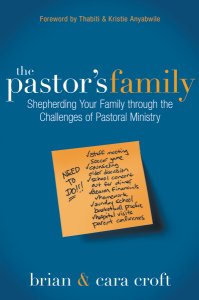
The Pastor’s Family Book Review by Jeff Bush

By Brian and Cara Croft 

  • You should not neglect your family for ministry, but you should not idolize your family over ministry either. 
  • Your ministry can begin together as a family and end together as a family; they do not have to be separate. 
  • What if God judged our ministries according to our family unity as opposed to our ministry success? 
  • The temptation to prioritize ministry over family is not new. It has been a struggle for many good men. 
  • The squeaky wheel gets the grease. The problem in ministry is that many times others get the attention and your family gets left out. 
  • In a recent conference, the author did a survey and over 77% of the pastors admitted to not having a good marriage. 
  • A pastor must recognize his sin of neglect to the family and ask forgiveness. First to God and then to his wife. 
  • A pastor’s child that constantly sees dad choose ministry responsibilities over family, will become exasperated (Ephesians 6:4; Colossians 3:21)
  • Be careful not to pile too many things on your wife. 
  • As a pastor, be careful not to treat other women in your church better than you treat your wife.
  • There are four practical ways you can consider your wife: 
          1. Loving her. 
          2. Encouraging her. 
          3. Discipling her.
          4. Praying for her. 
  • If your marriage is struggling, your ministry is also struggling.
  • A pastor should take every day of vacation he’s allotted in the year. 
  • When was the last time you thought about all the things you’re thankful for in your spouse? When was the last time you told him?
  • There’s great impact in an unanswered phone call. When you are at dinner or  with your family, leave your phone alone and don’t answer. 

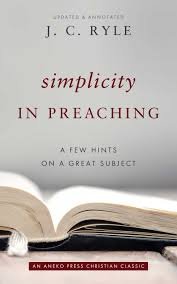
Simplicity in Preaching Book Review by Jeff Bush

By JC Ryle 

  • Unless you are simple in your preaching, you cannot be understood, and if you cannot be understood, you are of no good to the listeners. 
  • No greater mistake can be made than supposing you can easily be understood. 
  • The majority of preachers preach over the head of their listeners. 
  • It is not easy to write a clear and straightforward sermon that can be easily understood. 
  • To write what is simple, striking. and easily understood is a rather hard thing. 
  • If you are going to attain simplicity in preaching, you must have a good understanding of your subject. 
  • Do not preach on an obscure passage that you do not know or understand. 
  • Be careful of spiritualizing and drawing out something that the Holy Spirit never put in the text. 
  • If you want to be simple, there must be order your sermon.
  • If you do not understand a passage or subject, you cannot make it simple; and if you do not make it simple, it will not be understood.
  • Use simple words. Simple words, are not words of one syllable rather words that are commonly used.
  • Use antidotes and illustrations. Look at the sermons of Jesus, He referred to the birds of the air, the fish of the sea, the sheep, the goats, etc.
  • The best speaker can turn the ear into an eye, causing people to imagine and see.
  • You will never preach with simplicity without a lot of hard work. Take time to prepare and develop your sermons.

Planting by Pastoring Book Review by Jeff Bush

By Nathan Knight 

  • Don’t look at the best business models, look to God. 
  • We love size and speed, but a church can grow and be healthy without those. 
  • Most authors and church planters say that size and speed are important in church planting, but when we go to Scripture, the narrative of God is more on slowness. Consider Abraham and Sarah who were childless for 25 years after being told they would have a child. Consider Israel who was is in slavery in Egypt for 420 years. Or consider the coming of Christ in which thousands of years have passed.
  • The essence of a church is not their financial stability.
  • Multiplication does not come at the expense of depth. 
  • Planting by pastoring is glorious and grace filled, but it is not efficient. It takes time and energy. 
  • Evangelism is not the finish line in church planting. 
  • We want to know names, not just see numbers. We want to know stories, not just statistics. 
  • We plant churches to pastor people individually so we can worship Jesus collectively.
  • What if Jesus did not intend for churches to look like McDonald’s serving a billion people, rather look like your kitchen to serve your family and friends?
  • Pastor’s sacrifice for their sheep
  • Jesus knew His people and His people knew Him. He pastored them as names and not numbers.
  • The foundation of the church is Jesus and His Gospel. If you are a church planter, you should ask yourself what lies at the foundation of this thing that you are spending so much time building. 
  • Let the size and significance of the church you are planting take care of themselves. Slow down and press the Gospel into the lives of the people just as Jesus did.
  • The people need to know that you are wanting to help them, not get something from them. You are a pastor, not an entrepreneur.
  • Jesus gathered men before He ever held a public campaign or evangelistic effort.
  • A planter pastor must have character, competence, and compassion. 
  • Charisma might attract people on the front end, but it rarely endures. Your love for Jesus will keep you there, not your charisma. 
  • The power is in the Gospel. A magnetic personality and eloquent composure is nice to have, but they are bonus, extra, and unnecessary. 
  • If you are planting churches to be respected, heard, and esteemed, you are doing so for the wrong reasons.
  • Plant churches for the identity of Jesus, not to find or focus on your own identity.
  • Our areas do not need community centers and places of entertainment, they need a church where Christ is preached.
  • If you’re going to plant a church you need to be sent out by a church. A church that will love you and lead you.
  • A church planting team will minimize weaknesses and maximize effectiveness. Throughout the Bible, we see teams going out. Paul and Barnabas, Jesus and the disciples, and even many letters that Paul signed included a team of people.
  • In planting a church, we can get so involved with a list of what needs done and neglect our own souls. 
  • A team helps you with encouragement and accountability.
  • Prayer is your lifeline to God. Prayer is essential.
  • You should allow people to challenge your thinking. Is the place you are wanting to go truly a place of need? 
  • When, choosing a city, ask yourself if you are reflecting the need of Romans 15:19–20.
  • Preach, pray, love, and stay in a community. 
  • Love people, not programs.
  • Use as many evangelistic tools as possible, but one of the best tools will be the church members’ influence on other people.
  • Church planters can rest in God’s fruit as they faithfully scatter the seed.