
Spirit-Controlled Temperament

By Tim LaHaye (summary by Jeffrey Bush)

  • Temperaments are the inborn traits that affect all behavior. They are based on
    hereditary factors, and six people contribute to these: the two parents and four
    grandparents.
  • Character is the real you. This is the hidden person of the heart – 1 Peter 3:4.
    Sometimes referred to as the soul of a person.
  • Personality is the outward expression of a person, which may or may not be the
    expression of a person‘s character. The place to change someone’s behavior is on
    the inside, not the outside.
  • Temperament can be changed through the Holy Spirit – 2 Corinthians 5:17
  • You can use your background as an excuse for your behavior only until you accept
    Jesus Christ. At the point of salvation, you have the power to change your conduct.
  • There are four different types of temperaments: sanguine, choleric, melancholic, and
    phlegmatic.
  • Each temperament has its strengths and its weaknesses. Not one is better than the
    other.
  • The sanguine is a people-person, and enjoys talking and being with others. Simon
    Peter from the Bible was a sanguine. Most salesman, preachers, and actors are
    sanguine. They are never moderate about anything.
  • The choleric is a hot, quickly-reactive temperament. The apostle Paul was a choleric.
  • The melancholic is analytical and perfectionist type. He is a faithful friend, but does
    not make friends easily. Most musicians, theologians, scientist, engineers, and artist
    are melancholy. Moses was a melancholic.
  • The phlegmatic has a high boiling point and rarely explodes in laughter or anger.
    They can easily make everyone laugh while keeping a straight face. They are masters
    of things that take patience and detail. Abraham is a good example of a phlegmatic.
  • Rarely is someone composed of only one temperament. Usually, they have a
    predominant and secondary temperament, and possibly more.
  • Abraham went from being timid to a man known for his trust in the Lord. In God,
    personalities and lives are changed.
  • Because temperament is based on the natural man, it’s easier to diagnose the
    temperament of a lost person or carnal Christian than that of a spiritual person.
  • The temperament with the greatest strengths and potential also have the greatest
    potential of weaknesses.
  • Faith in Christ lifts a person above their temperament.
  • Selfishness is a basic weakness of every one of the temperaments.
  • Our strengths and weaknesses prevail by our choice.
  • We maximize our strength and minimize our weaknesses through the indwelling of
    the Holy Spirit.
  • Any spirit-filled Cristian will have the strengths of Galatians 5:22–23, without
    weaknesses.
  • The greatest goal of a Christian is to be filled with the Holy Spirit.

How to Talk So Kids Can Learn

By Adele Faber and Elaine Mazlish (summary by Jeffrey Bush)

  • As teachers, our goal is greater than just passing along facts and information.
  • If we want our students to be caring human beings, we must respond to them in
    caring ways.
  • If we are going to help our students in academic ways, we need to learn to help them
    in emotional ways. In one sense, we are parenting our students.
  • What is going on in their home life will affect their school life as well.
  • Punishment does not always deter misconduct, it merely makes the offender more
    cautious in committing his crime, more joy in concealing his traces, and more skillful
    in escaping detection.
  • Instead of immediate punishment, present expectations and offer choices.
  • Let your students overhear you saying something nice about them.
  • Who knows what any of us could become if we knew that someone believed in us.

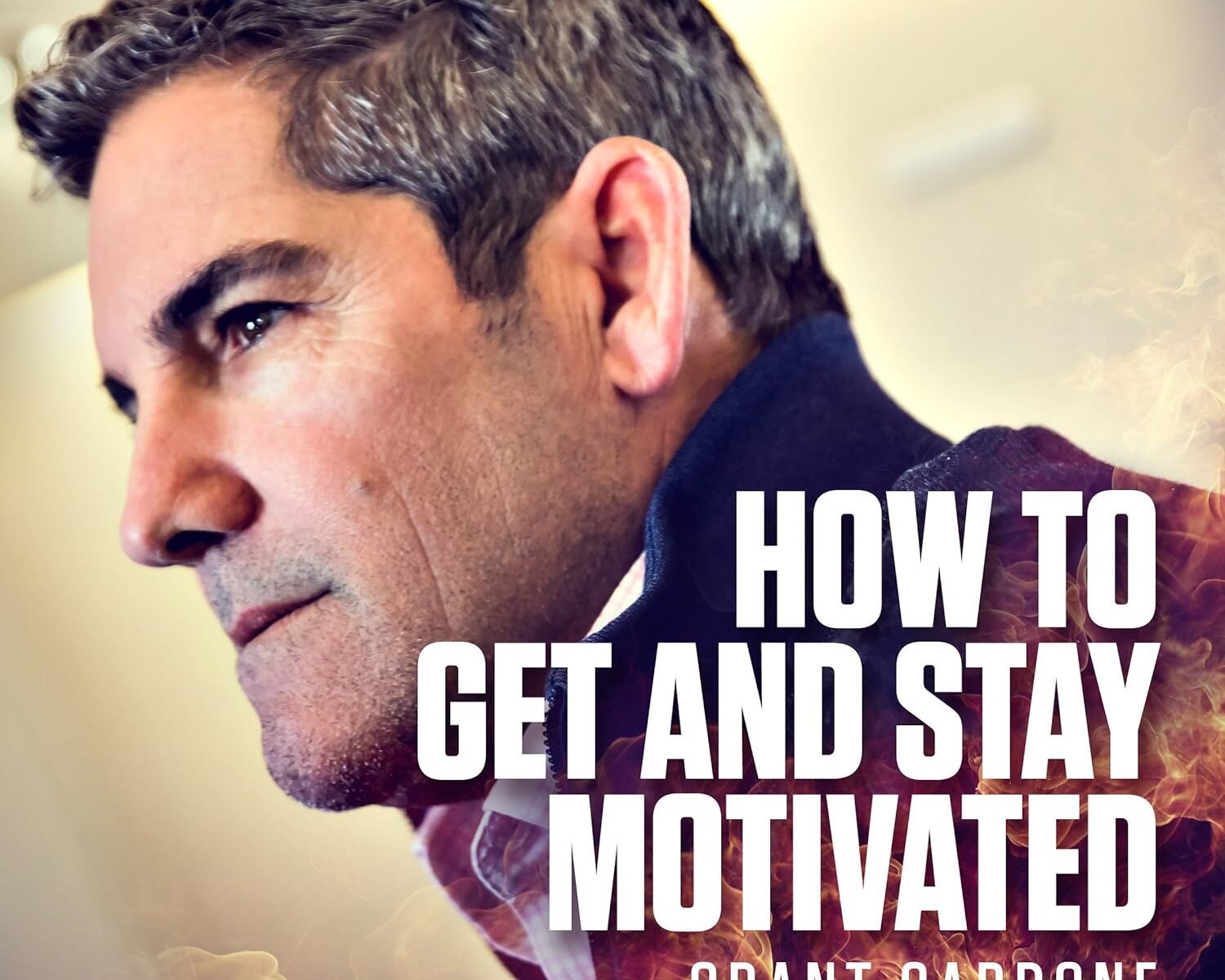
How to Get and Stay Motivated

By Grant Cardone (summary by Jeffrey Bush)

  • If you’re not motivated, you’re not going to get up and take action.
  • No one can tell you what you are capable of, only you know your true potential, so
    work towards it.
  • Shoot for the extra ordinary, not just the ordinary.
  • Do what others are not willing to do.
  • Be willing to fail.
  • Be unique . Be set apart by your actions and attitudes. Don’t try to be like everyone
    else, be different.
  • Do things that push you and challenge you. Most people do the easy things,
    therefore they are not motivated.
  • Give more than is expected of you. Don’t worry about people taking advantage, you
    will actually receive much more by giving more.
  • Surround yourself by winners. Get a mastermind group. Be around people that
    stretch you and become fuel for your dreams.
  • Read one book a week. The average American reads one book per year. If you want
    to separate yourself and reach your full potential, aim to read one book a week.
  • Cut out the negative people in your life. Reach up, not sideways or down, or you will
    kill your dreams and motivation.
  • Stay uncomfortable. Your discomfort is an indication that you are pushing through
    something.
  • Do things you’re scared to do. It will give you more confidence, boldness, and
    motivation.
  • Motivation isn’t something that you go and fill up on, you have to refuel yourself. Do
    things you are afraid of, and you will be refueling.
  • Surround yourself with positive reminders. Great people create their own
    environment. Surround yourself with positive messages and you will be positive and
    stay motivated.
  • Avoid people that refuse to accept responsibility in their life.
  • Throw the concept of balance out the window and seek to be exceptional. Seek to
    be exceptional in every area of your life.
  • Look to control time and not manage time.
  • Make quality time for your family every day. Don’t look for the time, make it.
  • Use and keep a full calendar.
  • Go to sleep early at night. If you stay up too late, you likely waste time or take in junk
    from TV that you do not need.
  • Get things done before the deadline. People that wait until the deadline usually don’t
    accomplish as much. It will motivate you to beat the deadlines.
  • Have a daily battle plan – write a to-do list for every day. Let everyone else just show
    up for work, but you show up with a daily battle plan, and you’ll accomplish more
    and be more motivated.
  • Be the most professionally, best dressed person in the room. Motivation is an inside
    job, so don’t take shortcuts on how you dress. Don’t worry how everyone else
    dresses.
  • Take enough time off that you are tired of taking off. Don’t go away for two days,
    take the amount of time you need until you are fired back up and can’t wait to go
    back to work.
  • Avoid drama TV and drama radio. You do not need the negative drama influence in
    your life, so get it out. Most news channels are not really giving news rather giving
    opinions and drama.
  • Look for an opportunity to help someone every day. Each person and circumstance
    will be different, but look for new opportunities every day. When you seek to help
    someone else, you will end up being energized and motivated.
  • You need to get a little bit of exercise every day. The hardest thing about exercise is
    getting started, but once you do, it will motivate you.
  • Eat healthy foods you can afford, and it will affect the way you feel.
  • Be energetic, whether you feel like it or not. It doesn’t matter if you are in your
    groove; force yourself to be energetic.
  • Take a power nap. Doesn’t matter what others think, if a nap will help you, then do it.
  • Listen to some music that will energize you. You don’t have to listen all day, but do
    listen.
  • Stop saying no to everything and start saying yes. You don’t need to think about it or
    get back to someone, say yes, even if you are not comfortable or enjoy it. You might
    find that you like new foods and new hobbies if you will just learn to say yes more
    often.
  • When people say things cannot be done, be deaf towards it. You will most certainly
    hear negative news, but be deaf towards the naysayers.
  • Be the originator of news instead of the receiver of news. Make news instead of
    watching it.
  • Become the expert in your space, be the person that people go to in your area of
    expertise.

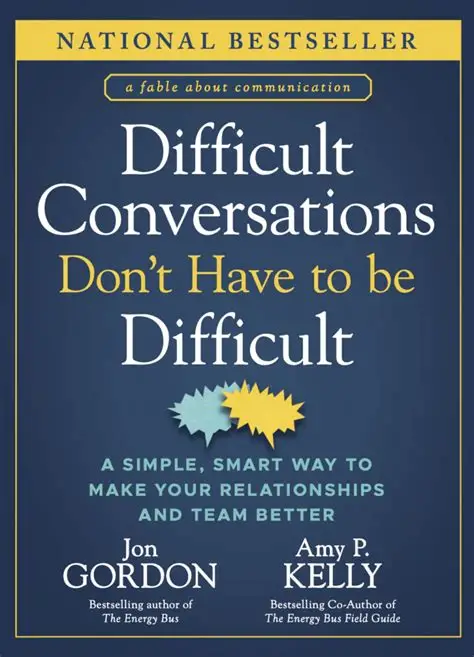
Difficult Conversations Don’t Have To Be Difficult

By Jon Gordon (summary by Jeffrey Bush)

  • Ego gets in the way of everything.
  • It takes courage to be transparent.
  • Relationships are what matter most.
  • If you want people to trust you, you have to lead the way. Trust takes time.
  • No one creates success alone; it takes a team.
  • If the “we” is not bigger than the “me,” you will suffer the consequences.
  • You must tell the truth if you’re going to better your team.
  • Truth and trust over time will lead to transformation.
  • Unresolved issues over time become roadblocks.
  • If you want the fruit, focus on the root.

The Anxious Generation

By Jonathan Haidt (summary by Jeffrey Bush)

  • Social media has made people to be “forever elsewhere.” Even when people are not
    on their phones (in class or listening to you), they are mentally in the metaverse.
  • The first generation that went through having Internet in their hands (early 2010’s)
    became more anxious, depressed, and self harming.
  • Studies show that the same year young people began using social media (smart
    phones), they began having a harder time connecting with other humans.
  • The increase of suicidal thoughts and threats increased shortly after smart phones
    and Internet became readily available.
  • Physical play for children is like work for adults. They need to play to learn and know
    how to interact with others, with life, and with situations.
  • The simple fact of playing will teach children more than information and instruction.
  • Experience, not information, is the key to emotional development.
  • Play-based childhood, not phone-based childhood, will teach and develop a child.
    Though smartphones can be great, they become experience-blockers.
  • We are overprotecting our children in the real world while under-protecting them
    online. If we really want to protect our children, we should delay their entry into the
    online world and send them outside into the real world to play instead.
  • There is no way to live without conflict; happiness cannot be reached by removing all
    triggers from life.
  • For physical development, children need physical play and physical risk taking.
    Virtual games offer no risk taking. For social development, they need friendships,
    which are embodied.
  • Children must face setbacks, failures, shocks, and stumbles in order to be prepared
    for life. Overprotection interferes with this and makes them more likely to be fragile
    and fearful as adults.
  • Fearful parenting keeps children on home base too much, and prevents them from
    growing strong and developing the dis-attachment they need to survive in life.
  • Teens that spend time on social media are more prone to anxiety, depression, and
    other disorders while teens that spend time with others (such as team sports and
    religious communities) have a better mental health.
  • A 2014 study conducted by Highlights magazine on children ages 6-12 reported that
    62% of children say their parents are often distracted by their phones while spending
    time with them.
  • Cell phones have connected us to everyone around us while disconnecting us to
    those closest to us.
  • Sleep deprivation, caused largely because of smartphones and screens in the
    bedroom, have caused a growing amount of mental illnesses.
  • People cannot really multitask, they just switch attention from one thing to another
    while losing attention span in the meantime.
  • Studies show that ADHD is much more present with those addicted to video games
    than anyone else.
  • Girls that spend five hours a week on social media are three times more likely to be
    depressed than others.
  • During Covid, there was a spike in people going to doctors thinking they had
    Tourette’s syndrome. Doctors confirmed they did not have it, and began to call it the
    mass social media induced illness.
  • Around the world, there’s a problem with girls having a social media addiction and
    guys having an internet gaming disorder.
  • Video games have made it easier for boys to retreat to their bedrooms instead of
    maturing in the real world.
  • Studies have found people that play on teams and are with a community are happier
    than those that stay alone. Humans are embodied, a phone-based life is not.
  • Our phones drown us in quantity while reducing quality.

Stronger Together

By Dave Harvey (summary by Jeffrey Bush)

  • Partnership is a crucial piece to the puzzle of leadership longevity and mission
    impact.
  • Partnerships must be rooted in doctrinal conviction.
  • Partnerships are needed for a church planting movement.
  • Proud people don’t play well in the partnership sandbox.
  • Accountability doesn’t shadow innovation, it is essential to it.
  • The more gifted the leader, the more essential is the accountability.
  • Interdependence says we need each other, collaboration says let’s find a way to
    accomplish things together.
  • As the African proverb says, if you want to go fast, go alone. If you want to go far, go
    with others.
  • Ego seeks loyalty more than it does honesty.
  • The seed of egotism lies within each of us.

Leading Character

By Dan B. Allender (summary by Jeffrey Bush)

  • Leadership is ultimately about character, no matter what your position is.
  • Our character reflects our Creator. We are made in the image of God.
  • When a leader’s failures are exposed, the easiest response is to cover with fig leaves
    and cast the blame to others.
  • Taking ownership for failures is crucial in leadership.
  • If you are too busy to pray, you should reevaluate and make time.
  • Grow in wisdom.
  • God might use our strength in the battle, but He also uses our weaknesses for His
    glory.

Leadership Lessons of Robert E. Lee

By Bil Holton (summary by Jeffrey Bush)

  • Throughout the war, General Lee was extremely self-denying in the matter of food.
    He refused to enjoy a full course meal when his army was half-starved. — Douglas
    Southall Freeman
  • Truly involved leaders make themselves accessible instead of distancing themselves
    from the “troops” by taking up residence in ivory towers.
  • Apologies are the heart’s way of reminding the ego that everyone has value, that
    someone else besides you is important.
  • The absence of legitimate support, particularly from top management, kills as many
    companies as a musketball through the heart.
  • You cannot define best practices out of context. Of course, there are some best
    practices that work every time: truth, honesty, integrity, wisdom, sensitivity, prayer,
    encourage.
  • Today, more than ever, leaders must rise above the inertia of inaction.
  • Lee emerges as the whole person because his prewar, war and postwar career are
    totally free of contradictions: he acted like the same man under all circumstances.
    Clifford Dowdey
  • Many people are seen as leaders because of circumstantial evidence. The evidence
    referred to is: how the leader reacted to the situation, whether he/she met with
    success or failure, how direct reports felt about the experience, if mistakes were
    learned from, how decisions were made, whether responsibilities and
    accountabilities were owned and acted upon with integrity, skill, etc.
  • The great leader adapts to circumstances without complaint.
  • Leaders, as coaches, will want to develop four general, coaching competencies:
    impassioned motivator, sensitive counselor, enthusiastic sponsor, and dedicated
    educator.
  • To be effective, to be effective at all, those who assume the mantle of leadership
    must cultivate character. It is character that shines as a commanding presence. It is
    character that inspires those who follow to outperform themselves. It is character
    that makes one “awesome and complete.” It is uncompromised character that
    removes one from “common clay.”
  • One of the survival skills for managers who want to remain productive and
    responsive to performance improvement challenges is the ability to effectively
    manage civilized disagreement.
  • Since confrontation is natural, leaders must know how to minimize or eliminate
    dysfunctional in-fighting and seek constructive outcomes and lasting peace.
  • As those who are asked to lead people and manage systems through these
    turbulent, chaotic times, you must be courageous “amid darkness and storm.”
  • As leaders who navigate organizations through stormy business landscapes, refuse
    to be intimidated by naysayers. Successful leaders lay firm foundation with the bricks and blocks that are tossed unjustly in their direction. In most cases, criticisms
  • arise out of “pinched” egos.
  • So expect the heat, inspect the heat, and then listen to the critics with a grain – no, a
    particulate – of salt.
  • Any leader who knows anything about leading people, from battlefield to boardroom,
    knows this: There’s absolutely no substitute for an honest, unshakable belief in the
    performance power of discipline.
  • Data, logic, derailment assessment, and statistical analysis do not – and cannot –
    speak the same language as empathy.
  • Lee’s endurance was phenomenal. His incredible endurance was fueled by his sense
    of duty and responsibility.
  • An excuse is the line of least persistence. Indecision, followed by excuses, is nothing
    but alibi leadership. High-performance teams do not – would not even conceive of –
    including excuses as an element in the productivity process.
  • An excuse looks for alibis; responsibility seeks results.
  • We must expect reverses, even defeats. They are sent to teach us wisdom and
    prudence, to call for greater energies, and to prevent our falling into greater
    disasters. — A.L. Long
  • Managers and leaders who give their totality to work at the expense of relationships,
    particularly family ties, are paying too high a price.
  • Good leaders find the fault but share the blame.
  • Cowardice asks the question, is it safe? Expedience asks, is it politically correct?
    Egotism asks, would it be the popular thing to do? But integrity asks, is it the right
    thing to do?
  • Lee’s extraordinary ability to lead is legendary. Your leadership worth, your human
    worth, will be measured by your character, your attitudes, your contributions, not by
    time on the job. The ultimate testimony to your worth will not be what you have
    gotten out of your career, but what you have brought to it.
  • One of the greatest, if not the greatest compliment, any leader can receive is the
    acknowledgment of having manifested absolute and equivocal grace under fire.
  • Advice seems believable from one who stays composed and graceful under trying
    circumstances.
  • Any leader can spout the latest management theories, chant the hottest techno-
    babble, proclaimed the best budget, tight wire strategies, applaud the latest acquisitions, invest in the newest quick-fixes, and concoct sizzling market
  • projections. Only the rare leader sees the human element as the organizations, most
  • valuable asset, believes it, and shows it.
  • As a leader, if your foundation becomes shaky, it’s because your integrity is out of
    balance. Lee refused to deviate, even an inch, from the street line of integrity.
    Leaders must move beyond the illusion of integrity’s insignificance. All the great
    ones, military or civilian, use it unfailingly as a guiding principle. Honor is the throne
    of integrity. Sacrifice is the altar of honor.
  • Heart power is the strength of any organization.
  • Perfection is polished imperfection.
  • A leaders day-to-day behavior sends messages that either support or suffocate
    spirited performance.
  • Most leaders take responsibility, but the best leaders have response–ability.
  • Fundamentally, leadership competence is a function of role competence.
  • Because the moment of absolute certainty never arrives, tenacity usually takes you
    beyond the point where most people quit. Tenacity is the inner voice that whispers:
    it’s always too soon to quit.
  • Heed the voices of wisdom of those who have gone before you. No leader is born
    wise.