Overcoming Bitterness


By Stephen Viars (summary by Jeffrey Bush)

  • Bitterness is not a reaction but a reality, and you must face it well.
  • It will do you good to be honest about the bitter happenings in this world. And it’s at
    that time that you can taste and see that the Lord is good (Psalm 34:8).
  • Understanding the pain from bitterness should impact how you treat others – don’t
    make jokes at other’s expense, be careful how you respond, etc.
  • Your bitter circumstances and experiences can make your relationship with the Lord
    fuller and richer.
  • Which of the wrongful extremes do you fall into when it comes to bitter
    circumstances: complaining or suffering in silence?
  • Blame shifting is as old as the garden of Eden, but Jesus reminds us that we should
    remove the beam from our own eye before looking at another (Matthew 7:3-5).
  • Bitter tears can move you to greater depth in your relationship with God, and
    motivate you to remember that only your future will be fully satisfying.
  • Esau had to decide between immediate gratification or God’s eternal purpose, and
    later he cried bitter tears. But Jacob didn’t take his birthright, Esau sold it.
  • People do not become bitter when things go their way. It’s when disappointments in
    life come that you’re tested to either see things through God‘s point of view or your
    own.
  • The Bible principle is to put off and put on — put off thoughts, behaviors, patterns,
    and cravings that are you-focused and put on what is God-focused.
  • The one word that explained Naomi was “bitterness.” What would be the one word
    that would explain who you are?
  • Naomi’s bitterness caused her to lie — she said she left full (not true since they left
    Israel because of a famine) and now was empty (though God had provided for her
    even in her bitterness). Bitterness causes one to lie and exaggerate.

Loneliness

By Lou Priolo (summary by Jeffrey Bush)

  • Loneliness has become a worldwide epidemic and what’s more, is that it is
    dangerous.
  • Those that are lonely are more prone to high blood pressure, a stroke, anxiety,
    depression, poor cognitive performance, and dementia.
  • Naomi, Elijah, King David, the Apostle Paul, and Jeremiah are just a few people in
    the Bible that suffered from loneliness.
  • Loneliness may be characterized as a defective relationship with God. Whether
    unsaved, or not in fellowship with your Creator.
  • Having a right relationship with God is your key to both pleasing God and being
    satisfied.
  • To change your feelings, you must change your thoughts. So we must repent of our
    thinking and change it the way God intends.
  • Our loneliness is like a smoke alarm that indicates something is not right. It is God’s
    detector, letting us know that we need to get close to Him.
  • Loneliness, many times leads us to believe that we need others when in reality we
    need God.
  • Loneliness can be a blessing instead of a curse.
  • Loneliness can cause you to minister to others because you both understand and
    see the need.
  • When you are lonely you need to talk to yourself more than listen to yourself.
  • Self-pity is essentially discontentment with what God has or has not given you.
  • When you focus on yourself instead of God, you intensify your loneliness
  • When you are lonely, you must get up and get out. You don’t feel like seeing others,
    but don’t let these unbiblical thoughts keep you from being with and ministering to
    others.
  • Focus on loving others instead of focusing on your need from others.
  • When you are lonely, you’re likely failing in the “one another” commands that God
    gives in the Bible.
  • At the heart of loneliness is learning to be content. Content that God has truly given
    you everything that you currently need.

In-Law Relationships

By Gary Chapman (summary by Jeffrey Bush)

  • Relationships are built by seeking understanding, and they are torn down by
    interruptions and arguments.
  • If you greet and treat others with respect, they will be more willing to listen to your
    point of view.
  • Learn the art of respect. Respect is a major ingredient in building positive in-law
    relationships.
  • Respect allows freedom of choice. The opposite of respect is manipulation.
  • You cannot gain respect by showing disrespect.
  • Ideas should be shared as suggestions, not demands. You can respect another
    person‘s ideas without having to follow their ideas.
  • “You” statements usually start fights. Use “I” statements.
  • Negotiation is the opposite of withdrawal and resentment.
  • Grant the gift of freedom. The greatest gift that parents can give to their married
    children is freedom.
  • Don’t make your married children dependent on you. Marriage is about
    independence, not dependence.
  • You don’t build positive in-law relationships by making negative comments about
    someone else’s interests.
  • The ultimate key that unlocks the door of becoming friends with your in-laws is an
    attitude of love.
  • If you want to help your in-laws, find out what they believe is helpful instead of using
    your own judgment.
  • Genuine love is seldomly rejected, but someone must take the initiative to love.
  • If you’re going to love your in-laws, you need kindness and patience.
  • Failures call for apologies and apologies call for forgiveness.

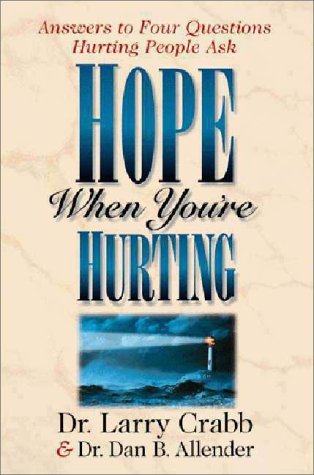
Hope When You’re Hurting

By Dr. Larry Crabb (summary by Jeffrey Bush)

Why, the author believes that soul care belongs to the church:

The author says many Christians run to counselors and professional help when
going through difficulties but suggests soul care belonging to the church for the
below reasons:

  1. The Nature of the Problem.
    ◦ We are not damaged things needed to be fixed, we are disconnected
    persons that must depend upon the Gospel to reestablish
    connection.
    ◦ We are eternal souls in need of God’s fellowship.
  2. The Power of Community.
    ◦ The power of the gospel is released when we live together in a
    connected community.
    ◦ We are not broken people needed to be fixed, we need the closeness
    to give and receive from one another.
  3. God’s passion for Shepherding

God’s Grace in Your Suffering

By David A. Powlison (summary by Jeffrey Bush)

  • God never promises a life free of trials and hardships.
  • God works through affliction.
  • We cannot assess God’s blessing on a person’s life by the amount of or lack of
    afflictions.
  • Suffering produces genuine faith in our lives
  • Profound good sometimes comes from severe suffering.
  • God knows you, and that makes all the difference in the world as you do not have to
    face trials alone.
  • God’s loving purpose is your transformation.
  • God doesn’t tell us to not fear because everything will turn out, He tells us not to fear
    because He is with us.
  • In suffering, you learn how to need mercy and how to give mercy.

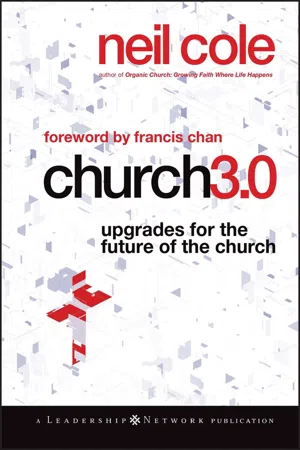
Church 3.0

By Neil Cole (summary by Jeffrey Bush)

  • Churches might not be multiplying because we need a change before God can bless
    what we are doing.
  • We need to replace old ways of thinking of the church with Scriptural, healthy,
    fruitful, and reproducing ways.
  • “It is impossible for a man to learn what he thinks he already knows.” — Epictetus
  • Far too long, Christians have said ideas are Biblical just because they tagged on a
    few verses (often time taken out of context).
  • If we were to take a survey in our congregations of those saved by events or by
    influence of family and friends witnessing, we’d find out that most are saved through
    the witness of family and friends. We know this, yet focus more on events than we
    encourage and equip individuals to influence their family and friends.
  • We focus on attractional church methods when 3 out of 5 young people today said
    they would be willing to study the Bible or listen to their friend/family share their
    beliefs.
  • We need to shift from an organizational model to relational model.
  • Church is not to be sedimentary (come and see us), but sent (going to find others).
  • Buildings, budgets, and big shots take up the biggest part of our church budgets,
    yet our cities are not being affected with the Gospel.
  • We shouldn’t start churches to make disciples rather make disciples to then start
    churches.
  • We seek to make our church more appealing when we should be asking ourselves
    how is our witness in the jobs and places within our community.
  • Church is not the agent of change, Jesus is.
  • We much switch from an institutional way of church to an influential; share Jesus
    everywhere.
  • Church is not a what but a Who.
  • We do an injustice to the Lord by reducing church to a one-day-a-week activity.
  • The Lord didn’t say, “Oh ye of little strategy” but “Oh ye of little faith.”
  • If we can’t produce healthy disciples, we will not produce healthy leaders, and if we
    cannot produce healthy leaders, we will not produce a church planting movement.
  • We are not commanded to multiply churches rather multiply disciples, and they will
    multiply churches.
  • Paul started churches that did not depend on him. We must learn to help others
    depend on God and not on us.
  • The DNA of a church is more important than the model of the church. The early
    church’s model looked different, but they were about the Word, fellowship, and
    purpose.
  • Many studies have been done showing the number 150 is the maximum number
    people can get to know before they feel disconnected. The studies, both secular and
    religious, go to prove that more churches are better than large churches over 150.
  • Attempting the mega church model is sacrificing the role of a shepherd for the role of
    a rancher.
  • We seem to think that large gatherings are more impacting, but Jesus spent the
    majority of His time with the disciples.
  • Smaller groups can impact much more than larger crowds. This seems contradictory
    to our thinking, but it has been proven over and over again throughout history.
  • It is not just about converts, it is about igniting new messengers into the world.

Wounded by God’s People Book Review by Jeff Bush

by Anne Graham Lotz

  • Sometimes the deepest wounds are by those who also call themselves God’s children. 
  • If anyone could understand, it is our Savior. He was despised and rejected by those He came to save. 
  • When they hurled their insults at Him, he did not retaliate. He did not respond to the threats. He charged it to His Father.
  • If anyone had a right to respond, retaliate and react, it was Jesus. 
  • Don’t let anyone rob you of the greatest treasure, which is a personal and passionate relationship with Jesus.
  • Don’t reject the God of those that are rejecting you.
  • Hagar was wounded by the family (Abraham and Sarah) by which came the heritage of our Jesus.
  • Sarah was wounded because she could not have a child, and was probably looked down upon as a result. But now this wounded woman became a wounder to Hagar. 
  • Sarah, an exemplary woman in the Bible, wounded another person. 
  • After being wounded, if we think on it and live in it, we can easily slip into becoming a wounder. 
  • Hannah was mocked because she couldn’t have a child, but she chose to pray and talk to God instead of retaliate. 
  • Although a wounded person might not get over their hurt easily, you still should still ask forgiveness. 
  • Wounds can be contagious. Families and countries have taken sides and began wars and fights over past hates. 
  • Hagar did what seems to be the easiest when hurt, she ran. Though running may be the easiest answer, it doesn’t solve the problem. 
  • Instead of having imaginary conversations with your wounders, you must forgive or you will not heal. 
  • Place your eyes on the Healer rather than the scars of your wounders. 
  • Wounds have a way of festering if you don’t let them heal. 
  • As did Hagar, there must be a time to stop crying and start crying out. 
  • God told Hagar to go lift up her son Ishmael after she ran away. It doesn’t seem to make sense that lifting a person during your own turmoil can relieve your pain. Yet God seems to use that method. Who can you lift up? Who is your Ishmael, one that needs your hand?
  • Allow God to use this valley to open your eyes. Don’t let the pain or hurt blind you from what God wants you to see.
  • God opened Hagar’s eyes to see water. Had the water been there the whole time?
  • The hurt can broaden your heart, deepen your compassion, refocus your purpose and draw you nigh to God. 
  • God can give you a vision in your valley. 
  • You can not move forward by looking backwards. 
  • Look up and look ahead. You cannot move forward by looking backwards.
  • When Jesus was on the cross, He said, “Father forgive them.” How could you not forgive those who wounded you? 

Win the Day Book Review by Jeff Bush

By Mark Batterson 

  • We feel so unqualified for tomorrow’s circumstances that we quit before we even start. 
  • Let go of dead yesterday’s and unborn tomorrow’s.
  • Focus on the inputs more than the outcomes. 
  • Win the day, and tomorrow will take care of itself. Do that enough days in a row, and you can accomplish almost anything.
  • Break the bad habits by doing good habits.
  • We are so fixated on the past, and anxious about the future, that we miss out on the present.
  • Most people think eternity starts in the future, but it starts right now.
  • The expiration on manna was every day. The deadline on anger was before sundown. God’s mercies are new every morning. We are told to take up our cross daily. We are told to rejoice today. The 24-hour rule is everywhere you look. 
  • You might not think you can do something for a month or a week, but you can do it for a day. 
  • Unleash the power of 24-hours. 
  • God will use things in your past to prepare you for tomorrow. 
  • It might take a Goliath-sized giant to bring out the David within you. 
  • Some people say they succeeded in spite of bad situations, but most likely they succeeded because of those bad situations. 
  • You don’t get to choose your past, but you do get to determine what your future will look like. 
  • There’s nothing wrong with asking God to change your circumstances, but God might be using your circumstances to change you. 
  • Sometimes God saves us from suffering, but many times He saves us through suffering. 
  • If you want to do what no one has done, you need to do what no one is doing. 
  • If you do not like what is happening in your life, take responsibility and change it. 
  • If you will do little things like big things, then God might do big things with those little things 
  • Sometimes our Plan B is God‘s plan A.
  • Today is the day. If you wait until you are ready to do it, you will never do it.
  • We need an holy urgency. Not the kind that is born of nervousness, but the kind that is born of a righteous passion.