In-Law Relationships

By Gary Chapman (summary by Jeffrey Bush)

  • Relationships are built by seeking understanding, and they are torn down by
    interruptions and arguments.
  • If you greet and treat others with respect, they will be more willing to listen to your
    point of view.
  • Learn the art of respect. Respect is a major ingredient in building positive in-law
    relationships.
  • Respect allows freedom of choice. The opposite of respect is manipulation.
  • You cannot gain respect by showing disrespect.
  • Ideas should be shared as suggestions, not demands. You can respect another
    person‘s ideas without having to follow their ideas.
  • “You” statements usually start fights. Use “I” statements.
  • Negotiation is the opposite of withdrawal and resentment.
  • Grant the gift of freedom. The greatest gift that parents can give to their married
    children is freedom.
  • Don’t make your married children dependent on you. Marriage is about
    independence, not dependence.
  • You don’t build positive in-law relationships by making negative comments about
    someone else’s interests.
  • The ultimate key that unlocks the door of becoming friends with your in-laws is an
    attitude of love.
  • If you want to help your in-laws, find out what they believe is helpful instead of using
    your own judgment.
  • Genuine love is seldomly rejected, but someone must take the initiative to love.
  • If you’re going to love your in-laws, you need kindness and patience.
  • Failures call for apologies and apologies call for forgiveness.
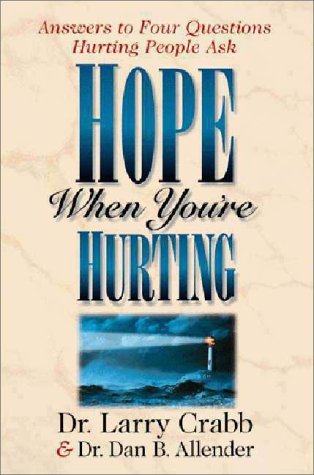
Hope When You’re Hurting

By Dr. Larry Crabb (summary by Jeffrey Bush)

Why, the author believes that soul care belongs to the church:

The author says many Christians run to counselors and professional help when
going through difficulties but suggests soul care belonging to the church for the
below reasons:

  1. The Nature of the Problem.
    ◦ We are not damaged things needed to be fixed, we are disconnected
    persons that must depend upon the Gospel to reestablish
    connection.
    ◦ We are eternal souls in need of God’s fellowship.
  2. The Power of Community.
    ◦ The power of the gospel is released when we live together in a
    connected community.
    ◦ We are not broken people needed to be fixed, we need the closeness
    to give and receive from one another.
  3. God’s passion for Shepherding

God’s Grace in Your Suffering

By David A. Powlison (summary by Jeffrey Bush)

  • God never promises a life free of trials and hardships.
  • God works through affliction.
  • We cannot assess God’s blessing on a person’s life by the amount of or lack of
    afflictions.
  • Suffering produces genuine faith in our lives
  • Profound good sometimes comes from severe suffering.
  • God knows you, and that makes all the difference in the world as you do not have to
    face trials alone.
  • God’s loving purpose is your transformation.
  • God doesn’t tell us to not fear because everything will turn out, He tells us not to fear
    because He is with us.
  • In suffering, you learn how to need mercy and how to give mercy.

God Owns My Business

By Stanley Tam (summary by Jeffrey Bush)

This is an incredible biography of a successful businessman with deep faith,
hard work, and strong convictions. He wanted God to be his senior partner in
business, so he asked a lawyer to draw up the paperwork. One lawyer told him
he couldn’t do it, and the second said the same. Finally, because of Stanley’s
persistence, the lawyer drew up papers that said God would own 51% of his
business. This meant 51% of all profit went to God’s work overseas and
different Christian organizations.

Stanley was sensitive to God‘s working in his life. On more than one occasion he
went back to apologize to someone or pay something he owed.

He established five guideposts for his life:

  1. To thank God for every adverse event.
  2. Rather hold a bolt of lightning in my hand than to speak against a
    brother.
  3. To pay any price in order to be obedient to the Holy Spirit.
  4. To administer love and never govern in anger.
  5. To pay three compliments every day.

Developing The Leaders Around You

By John C Maxwell (summary by Jeffrey Bush)

  • A leader sees the big picture, and understands he needs help from others.
  • Great leaders produce other leaders.
  • Grow a leader, and you will grow an organization.
  • Followers tell you what you want to hear, leaders tell you what you need to hear.
  • It takes a leader to know a leader, to grow a leader, and to show a leader. But it also
    takes a lead to attract another leader.
  • There’s no success without a successor.
  • Most people only produce when they feel like it, but leaders produce even when they
    don’t feel like it.
  • The more people you lead, the more people you need.
  • Leaders are perpetual learners.
  • The first thing to look for in a potential leader is character flaws. Everyone has
    weaknesses, but character is essential.
  • A great leader will help others have confidence in themselves.
  • How many leader must be able to to communicate effectively.
  • To nurture potential leaders, they need the BEST from you:
    B — believe in them
    E — encourages them
    S — share with them
    T — trust them
  • To nurture potential leaders, they must see leadership modeled.
  • People must trust you before they will follow you.
  • Time is valuable, and time spent with a potential leader is an investment.
  • Good leaders give encouragement.
  • A good leader will show each individual their significance as part of the big picture.
  • When you nurture those around you, everyone wins.
  • Good leaders are good listeners.
  • How you select people is more important than how you manage people.
  • Respect must be won. Respect comes from trust, care, and the ability to make hard
    decisions.

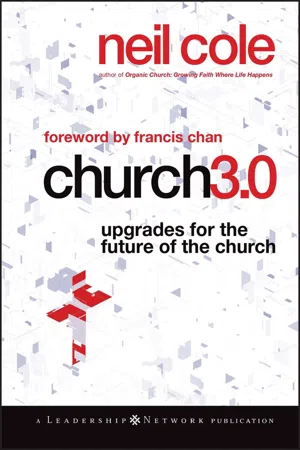
Church 3.0

By Neil Cole (summary by Jeffrey Bush)

  • Churches might not be multiplying because we need a change before God can bless
    what we are doing.
  • We need to replace old ways of thinking of the church with Scriptural, healthy,
    fruitful, and reproducing ways.
  • “It is impossible for a man to learn what he thinks he already knows.” — Epictetus
  • Far too long, Christians have said ideas are Biblical just because they tagged on a
    few verses (often time taken out of context).
  • If we were to take a survey in our congregations of those saved by events or by
    influence of family and friends witnessing, we’d find out that most are saved through
    the witness of family and friends. We know this, yet focus more on events than we
    encourage and equip individuals to influence their family and friends.
  • We focus on attractional church methods when 3 out of 5 young people today said
    they would be willing to study the Bible or listen to their friend/family share their
    beliefs.
  • We need to shift from an organizational model to relational model.
  • Church is not to be sedimentary (come and see us), but sent (going to find others).
  • Buildings, budgets, and big shots take up the biggest part of our church budgets,
    yet our cities are not being affected with the Gospel.
  • We shouldn’t start churches to make disciples rather make disciples to then start
    churches.
  • We seek to make our church more appealing when we should be asking ourselves
    how is our witness in the jobs and places within our community.
  • Church is not the agent of change, Jesus is.
  • We much switch from an institutional way of church to an influential; share Jesus
    everywhere.
  • Church is not a what but a Who.
  • We do an injustice to the Lord by reducing church to a one-day-a-week activity.
  • The Lord didn’t say, “Oh ye of little strategy” but “Oh ye of little faith.”
  • If we can’t produce healthy disciples, we will not produce healthy leaders, and if we
    cannot produce healthy leaders, we will not produce a church planting movement.
  • We are not commanded to multiply churches rather multiply disciples, and they will
    multiply churches.
  • Paul started churches that did not depend on him. We must learn to help others
    depend on God and not on us.
  • The DNA of a church is more important than the model of the church. The early
    church’s model looked different, but they were about the Word, fellowship, and
    purpose.
  • Many studies have been done showing the number 150 is the maximum number
    people can get to know before they feel disconnected. The studies, both secular and
    religious, go to prove that more churches are better than large churches over 150.
  • Attempting the mega church model is sacrificing the role of a shepherd for the role of
    a rancher.
  • We seem to think that large gatherings are more impacting, but Jesus spent the
    majority of His time with the disciples.
  • Smaller groups can impact much more than larger crowds. This seems contradictory
    to our thinking, but it has been proven over and over again throughout history.
  • It is not just about converts, it is about igniting new messengers into the world.

Bitterness

By Lou Priolo (summary by Jeffrey Bush)

  • Bitterness comes from not being able to forgive others.
  • God says that bitterness is a root, so there must be seeds. The seeds are usually a
    hurt.
  • How do you know if you are bitter or not? According to Proverbs 14:10, the heart
    knows its own bitterness — you know if you are bitter or not.
  • Bitterness is seen in multiple ways: you cannot resolve a conflict, cold shoulder or
    vindictive, outburst of anger (overreacting, emotionally), snide comments or remarks,
    speaking to someone as though they are inferior, mean joking, criticism, intolerance,
    hypersensitivity, impatience, endurance to our prayers, inability to love, God and
    others, etc.
  • Forgiveness is costly. It cost you the offense that you forgive.
  • The offense that you forgive, however bad it may seem to you, is not as bad as the
    sins Jesus forgave you for in salvation
  • God goes on record to say that He will remember your sins no more.
  • Forgiveness is not a feeling, it’s a promise. When you forgive, you are promising not
    to hold the offenses of the other person. This is what Jesus did for you.
  • Forgiveness is immediate. Trust takes time.
  • Forgetting is a result of forgiving.

Who Stands With You?!

“And the night following the Lord stood by him, and said, Be of good cheer, Paul: for as thou hast testified of me in Jerusalem, so must thou bear witness also at Rome.” — Acts 23:11

Paul was living for God and found himself in a whirlwind of problems. Though each circumstance and outcome will be different for God’s servants, there are some great truths we can extract from Paul’s situation. 

  1. God always stands with His children. 

Paul was witnessing for God when it seems almost every person turned against him. There will be times in your life that you will feel alone, but don’t forget God’s “great and precious promises” (2 Peter 1:4). You are never alone with God on your side. He said He will never leave you nor forsake you (Hebrews 13:5; Isaiah 49:15). Get to know Him and stay close to Him, for it is He Who is with you even when you feel alone, afraid, or abandoned.

  1. God encouraged Paul was in a tough situation. 

You will probably never have the Lord, or an angel, physically come to you, but the Lord still whispers truth in your heart and ears. Sometimes God reminds you of a truth from His Word, or a word that was told to you by one of His messengers, or a song you learned long ago. There are moments you must get away to encourage yourself in the Lord as the Psalmist David did in 1 Samuel 30:6. There are other moments God refreshes your soul with His presence. However the encouragement comes, continue to look to God and be of good cheer. God is greater than your problems!

  1. God has a purpose. 

God told Paul he was going to bear witness for Him in Rome. God had a purpose for Paul’s situation, and He does for yours as well. Nothing can catch God off guard. God knew about Job, even when Job didn’t understand. God knows your struggles, and God has a purpose. 

Here to Serve, 

Jeffrey Bush